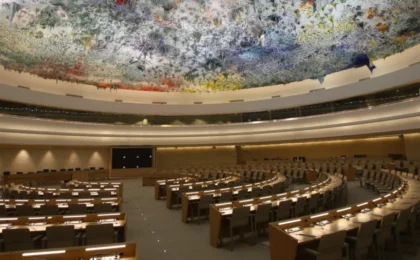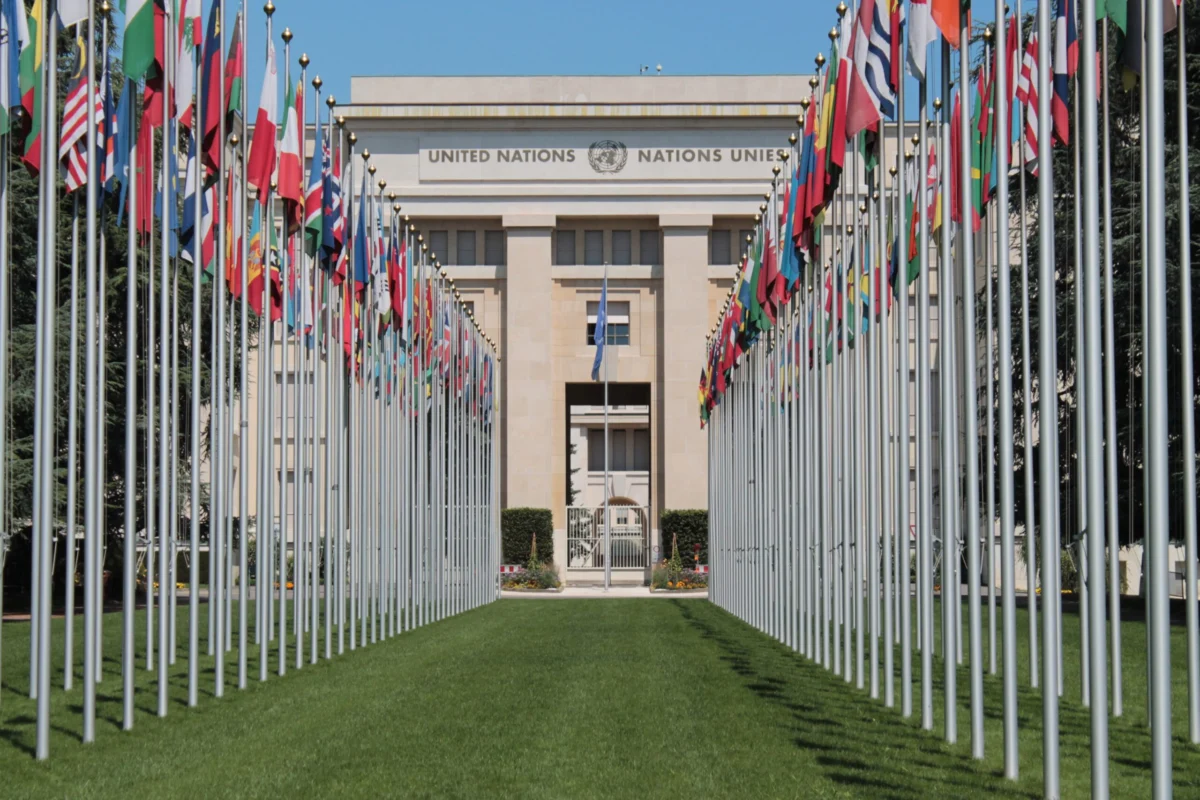
The United Nations, the world’s primary architect of international cooperation and human rights protection, is currently grappling with an existential liquidity crisis. According to a harrowing report released this week by Human Rights Watch (HRW), the institution’s ability to uphold its fundamental charter is being severely compromised by a persistent failure of major member states to fulfill their financial obligations. As the global landscape faces intensifying geopolitical volatility, the UN’s budgetary shortfall has moved from a recurring administrative headache to a structural emergency, threatening the future of humanitarian aid, peacekeeping operations, and human rights oversight.
The Core Conflict: A Systemic Failure of Responsibility
At the heart of the crisis lies the mechanism of "assessed contributions"—the mandatory dues that every member state is obligated to pay based on an intricate formula that accounts for national income, economic size, and other development indices. These contributions form the bedrock of the UN’s regular and peacekeeping budgets. However, as of July 2026, the global organization is reeling from a massive shortfall, with only 120 of 193 member states having paid their budgetary contributions in full for the current fiscal year.
The HRW report highlights a sobering reality: the two largest economies in the world, the United States and China, are the primary contributors to the UN’s financial instability. Their failure to adhere to payment schedules—or in some cases, their refusal to pay altogether—has created a budgetary vacuum that is forcing the UN to implement severe austerity measures. These cuts are not merely abstract accounting adjustments; they represent a tangible retreat from the frontlines of global justice.
A Chronology of Fiscal Erosion
The trajectory of this financial decline did not occur overnight. It is the result of years of mounting geopolitical friction and administrative neglect.
- 2024: The UN begins to report significant liquidity concerns, with peacekeeping missions experiencing the first major wave of budget-driven constraints. International human rights missions peak at approximately 11,000 deployments.
- February 2025: Amidst a broader trend of declining global foreign aid, the UN’s internal reports indicate that women’s rights organizations and critical social programs are among the first to be hollowed out by funding gaps.
- January 2026: Under the second administration of President Donald Trump, the United States formally accelerates its withdrawal from several UN-affiliated trade, climate, and research agencies, citing a lack of alignment with US national interests.
- February 2026: Facing the threat of "imminent financial collapse"—a term used by the UN Secretary-General—the United States makes a partial payment of $160 million toward its outstanding arrears. However, this payment covers only a fraction of its nearly $4 billion debt.
- June 2026: In a desperate attempt to stabilize its accounts, the UN General Assembly passes a resolution to temporarily suspend the long-standing rule requiring the organization to refund unspent contributions to member states. This move is intended to keep liquidity within the system rather than returning it to states that, in many cases, have not paid their dues in full.
- July 2026: Human Rights Watch publishes its comprehensive investigation, explicitly linking the funding crisis to a catastrophic reduction in the UN’s capacity to monitor and report on human rights abuses worldwide.
Supporting Data: The Anatomy of a Financial Crisis
The HRW document accompanying the report provides a granular look at the extent of the damage. The UN’s regular budget is designed to be a predictable, shared burden. When that predictability vanishes, the organization enters a state of perpetual crisis management.
The data reveals that the "Big Two"—the US and China—hold the keys to the UN’s survival. The US, which remains the UN’s largest financial debtor, has utilized its fiscal leverage to signal political dissatisfaction. President Trump’s characterization of UN climate warnings as a "con job" and his skepticism toward multilateralism have translated into a policy of financial attrition. By withholding billions in dues, the US effectively forces the UN to prioritize survival over mission effectiveness.
China’s role is more complex. While technically paying its dues, Beijing consistently misses yearly deadlines, often utilizing these delays as a form of diplomatic leverage to exert control over the UN’s policy agenda. As of July 13, 2026, the delay of payment from major states has created a "trickle-down" effect of financial instability. With 65 of the 120 contributing states paying their dues more than 30 days after the February deadline, the UN is left without a reliable cash flow to manage its monthly payroll, let alone its complex, high-stakes international missions.
Official Responses and the Humanitarian Toll
The human cost of this fiscal neglect is documented by UN High Commissioner for Human Rights Volker Türk. His office, tasked with the noble objective of ensuring dignity and freedom for all, has been forced to slash its operations by more than 50 percent. The number of international human rights missions plummeted from 11,000 in 2024 to just 5,000 in 2025.
"We are witnessing a slow-motion retreat from the global stage," an anonymous UN official noted in the wake of the report. "When we cannot afford to deploy monitors to a conflict zone or a region experiencing a humanitarian crisis, it is the most vulnerable populations who pay the price. We are effectively leaving victims of state-sponsored violence without a voice."
In response to the crisis, the UN has begun to entertain aggressive accountability measures. There is growing sentiment among member states that those who fail to pay should face political consequences. Proposals currently under discussion include:
- Revoking Voting Privileges: Enforcing stricter penalties for persistent non-payment.
- Leadership Restrictions: Barring officials from countries in arrears from holding key positions in UN committees or administrative offices.
- Transparency Requirements: Requiring defaulting nations to justify their non-payment before the General Assembly.
Implications: A Future Without a Safety Net
The implications of this funding crisis extend far beyond the balance sheets of the UN headquarters in New York or Geneva. The UN was created in the shadow of the Second World War to prevent the collapse of international norms. If the primary enforcement mechanism of those norms—the United Nations—is rendered impotent by financial starvation, the consequences for the international order could be irreversible.
1. Erosion of International Law
As funding for human rights missions evaporates, the UN’s ability to document atrocities, investigate war crimes, and hold perpetrators accountable diminishes. This creates an environment of impunity where authoritarian regimes can operate with less oversight.
2. The Vacuum of Power
When the UN is unable to provide humanitarian aid or facilitate diplomatic peacekeeping, other, less transparent, or more self-interested actors often step in to fill the gap. This shifts the global paradigm away from collective security toward a more transactional, power-based system.
3. Institutional Fragility
The reliance on "voluntary" and "assessed" contributions has always been a weakness, but the current crisis demonstrates that the system is no longer fit for purpose in an era of intense nationalist rhetoric. Without a fundamental restructuring of how the UN is funded, the organization risks becoming a hollow shell—an entity that exists on paper but lacks the muscle to act.
Conclusion: The Choice Ahead
The report by Human Rights Watch serves as a final warning. The funding crisis is not merely a budgetary issue; it is a political choice made by the world’s most powerful nations to diminish the role of international cooperation. As the UN stands at this precipice, the international community must decide whether it values the stability and justice that the organization represents, or whether it is content to preside over the dismantling of the post-war order. For the millions of people who rely on the UN for food, protection, and justice, the time for administrative reform has long since passed—the time for a sustained commitment to global accountability is now.