For decades, the backbone of the global digital economy has been the IT services industry. Giants like Infosys, TCS, and Wipro built empires by providing armies of engineers to customize, integrate, and maintain the complex enterprise software that powers the world’s largest corporations. It was a model built on human scale: the more work a client needed, the more bodies an IT firm deployed.
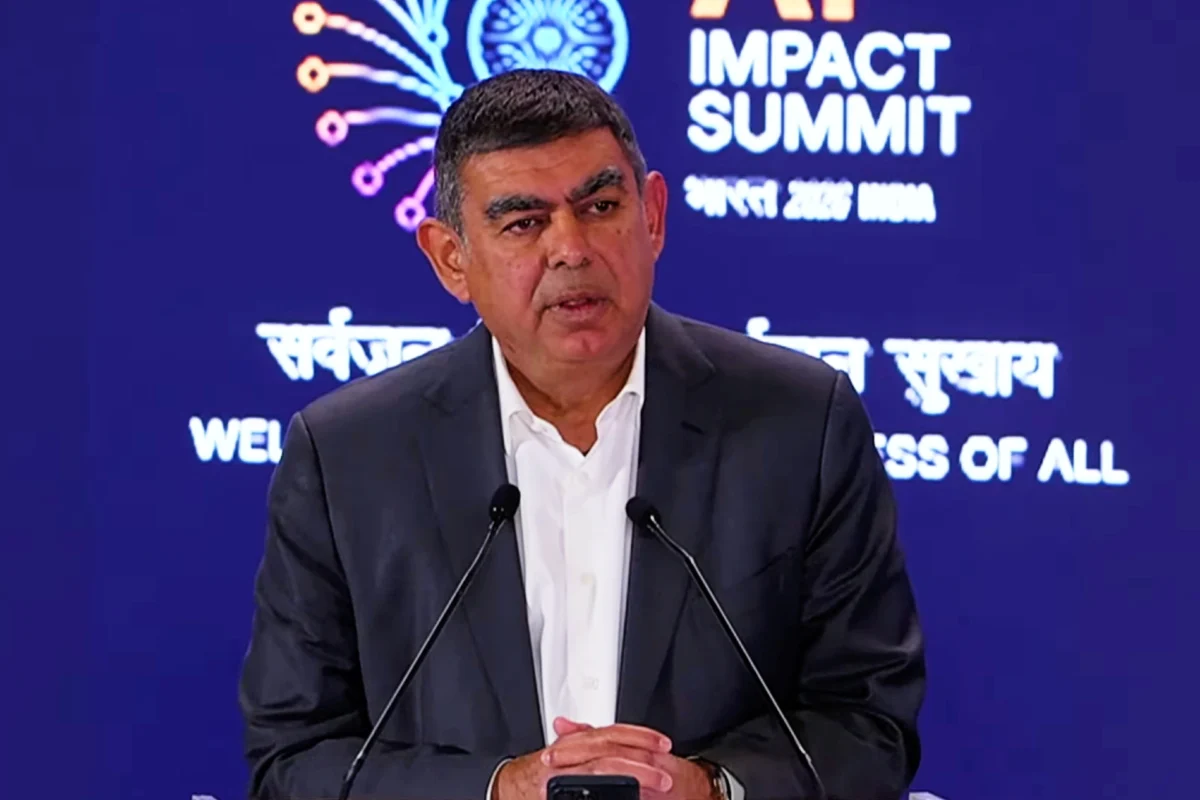
Today, that paradigm is facing its most significant challenge yet. Vishal Sikka, the former CEO of Infosys and a veteran of enterprise software heavyweights like SAP and Oracle, is betting that the era of human-linear scaling is drawing to a close. His new startup, Hang Ten Systems, emerged from stealth this week with a $32 million seed round, armed with a thesis that AI-native agents can do what thousands of outsourced developers previously did—faster, cheaper, and with greater efficiency.
The Core Proposition: Rethinking IT Services
Hang Ten Systems is not just another software vendor; it is an "AI-native services company." While traditional firms are scrambling to layer generative AI tools on top of their existing workflows, Hang Ten is architecting its entire delivery model around agentic code generation, reusable AI skills, and deep domain expertise.
The startup’s mission is to help enterprises continuously build, modify, and operate software using AI-driven automation. By moving away from a labor-intensive model, Hang Ten aims to solve the "efficiency trap" that plagues legacy firms, where revenue growth is tethered to hiring costs. As Navin Chaddha, managing partner at lead investor Mayfield, put it: "Traditional services scale linearly with headcount. Hang Ten is built so its leverage grows with every project."
Chronology: From SAP to VianAI to Hang Ten
Vishal Sikka’s career has been a trajectory toward this exact moment. After a 12-year tenure at SAP, where he served as CTO and helped drive the company’s transition to the HANA platform, Sikka moved to the helm of Infosys in 2014. His time at the Indian IT titan was marked by an aggressive push toward automation and AI, an agenda that eventually led to his departure in 2017.
Following his exit from Infosys, Sikka founded VianAI, a venture focused on democratizing machine learning and enterprise AI applications. VianAI was a significant success in the venture capital market, raising $50 million in its 2019 seed round and eventually securing $140 million in 2021 from SoftBank Vision Fund 2.
However, Chaddha notes that Hang Ten is a distinct beast. While VianAI was a product-first company focused on decision-making tools and AI applications, Hang Ten is a service-oriented machine. It is designed to act as a partner in the actual creation and maintenance of enterprise software. The "early crew" at the startup reflects this shift, composed of longtime collaborators from SAP, Infosys, and VianAI, including CTO Navin Budhiraja, Chief Design Officer Sanjay Rajagopalan, and SVP of Forward Deployed Engineering Tao Liu.
Supporting Data: The Market Landscape
The urgency behind Hang Ten’s launch is underlined by a stark shift in market sentiment. Traditional IT services stocks have been under significant pressure. Infosys, for instance, has seen its share price decline by more than 35% this year as investors question whether the "human-in-the-loop" services model can survive the rise of autonomous AI.
The financial data highlights a tale of two outlooks:
- The Bearish View: Analysts at Jefferies recently argued that the IT services sector is arguably the first to face "meaningful AI disruption." The logic is simple: if an AI agent can write code, debug software, and integrate APIs, the value proposition of thousands of offshore developers diminishes rapidly.
- The Bullish View: Conversely, industry incumbents like Infosys are fighting back. Chairman Nandan Nilekani recently articulated a vision where AI expands the total addressable market (TAM) rather than shrinking it. He projects an "AI-first services" opportunity worth $300 billion to $400 billion by 2030, arguing that businesses will need more help than ever to navigate the complexity of implementing AI agents across their legacy systems.
Hang Ten enters this fray with a lean, aggressive approach. Despite being only a month old, the startup has already secured enterprise clients, including Siemens Gamesa Renewable Energy and Fresenius. The company is actively scaling, hiring across global locations to meet what it describes as an insatiable demand for "AI-native project delivery."
Official Responses and Strategic Vision
The $32 million seed round, led by Mayfield with strategic investment from Aramco Ventures, signals strong institutional backing for Sikka’s vision. The inclusion of Yahoo co-founder Jerry Yang on the board adds a layer of seasoned governance to a startup that is essentially attempting to disrupt the very industry Sikka once led.
In a blog post detailing the launch, the 59-year-old Sikka was characteristically ambitious, framing the current shift as the most significant technological wave of our lifetimes. "We are here to help enterprises hang ten on the biggest wave of our lifetimes," he wrote.
For their part, clients are clearly eager for a new approach. The "AI-native" methodology promises to strip away the bloat of traditional consulting engagements, replacing long, expensive scoping phases with rapid, iterative, agent-driven development.
Implications: The Future of Outsourcing
The implications of Hang Ten’s emergence are profound for the $1.5 trillion global IT services industry.
1. The Death of Linearity
If Hang Ten succeeds, the "headcount-as-revenue" model will become a relic of the past. If a firm can deploy AI agents to handle 80% of routine maintenance and integration tasks, the pricing power of legacy firms—which rely on charging hourly rates for human labor—will be severely undercut.
2. The Rise of "Agentic" Services
The industry is moving from "Software as a Service" (SaaS) to "Service as Software." In this future, the service provider doesn’t just manage the code; they provide the intelligence that manages, updates, and evolves the code autonomously. This shifts the competitive advantage from having the largest workforce to having the most effective AI agent frameworks.
3. A New Battleground for Talent
Hang Ten’s aggressive hiring plan highlights a shift in what companies are looking for. They no longer need just programmers; they need "forward deployed engineers"—professionals who understand the intersection of deep domain expertise and agentic AI orchestration.
4. The Survival of the Incumbents
The success of Hang Ten will force legacy giants to accelerate their pivot. Partnerships between firms like Infosys and AI leaders like OpenAI and Anthropic are currently in their infancy. The pressure is on these firms to prove that they can adapt their legacy business models before startups like Hang Ten capture the high-margin, forward-thinking enterprise contracts.
Conclusion
Vishal Sikka’s Hang Ten Systems is more than just a well-funded startup; it is a declaration of war on the traditional IT services model. By leveraging the same AI tools that threaten to displace human developers, Hang Ten is betting that it can deliver the future of software development at a speed and scale that the incumbents cannot match.
Whether the industry evolves into a larger market as Nandan Nilekani hopes, or undergoes a painful, structural contraction as the Jefferies analysts fear, remains to be seen. What is clear is that the old way of doing business—defined by thousands of consultants sitting in cubicles—is rapidly becoming obsolete. In the world of enterprise AI, the companies that "hang ten" on the incoming wave will likely define the next decade of digital transformation. For Sikka and his team, the race to build the infrastructure for that new world has already begun.