For decades, the field of genetics has operated under a relatively straightforward premise: the biological blueprint of an organism is dictated by the DNA sequence inherited at the moment of conception. While environmental factors and lifestyle choices have long been recognized as influential, the "hereditary clock"—the biological impact of a mother’s age on her offspring—has remained one of evolution’s most persistent enigmas.
From the simplest aquatic invertebrates to the complex social structures of elephants and humans, maternal age effects represent a universal biological phenomenon. As research evolves, scientists are beginning to realize that these effects are not merely the byproduct of biological wear and tear, but potentially a sophisticated, reversible mechanism that bridges the gap between generations.
The Evolutionary Puzzle: Why Do Maternal Age Effects Persist?
In the natural world, survival and reproductive fitness are the primary currencies of evolutionary success. Typically, natural selection acts as a ruthless editor, pruning traits that diminish the vitality or longevity of offspring. Yet, maternal age effects—which frequently result in shorter lifespans, reduced reproductive success, and diminished physical fitness for the offspring of older mothers—persist across an extraordinary range of species.
If these effects are largely detrimental, why hasn’t evolution selected against them? The answer, according to researchers at the Marine Biological Laboratory (MBL), may lie in the timing of the life cycle.
"Selective pressure is much lower at advanced ages," explains Kristin Gribble, an associate scientist in the Bay Paul Center at the MBL. In species like rotifers—tiny, rapidly reproducing aquatic organisms—the biological priority is front-loaded. Because these creatures perform the bulk of their living and reproducing in their youth, the evolutionary "incentive" to optimize the fitness of offspring born to older mothers is significantly weakened. By the time an organism reaches an advanced age, its genetic legacy is largely secured, rendering the selective pressure against maternal age-related decline negligible.
Rotifers as a Window into Human Biology
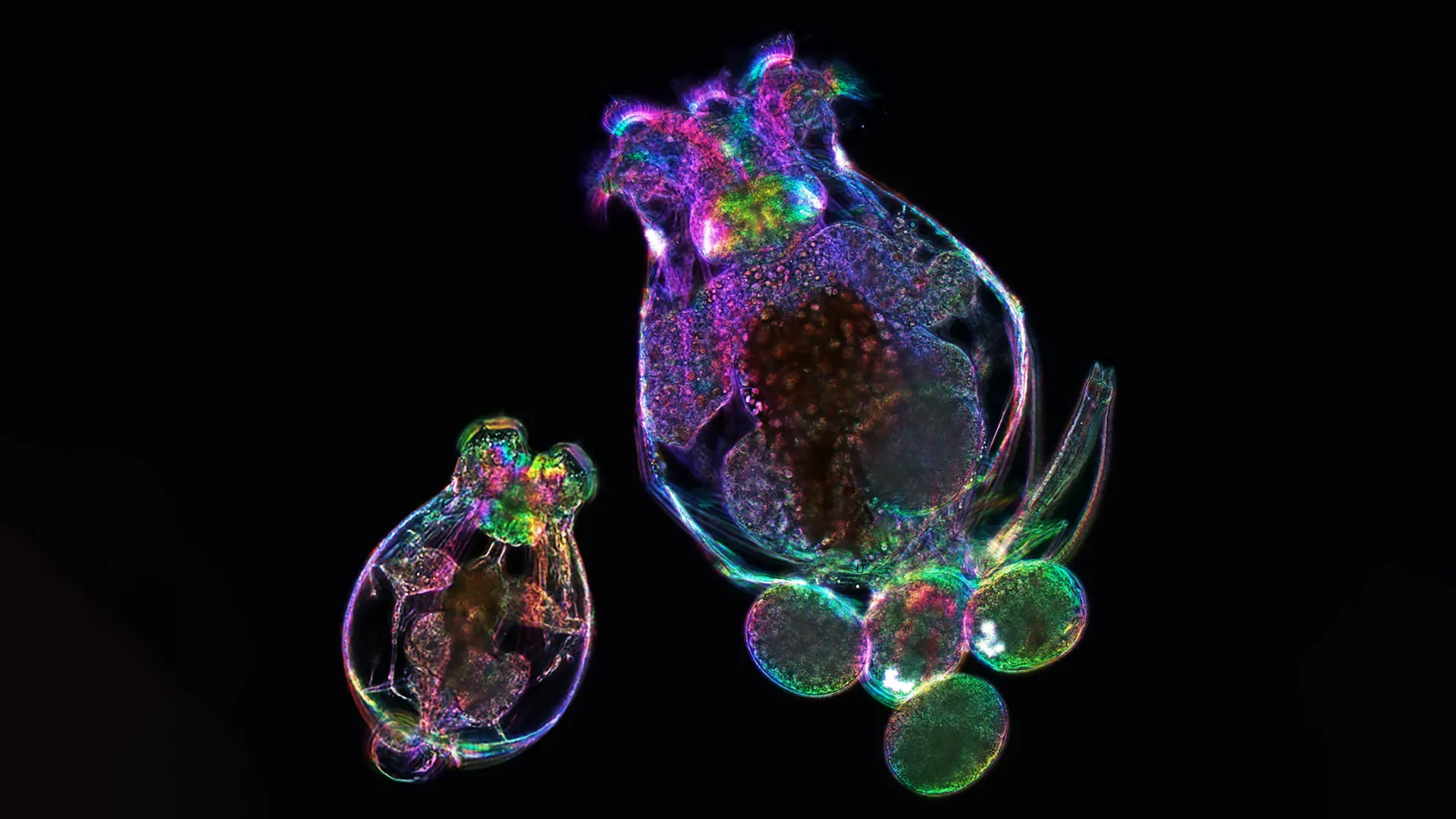
To bridge the gap between abstract evolutionary theory and hard biological data, Gribble’s laboratory has turned to the rotifer. These microscopic animals serve as ideal proxies for understanding the mechanisms of aging and inheritance. Their rapid reproduction rates allow scientists to observe multiple generations in a matter of weeks, providing a condensed timeline of evolutionary impact.
"Understanding the mechanism in these simple invertebrates can help us understand how maternal age effects occur in people as well," Gribble notes. The lab’s research, conducted in collaboration with postdoctoral scientist Alyssa Liguori—now an assistant professor at SUNY-New Paltz—has yielded a paradigm-shifting discovery: the effects of maternal age may not be the result of permanent DNA damage, but rather the consequence of epigenetic regulation.
Challenging the Mutation Hypothesis
For years, the scientific community operated under the assumption that the negative impacts of advanced maternal age were driven by the "garbage collection" theory—the idea that DNA mutations and cellular damage accumulate over time, eventually degrading the quality of the egg or the intrauterine environment.
However, Liguori’s work with two different genotypes of rotifers challenged this narrative. The research demonstrated that maternal age effects did not worsen in a linear, compounding fashion across successive generations. Instead, the effects were remarkably fluid and, crucially, reversible within a single generation. This rapid reversal is a death knell for the theory that mutations are the primary culprit. If the damage were fixed in the DNA sequence, it would not disappear in the next generation. Instead, the data suggests that these traits are controlled by epigenetic processes—the "switches" that determine whether specific genes are turned on or off.
The Role of Epigenetics and Histone Modifications
If the underlying DNA sequence is not the driver of maternal age effects, what is? Gribble’s team is currently investigating the role of histone modifications. Histones are proteins that act as spools around which DNA is wrapped; by altering these proteins, cells can effectively silence or activate genes without changing the underlying code.
This discovery suggests that a mother’s age may transmit a "biological memory" to her offspring. This memory is not encoded in the sequence of nucleotides, but in the structural configuration of the genetic material itself. Furthermore, the team is exploring the role of mitochondrial DNA (mtDNA). As the powerhouse of the cell and a strictly maternally inherited component, mtDNA may serve as a conduit for transmitting vital information about the mother’s physiological state to the developing offspring.
The Complexity of Inheritance: A Double-Edged Sword
While maternal age is often framed in the context of decline, the research indicates that the story is far more nuanced. Genetic variation acts as a critical moderator, with some gene variants potentially shielding offspring from the negative impacts of an older mother.
In one striking instance during their experiments, Gribble’s team observed a strain of rotifers where offspring born to older mothers exhibited increased longevity. "There are likely gene variants out there that are protective of negative effects of advanced maternal age," Gribble explains. "In one of our strains, we saw that offspring from older mothers had a longer lifespan, implying a genetic mechanism may be involved in that beneficial effect."
This finding highlights a vital complication in the study of aging: the "harmful" outcomes observed in many populations may not be universal, but rather the result of a specific intersection between maternal age and the genetic predispositions of the offspring.
Implications for Precision Medicine
The implications of this research extend far beyond the laboratory aquarium. If biological outcomes are heavily influenced by the environment and age-related states of a mother, grandmother, and even a great-grandmother, the current paradigm of medical diagnosis and treatment may require a significant expansion.
A Multigenerational View of Health
In modern clinical settings, a patient’s health is usually evaluated based on their personal medical history and their current genome. Gribble’s research suggests this is an incomplete picture.
"It’s not just about what’s in your genome as an individual," says Gribble. "Your health potentially depends on the health and environment of your mom and grandmother and great-grandmother."
If medical practitioners can identify the epigenetic markers associated with maternal age, they may one day be able to predict susceptibility to certain diseases or physiological traits long before they manifest. This could usher in a new era of "precision medicine," where treatment plans are tailored not just to an individual’s DNA, but to the ancestral biological context that shaped their development.
Conclusion: The Future of Evolutionary Biology
As the scientific community continues to peel back the layers of maternal age effects, the distinction between "nature" (genetics) and "nurture" (environment) is becoming increasingly blurred. The realization that environmental and age-related biological states can leave lasting, yet reversible, marks on subsequent generations changes how we view the inheritance of health.
For Kristin Gribble and her team, the next phase of research is clear: mapping exactly how these signals travel across generations. By understanding the chemical signatures left on histones and the influence of mitochondrial DNA, scientists are moving closer to answering the fundamental question of how an organism’s past becomes its future.
The study of maternal age effects, once a niche corner of evolutionary biology, is rapidly becoming a cornerstone of our understanding of human health. It reminds us that we are not merely the sum of our genes; we are the product of an ongoing, multigenerational dialogue between our biology and the world our ancestors inhabited. As this research progresses, it offers the promise of a more comprehensive, empathetic, and effective approach to medicine—one that recognizes the deep, interconnected threads that link the past to the present.