MACAU SAR – For decades, the name "Macau" has been synonymous with the rhythmic clatter of slot machines and the high-stakes tension of baccarat tables. As the world’s largest gambling hub, the city has long outpaced Las Vegas in gaming revenue. However, a significant paradigm shift is underway. Macau is no longer content with being the "Sin City of Asia"; it is aggressively rebranding itself as a "world-class business city."
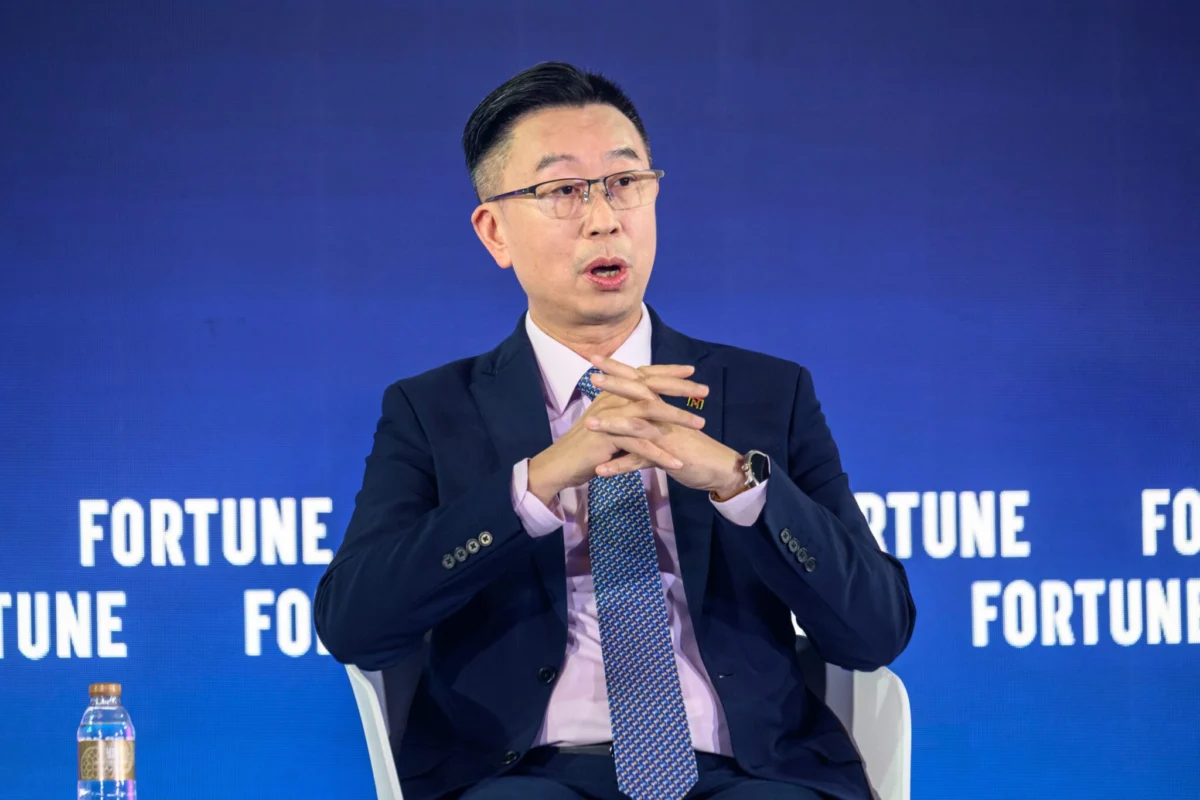
Speaking at the Fortune Leaders Forum in Macau on September 8, Alex Che Weng Keong, President of the Board of Directors of the Commerce and Investment Promotion Institute of the Macao SAR (IPIM), outlined a vision that moves the territory beyond tourism and toward a diversified, technology-driven economy. By leveraging its unique regulatory status, its proximity to mainland China, and its historical ties to the Portuguese-speaking world, Macau aims to redefine its identity for the mid-21st century.
Main Facts: The Diversification Mandate
The core of Macau’s new strategy is economic diversification. For years, the city’s economy has been characterized by a heavy—and some argue, precarious—reliance on the gaming sector. Currently, gaming accounts for approximately 45% of Macau’s Gross Domestic Product (GDP) and provides a staggering 80% of the government’s total tax revenue.
To mitigate the risks associated with a mono-sector economy, the Macau government has launched an ambitious "1+4" development strategy. The "1" represents the ongoing enrichment of the tourism and leisure industry, while the "4" refers to the four burgeoning sectors the government is determined to grow:
- Big Health: Including Traditional Chinese Medicine (TCM) and medical tourism.
- Modern Finance: Focusing on bond markets, wealth management, and lease financing.
- High Technology: Emphasizing semiconductors, materials science, and digital transformation.
- MICE and Culture: Meetings, Incentives, Conferences, and Exhibitions, alongside large-scale sports and cultural events.
Alex Che pointed to Las Vegas as a successful precedent for this transition. "The world’s other major gambling hub has shown a casino town can also become a world-class venue… for business, exchange, conferences, and exhibitions," Che noted. The goal is to transform the perception of Macau from a weekend playground into a critical node in the global supply chain of ideas and capital.
Chronology: From Colonial Outpost to Global Tech Hub
Macau’s journey toward this transformation is rooted in its unique history and its evolving relationship with the Chinese central government.
- 1999: The Handover. Portugal returned Macau to Chinese rule under the "One Country, Two Systems" framework. This granted Macau a high degree of autonomy, including its own currency (the Pataca), a separate customs territory, and a legal system based on Portuguese civil law.
- 2002: Liberalization of Gaming. The government ended the decades-long gaming monopoly, inviting international operators like Wynn, Sands, and MGM. This sparked an unprecedented economic boom but also deepened the city’s reliance on gambling.
- 2019: The Greater Bay Area (GBA) Outline Development Plan. The Chinese central government unveiled a master plan to integrate Hong Kong, Macau, and nine cities in Guangdong province into a global economic powerhouse. Macau was designated as a "core city" with a focus on tourism and trade with Portuguese-speaking countries.
- 2021: The Hengqin Project. The "Master Plan of the Development of the Guangdong-Macao In-Depth Cooperation Zone in Hengqin" was released. This effectively expanded Macau’s physical and economic footprint onto a 106-square-kilometer island in mainland China.
- 2024: The New Five-Year Plan. The government’s third five-year plan (covering 2026–2030) was solidified, committing 130 billion patacas ($16.1 billion) to "emerging industries."
This timeline illustrates a deliberate move by both local and central authorities to pivot away from a gaming-centric model toward a more sustainable, integrated economic future.
Supporting Data: The $16 Billion Bet on the Future
The scale of Macau’s ambition is backed by significant financial commitments and clear benchmarks. The 130 billion patacas ($16.1 billion) earmarked for emerging industries represents one of the largest non-gaming investments in the territory’s history.
Key Economic Targets:
- GDP Composition: The government aims for non-gaming industries to contribute 60% of Macau’s GDP by 2030.
- Geographic Expansion: While the Macau peninsula and Cotai Strip cover only 33.4 square kilometers, the integration with Hengqin adds 106 square kilometers of developable land—a nearly 300% increase in spatial capacity.
- Regional Context: Macau is the smallest city in the Greater Bay Area, a region with 87 million residents and a GDP of roughly $2 trillion. This output is larger than the national economies of Spain or Australia, providing Macau with a massive internal market and a sophisticated talent pool.
Alex Che emphasized that Macau’s autonomy is its greatest asset in attracting these funds. "Emerging industries often need different kinds of regulatory approaches and different ways for talent to move," he explained. By utilizing its independent legislative and regulatory systems, Macau can offer a "sandbox" environment for fintech and biotech firms that might face stricter hurdles elsewhere.
Official Responses: Strategic Synergy and the "Division of Labor"
The shift has garnered support from both government officials and private sector analysts, though experts warn that success depends on regional connectivity.
The Government’s Perspective
Alex Che highlighted the diplomatic advantage Macau holds through its Lusophone heritage. As a former Portuguese colony, Macau maintains Portuguese as an official language. "When Macao’s Chief Executive went to Portugal, who did he meet? The President, the Prime Minister… Once government channels are established, business follow-through becomes much easier," Che said. This "bridge" role allows Macau to serve as a gateway for European and Latin American companies looking to enter the Chinese market.
The Private Sector View
Edward Au, Southern Region Managing Partner for Deloitte China, provided a more critical but constructive perspective during the forum. While acknowledging the region’s potential, he argued that the Greater Bay Area is currently "less than the sum of its parts."
"We already have a lot of world-class points of innovation, but we don’t yet feel that they’re connected into a world-class innovation network," Au remarked. He suggested a "clearer division of labor" to maximize efficiency:
- Hong Kong, Shenzhen, and Guangzhou: Leading open, cutting-edge innovation and financial services.
- Dongguan and Foshan: Serving as the "mid-stream" manufacturing and engineering hubs.
- Macau and Hengqin: Carving out a niche in Traditional Chinese Medicine (TCM), "Big Health," and the data-technology market.
This specialized focus is intended to prevent redundant competition between GBA cities and instead create a complementary ecosystem.
Implications: The Vision for 2036
The long-term implications of this pivot are profound. If Macau succeeds, it will transform from a leisure destination into a "unified tech city." This transition carries several critical consequences for the region and the global business landscape.
1. Redefining the "One Country, Two Systems" Model
Macau’s evolution serves as a test case for how a highly specialized economy can reinvent itself under Chinese sovereignty. By integrating with Hengqin while maintaining its own legal and currency systems, Macau is creating a "hybrid" economic zone that could serve as a blueprint for other special administrative regions.
2. The Talent War
To reach the 60% non-gaming GDP target, Macau must attract and retain global talent. This requires more than just tax incentives; it necessitates an overhaul of the city’s infrastructure, including international schools, healthcare, and a professional environment that rivals Singapore or Hong Kong. The 130-billion-pataca investment will likely be funneled into these "soft" infrastructure projects.
3. A New Gateway for the Lusophone World
As geopolitical tensions sometimes complicate direct trade between China and the West, Macau’s role as a neutral, Portuguese-speaking intermediary becomes increasingly valuable. This could position the city as a primary hub for green energy partnerships with Brazil or infrastructure projects in Lusophone Africa.
4. Cultural Identity Shift
By 2036, Alex Che hopes the global public will view Macau differently. "When people talk about Macao, they won’t just mean the 33.4 square kilometers of the peninsula—they’ll also include Hengqin’s 106 square kilometers," he stated. The ultimate goal is for the "Sin City" label to be replaced by a reputation for technological excellence and medical innovation.
Conclusion
Macau stands at a historic crossroads. The transition from a "tourism city" to a "business city" is a high-stakes gamble of its own, but one the government believes is necessary for long-term survival. With the backing of the Greater Bay Area’s $2 trillion economy and a clear strategic roadmap toward 2030, the city is betting that its future lies not in the hands of lady luck, but in the precision of high-tech innovation and international trade.
As the 2026–2030 five-year plan approaches, the world will be watching to see if this tiny peninsula can truly become the "Silicon Peninsula" of the East. If the Las Vegas model is any indication, the odds may be better than they appear.