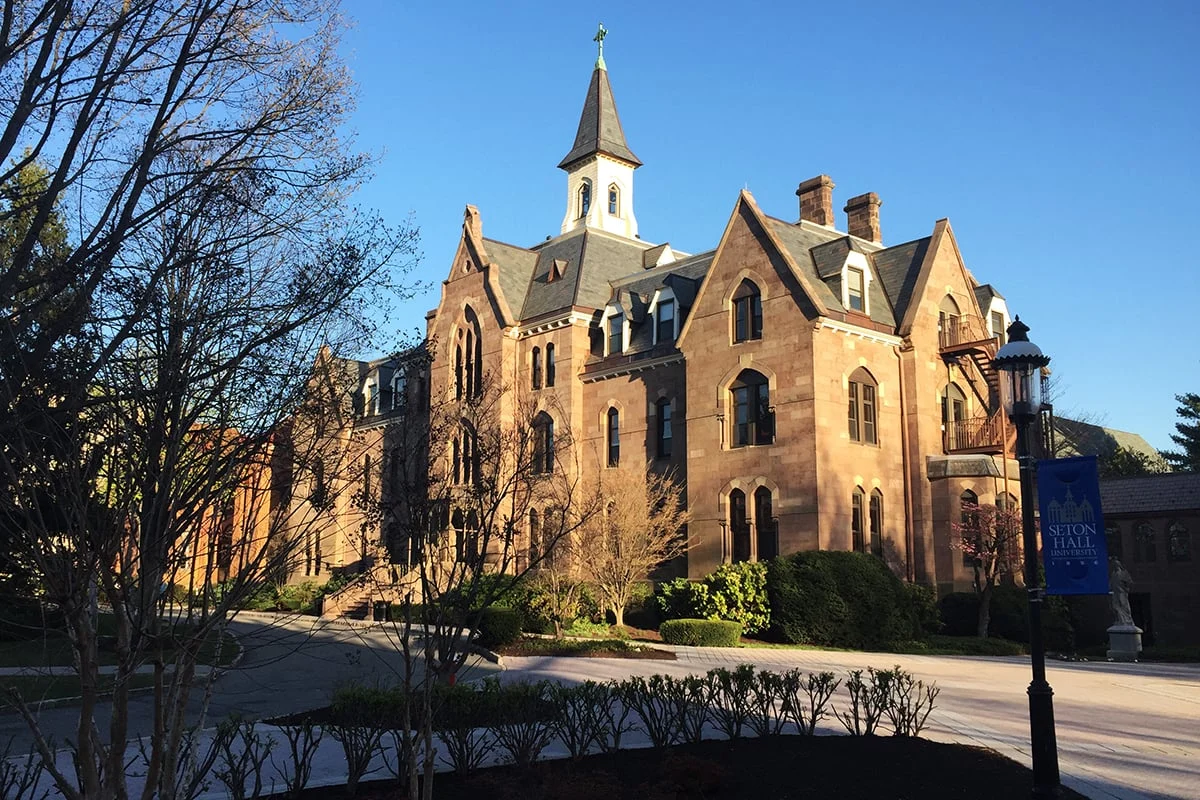
A long-standing cloud of controversy surrounding Seton Hall University President Monsignor Joseph Reilly has shifted following the release of an independent investigation conducted by the law firm Ropes & Gray. The report, commissioned by the Roman Catholic Archdiocese of Newark, seeks to reconcile conflicting narratives regarding Reilly’s handling of sexual abuse allegations during his tenure as a seminary leader in 2012.
While the findings clear the university president of any direct involvement in abuse—and validate his immediate disciplinary actions—the report simultaneously sheds light on systemic administrative failures that have plagued the institution for years.
The 2012 Incident: A Conflict of Protocols
The core of the investigation concerns a specific event from September 2012. According to the Ropes & Gray report, a seminarian approached Monsignor Reilly to report that a fellow student had made "unwanted sexual advances, including unwanted touching."
Reilly, serving as a seminary leader at the time, acted with immediate administrative finality. Alongside another seminary official, he confronted the accused student. Given the gravity of the allegations, combined with pre-existing concerns regarding the accused student’s conduct, Reilly promptly dismissed the individual from the seminary.
However, the Ropes & Gray investigators identified a critical procedural oversight: while Reilly reported the incident to the archdiocese, he failed to notify Seton Hall’s Title IX office. The report characterizes this as an "unintentional error," noting that it was "attributable in significant part to his lack of training on Seton Hall’s reporting requirements before 2013."
Chronology of a Two-Year Controversy
The release of this report serves as a pivotal moment in a turbulent two-year period for Seton Hall, characterized by legal battles, public scrutiny, and questions regarding institutional transparency.
- 2012: Monsignor Reilly dismisses a seminarian for sexual misconduct but fails to notify the university’s Title IX coordinator.
- 2019: A confidential, third-party investigation by Latham & Watkins LLP into the late Cardinal Theodore McCarrick references Reilly. Initial media reports suggest the investigation recommended Reilly’s removal from leadership boards.
- 2020: Approximately 450 sexual abuse claims against the university are consolidated into a single massive legal proceeding.
- 2024: Monsignor Reilly is inaugurated as the President of Seton Hall University. Shortly thereafter, Politico reports on the findings of the 2019 Latham & Watkins investigation, igniting intense public and internal criticism.
- 2025 (February): Cardinal Joseph W. Tobin, Archbishop of Newark, commissions Ropes & Gray to conduct a forensic review of the Latham report to determine the veracity of claims regarding Reilly.
- 2025 (June): An appellate court panel restricts the public release of the full Latham report, citing privacy concerns, allowing only a partial disclosure.
- 2026: The Ropes & Gray report is released, providing a formal defense of Reilly’s conduct while acknowledging the reporting failure of 2012.
The Latham & Watkins Report: A Disputed Narrative
The controversy was significantly fueled by the 2019 Latham & Watkins investigation, which was never intended for public consumption. Following the revelation of its existence, plaintiffs in the consolidated abuse lawsuits sought full disclosure of the document, hoping it would provide evidence of a culture of cover-ups at the university.
Seton Hall fought the release of the report, leading to a protracted legal battle that reached the appellate level. In June 2026, the courts sided partially with the university, mandating that only specific sections be released to the public.
The Ropes & Gray review of that same confidential document reached a starkly different conclusion than the rumors that circulated in the media. According to the 32-page Ropes & Gray analysis, the Latham investigation contained "no adverse factual findings regarding Monsignor Reilly." The firm noted that Reilly’s name appeared only in passing, contradicting narratives that suggested he was a central focus of wrongdoing in the McCarrick probe.
Official Responses and Institutional Accountability
In the wake of the report’s publication, both the university and the Archdiocese of Newark have attempted to draw a line under the scandal.
Monsignor Reilly issued a personal letter to the university community, balancing an admission of error with a defense of his intent. "At the time, I believed I had handled this in the right way," Reilly wrote. "While I addressed the matter appropriately in promptly dismissing the seminarian and reporting the incident to the archdiocese, I should have also communicated that incident to the university’s Title IX office."
He emphasized that since 2013, Seton Hall has undergone a complete overhaul of its communication protocols, training, and guidance regarding Title IX and sexual misconduct reporting. The Ropes & Gray report corroborates this, noting that Reilly formally acknowledged his reporting obligations in 2020 and has maintained strict compliance since.
Cardinal Joseph W. Tobin, who serves as the President of the Seton Hall Board of Regents, offered a strong endorsement of the president. "No compliance concerns have arisen since," Tobin said in a formal statement. He clarified that he provided no editorial input into the Ropes & Gray report, maintaining its independence. "Nothing in this thorough report changes my firm view that Monsignor Reilly is a good priest with formidable experience and a deep commitment to a Catholic institution serving the Church and the world."
Broader Implications for Higher Education
The Seton Hall case serves as a microcosm of the challenges facing Catholic universities in the 21st century. The incident highlights three distinct areas of institutional risk:
1. The Complexity of Dual Reporting
For religious institutions, the challenge lies in navigating two distinct reporting structures: ecclesiastical (the Church hierarchy) and civil (Title IX and university policy). The Ropes & Gray report makes it clear that failing to bridge these two worlds can lead to perceptions of cover-ups, even when the underlying intent of the administrator was to handle a situation decisively.
2. The Legacy of the McCarrick Scandal
The fact that Reilly’s name was linked to the broader investigation into Cardinal McCarrick—even in a tangential way—demonstrated how deeply the shadow of that scandal reaches. Universities are finding that historical associations with disgraced figures can trigger automatic suspicion, necessitating proactive, transparent investigations to clear the names of current leadership.
3. Transparency vs. Privacy in Litigation
The legal fight over the Latham & Watkins report underscores the growing tension in higher education litigation. As plaintiffs seek greater access to internal reviews, universities are caught between a desire to maintain attorney-client privilege and the moral imperative to prove their integrity. The appellate court’s decision to block the full release of the Latham report suggests that, while transparency is highly valued, courts are still willing to protect internal institutional assessments from broad discovery.
Conclusion
The findings from Ropes & Gray provide a measure of closure for Monsignor Reilly personally, identifying his past error as one of process rather than malice. However, the path to this resolution—marked by years of litigation and public outcry—suggests that Seton Hall and similar institutions face a difficult road in rebuilding trust.
For the university, the lesson of the last two years is clear: in an era of heightened sensitivity to sexual abuse, the "prompt and substantive" action that Reilly took in 2012 is only half the battle. The other half is ensuring that institutional protocols are not just known, but lived, and that reporting failures are not allowed to fester in the dark corners of administrative history. As the university moves forward, the focus will likely remain on whether these systemic reforms are sufficient to prevent the errors of the past from repeating in the future.