By Editorial Staff
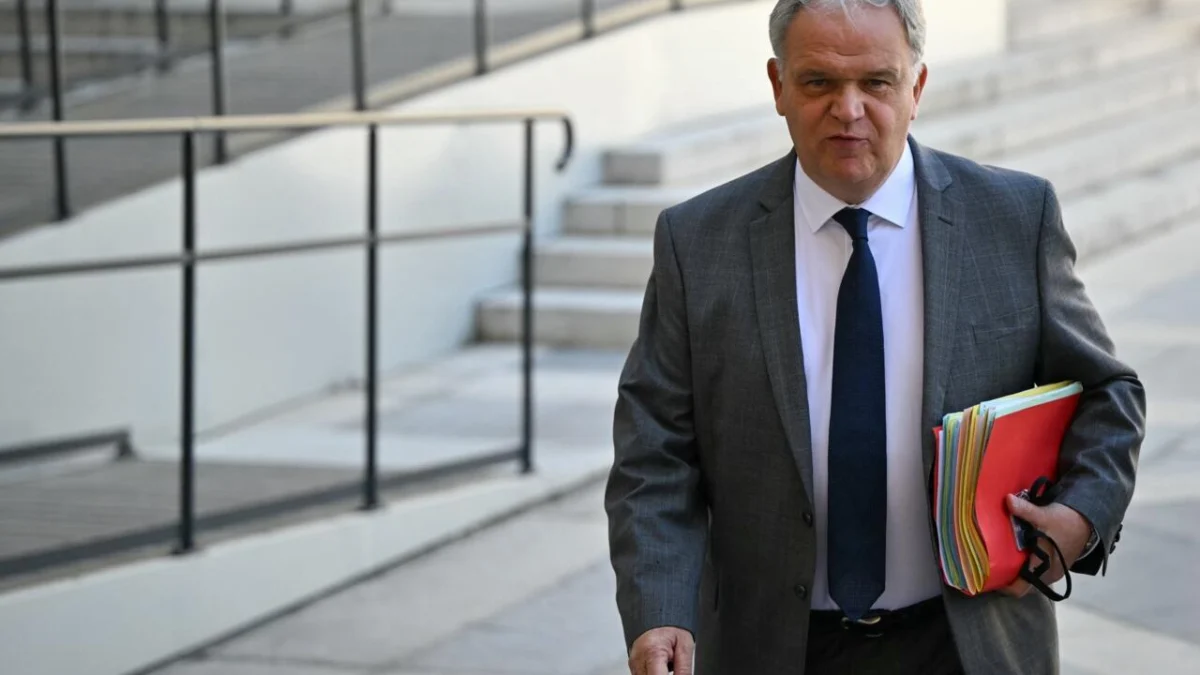
In a move that has sent shockwaves through the French civil society landscape, the French parliament has narrowly confirmed right-wing Senator François-Noël Buffet as the nation’s new Défenseur des droits (Defender of Rights). The appointment, which passed by a slim margin of 43 votes to 39, represents a pivot in the trajectory of an office traditionally tasked with acting as an independent bulwark against discrimination, state overreach, and the infringement of civil liberties.
For many, the transition from the outgoing ombudsman, Claire Hédon—a former journalist known for her staunch advocacy for the marginalized—to Buffet, a career conservative politician, marks more than a mere change in leadership. It signals a fundamental shift in the ideological character of an institution designed to protect the most vulnerable segments of French society.
The Appointment: A Narrow Confirmation
The confirmation of the 62-year-old lawyer on Tuesday followed a period of intense parliamentary debate. President Emmanuel Macron’s decision to nominate a politician with a well-documented history of opposing progressive social legislation has drawn sharp criticism from human rights groups, legal scholars, and even staff within the Defender’s own office.
The Défenseur des droits is a constitutional authority, independent of the government, tasked with ensuring that individuals’ rights are respected by public services and that victims of discrimination have a pathway to redress. By selecting an individual who has actively campaigned against the expansion of rights for LGBTQIA+ citizens and who has shown skepticism toward protections for undocumented migrants, critics argue the Élysée Palace has compromised the institutional integrity of the office.
A Chronology of Contention: The Buffet Record
To understand the depth of the public outcry, one must examine the legislative history of François-Noël Buffet. His career as a senator for the Rhône department has been defined by a consistent adherence to conservative values, often at odds with the evolving consensus on social rights in France.
- 2013: As the nation grappled with the historic Mariage pour tous (Marriage for All) legislation, Buffet was a vocal opponent, joining protests against the legalization of same-sex marriage.
- 2014: During local election campaigns, Buffet was among the politicians who signed a charter explicitly vowing to "preserve the father-mother-child family unit," a move that many activists viewed as a direct affront to non-traditional family structures.
- 2021: Buffet cast a decisive vote against legislation that would have expanded medically assisted reproduction (PMA) to single women and lesbian couples, a cornerstone of the progressive social agenda during the Macron years.
- 2024: During the landmark constitutional vote to enshrine abortion rights in France, Buffet chose to abstain, a decision that drew criticism from feminist organizations who viewed the move as a failure to protect fundamental reproductive autonomy.
- 2026: Throughout his recent tenure, Buffet has supported initiatives aimed at restricting state-funded medical care for undocumented migrants—a stance that medical professionals have condemned as an "ethical aberration."
The Internal and External Backlash
The nomination was, by all accounts, handled with a degree of political opacity. The confirmation was announced on July 7, a day when the French public was almost entirely preoccupied with a high-stakes court hearing regarding Marine Le Pen’s political future. This "burying" of the news did little to dampen the subsequent indignation.

Internal dissent within the Défenseur des droits has been palpable. In interviews with the investigative outlet Mediapart, employees expressed "dismay" and "shock" at the appointment. One staff member noted that it is difficult to imagine how the institution can effectively issue recommendations on equality when the head of that institution has spent years publicly opposing the very principles those recommendations are based upon.
Implications for the Rule of Law
The Défenseur des droits lacks formal legislative or judicial powers, yet its influence is immense. The ombudsman’s reports and legal opinions carry significant weight in the courtroom and serve as the primary moral authority in disputes between citizens and the state.
Nicolas Faget, spokesperson for the Association of Gay and Lesbian Parents and Future Parents (AGPL), did not mince words when describing the appointment as "both absurd and scary." Faget highlighted that the office has historically served as a critical shield for same-sex parents navigating obstacles in parental leave registration or civil documentation. With a leader who has fundamentally opposed the legal validity of these families, the "bulwark" now appears vulnerable.
"It is hard to think of a less suitable candidate to uphold our rights than one who doesn’t believe in them," Faget added. "We are looking at a potential systemic rollback of progress."
The "License to Kill" and Institutional Credibility
One of the most pressing concerns involves the "presumption of legitimate defense" for police officers, a controversial bill supported by Buffet’s political allies. The outgoing ombudsman, Claire Hédon, had labeled the bill "deeply problematic," arguing it could effectively function as a "license to kill" and weaken the accountability mechanisms surrounding police violence.
During his hearing before the National Assembly’s Legal Affairs Committee, Buffet was pressed on his views regarding this legislation. His response—which many lawmakers found evasive—was criticized as an attempt to perform a "political pivot" without offering a substantive commitment to opposing the bill. When accused of having a history of "racist and homophobic votes," Buffet claimed he had "evolved" on these issues, a defense that failed to convince his detractors.
The Political Calculus: Cronyism or Strategy?
Political analysts suggest the appointment is part of a broader "horse-trading" strategy as President Macron prepares for the end of his term. By placing loyalists in key administrative and oversight roles, the administration is accused of engaging in a form of institutional capture.

Critics point to a recurring pattern: the appointment of conservative figures to ministries overseeing health, gender equality, and anti-discrimination. This, they argue, creates a dangerous dissonance between the state’s public rhetoric on equality and the actual ideological orientation of its leadership.
"Whether it’s networking, cronyism, or political wheeling and dealing, it’s certainly not helping those who most need the Defender of Rights," remarked Faget.
A Future in Doubt: Looking Ahead
As François-Noël Buffet assumes his new role, the primary question is whether he will prioritize the institutional mandate of the office over his long-held political convictions. In his defense, Buffet pointed to his work as mayor of Oullins, where he improved accessibility for disabled citizens, and his efforts in the Senate to improve prison conditions. He maintains that he will provide "total independence" and has attempted to walk back his 2013 opposition to same-sex marriage, calling it "something stupid."
However, for the millions of French citizens who rely on the Défenseur des droits for protection against systemic bias, the appointment is a grim signal. The office is meant to be a non-partisan sanctuary where human rights are held above the fray of electoral politics. By appointing a figure whose career has been defined by the very "culture wars" the office is meant to mediate, the French government may have irrevocably altered the public’s trust in its most vital watchdog.
As the dust settles on this controversial confirmation, the eyes of the nation will be firmly fixed on the Défenseur des droits. The true measure of Buffet’s tenure will not be found in his words of conciliation, but in his actions when the rights of the most vulnerable are put to the test. For now, the sentiment among civil rights advocates remains one of profound apprehension.