In the evolving landscape of American higher education, few partnerships are as unlikely or as revealing as the one between Rachel Toor—a professor and sharp-eyed observer of the academic zeitgeist—and E. Gordon Gee, the legendary university president whose career has spanned nearly half a century. After nine months of collaborating remotely, the duo took their intellectual show on the road, debuting a live, unrehearsed dialogue at Hendrix College in Conway, Arkansas. What began as a logistical experiment in campus engagement quickly transformed into a profound masterclass on the existential pressures facing small, liberal arts institutions today.
Chronology of a Campus Visit: From Roundabouts to Revelations
The journey began with the visceral reality of travel, a recurring theme that served as a backdrop for the pair’s observations. Toor, who typically prefers the sanctuary of her home office, navigated the logistics of Arkansas, providing a humorous if harrowing introduction to local infrastructure. The trip served as an immediate icebreaker, grounding the high-level discussions of policy and governance in the relatable, often messy experience of modern travel.
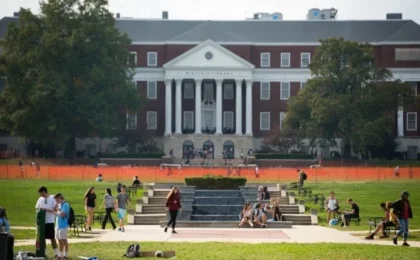
Upon arrival at Hendrix, the pair encountered a campus that defied the cynical tropes often leveled at modern colleges. For Gee, a veteran of large, complex university systems, the experience was a corrective. Over the course of a day, the duo engaged with the institution’s multifaceted ecosystem: students, faculty, staff, and the Board of Trustees. While Toor focused on the granular, human-centric details of campus life—the students operating golf carts, the softball coaches, the dining staff—Gee leaned into the structural, strategic imperatives of presidential leadership.
The climax of the visit was a candid, moderated dialogue before the Board of Trustees. It was here that the “Odd Couple” dynamic was on full display: Toor, leveraging her experience with a broad range of institutions, challenged the status quo, while Gee, channeling his decades of administrative experience, offered strategic insights that were periodically punctuated by Toor’s witty, Saturday Night Live-inspired pushback.
Supporting Data: The Stakes of Small-Scale Governance
The visit highlighted a stark divide in higher education: the difference between the “runway” afforded to large institutions and the “razor’s edge” lived by small colleges. Hendrix College, with roughly 1,000 students and 100 faculty members, represents a segment of the sector where the margin for error is effectively non-existent.
- The Bottom-Line Reality: At larger institutions, the modus operandi often favors prolonged planning cycles and distributed risk. At Hendrix, every student enrollment is a direct, measurable impact on the institution’s fiscal health.
- The Governance Model: The visit validated a model of "shared governance" that, in many institutions, is a point of contention. At Hendrix, faculty and administration appeared to operate with a shared sense of stewardship, a rarity in an era of polarized academic politics.
- The Leadership Inflection Point: As the institution navigates its future, the data suggests that board engagement is no longer optional. The “time and treasure” requirement for trustees has intensified; a fragmented strategy or a lack of unified messaging can, in the current economic climate, prove fatal.
Official Responses and Perspectives: The Presidential Lens
President Karen Petersen, who hosted the duo, acted as the pivot point for the visit. Her leadership, described by the pair as transparent and admired, stood in stark contrast to the often-opaque corporate-style management seen elsewhere.
For Gee, the visit was an exercise in unlearning his own assumptions. “I have always understood the power and poetry of the small institutions,” Gee noted, “but I have, much to my detriment, never fully comprehended their unique challenges.” He admitted that his previous observations—often honed in the halls of massive research universities—were occasionally inapplicable to the specific, high-stakes environment of a small liberal arts college.
Toor’s perspective offered the necessary counterweight. Her background as a creative writing professor and observer through The Sandbox newsletter allowed her to diagnose institutional health through the lens of human experience. She noted that while Gee brought the “Gee magic” to the boardroom, it was the informal, off-the-clock interactions that revealed the true pulse of the college.
Implications for Higher Education
The Hendrix experiment yields several critical takeaways for the broader higher education sector.
The Myth of the "One-Size-Fits-All" Strategy
The primary implication of the visit is that sector-specific strategies are essential. Techniques that might work for a land-grant university or a large private research institution can be disastrous for a college of 1,000 students. The realization that “what is good for the goose may not be good for the gander” underscores the need for leaders to tailor their approaches to the unique cultural and fiscal realities of their specific campuses.
The "Ted Lasso" Effect: Believe in the Mission
Gee’s adoption of a “BELIEVE” lapel pin—a nod to the popular television series Ted Lasso—was not merely a stylistic choice but a statement on the state of the industry. Higher education is currently beset by “cynical hysteria,” a climate that threatens to undermine the mission of the academy. The Hendrix visit suggests that institutional success is tied to a return to fundamental belief in the value of education. If leadership, faculty, and boards do not believe in the specific, transformative potential of their own institution, they cannot expect the public or potential students to do so either.
The Role of Radical Honesty
The partnership between Toor and Gee thrives on a compact of radical transparency. In an era where institutional communication is often sanitized by public relations departments, their willingness to openly disagree, correct one another, and admit to "being wrong" provides a roadmap for effective collaborative leadership.
Conclusion: Finding the Gold
The visit concluded with a reflection on the intersection of fiction and reality. The mention of the television series A Man on the Inside, and its fictionalized depiction of a college experience inspired by Hendrix alumna Mary Steenburgen, brought the conversation full circle.
The central question posed in that series—"Francis Wheeler came here in search of gold, but he found something much more important. What did Wheeler find?"—serves as a metaphor for the modern academic experience. While many institutions are focused on the "gold" of endowments, enrollment numbers, and rankings, the Hendrix visit proved that the true value of the institution lies in the commitment of its people, the integrity of its governance, and the ability to maintain a clear-eyed focus in the face of daunting, existential challenges.
As Toor and Gee continue their "rolling seminar" across the country, their journey from the roundabouts of Arkansas to the boardroom of Hendrix serves as a reminder that the best way to understand higher education is to step out from behind the computer, engage with the people on the ground, and be willing to be surprised by the resilience of the academic mission. For now, the takeaway is simple: adulting is hard, but leading a small college is harder—and it requires a collective, and deeply human, belief in the work at hand.