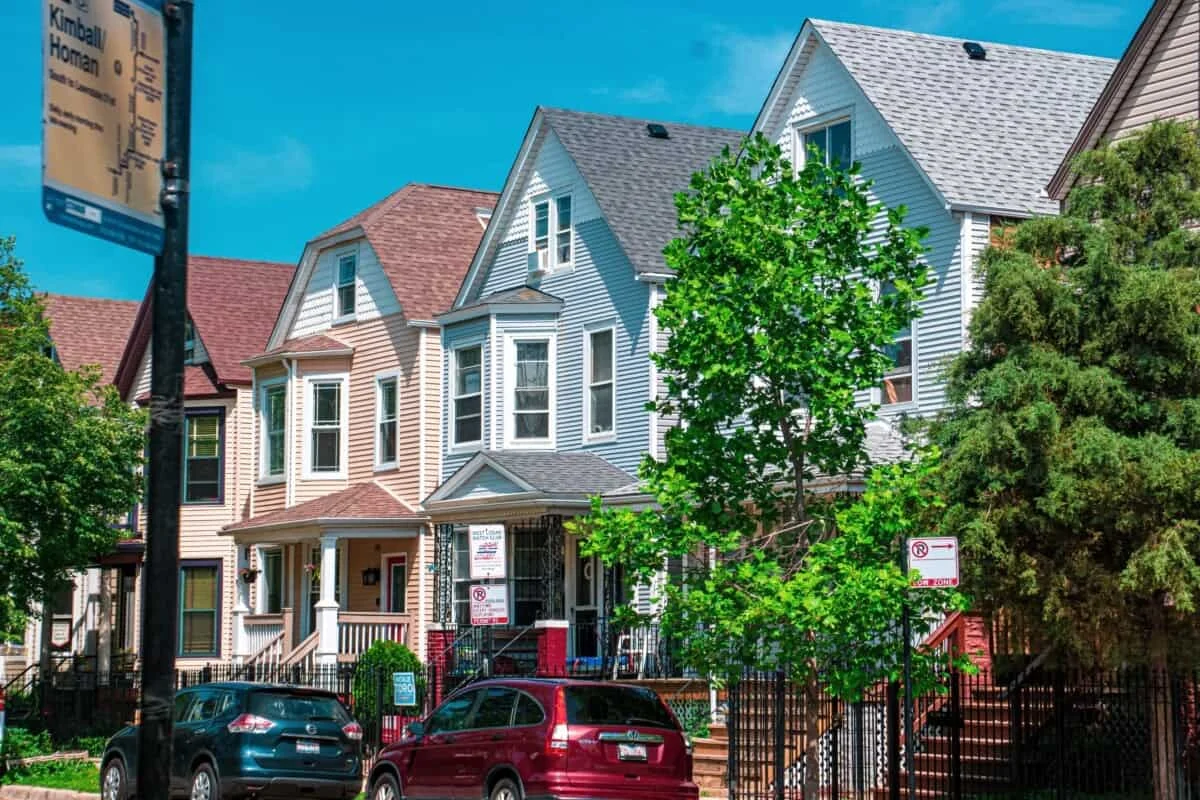
The spring housing market in DuPage County, Illinois, has defied the broader national trend, establishing itself as a powerhouse of appreciation and intense buyer competition. While the United States housing market as a whole has begun to show signs of a modest, gradual cooling—characterized by decelerating price growth and a slight uptick in the time homes spend on the market—DuPage County has moved in the opposite direction.
Data from May 2026 reveals a landscape where demand has surged, prices have climbed at a rate nearly four times the national average, and inventory, though growing, remains insufficient to satisfy the appetites of eager buyers. For those navigating this terrain, the message is clear: success requires speed, preparation, and a keen understanding of a market that continues to lean heavily in favor of sellers.
Main Facts: The State of the DuPage Market
The headline figure for DuPage County in May 2026 is the median sale price, which reached $456,880. This represents a robust 7.5% year-over-year increase. When contextualized against the national median sale price of $398,771—which saw a more conservative 2.0% annual growth—it becomes evident that DuPage is experiencing a unique period of economic velocity.
The intensity of this market is best captured by the sale-to-list ratio, which sits at 1.014, indicating that, on average, buyers are paying above the initial asking price to secure a property. Further compounding the competitiveness, more than half (52.8%) of all homes sold in the county went for more than the seller’s asking price. With only 9.3% of active listings experiencing a price reduction—compared to a national average of roughly 20%—the data underscores a reality where properties are either priced correctly and snapped up quickly, or they remain the exception to the rule.
A Chronology of the Spring Surge
The trajectory of the DuPage market throughout the spring of 2026 reflects a steady acceleration in buyer urgency. Following the typical winter lull, the early months of the year began with a flurry of activity as inventory began to replenish. By March, it became apparent that the "spring bounce" would be significantly more pronounced than in previous years.
Throughout April and into May, the inventory levels—which rose 6% year-over-year to 3,686 active listings—offered a glimmer of hope for prospective buyers. However, this influx of new supply was met with a wall of demand. Pending sales, a leading indicator of future closed transactions, climbed by 9.7% to reach 1,312. This recovery to near pre-pandemic spring levels signals that the psychological barrier keeping some buyers on the sidelines has begun to erode, despite ongoing concerns regarding national economic volatility.
The swiftness of these transactions has been a defining feature of the season. The typical home in DuPage spent just 42 days on the market. More tellingly, over 62% of listings were under contract within the first two weeks. This rapid absorption rate has kept the market in a state of perpetual "tightness," ensuring that any new supply hitting the market is promptly absorbed, thereby preventing the inventory buildup that might otherwise lead to a cooling of prices.
Supporting Data: Dissecting the Tiers
A granular look at the market by price tier reveals that while the entire spectrum of the DuPage housing market is performing well, the luxury segment is currently the engine of appreciation.
Luxury Dominance
Luxury homes, defined as those in the top 5% of the market with a median price of $1,565,539, saw a 10% year-over-year increase in value. Perhaps more striking is the speed at which these properties are moving: the typical luxury listing sold in 45 days, a staggering 11 days faster than this time last year. Nearly 46% of these high-end transactions closed above the asking price, a testament to the depth of wealth and the intensity of competition at the top end of the market.
The Starter Home Squeeze
In contrast, the "starter home" segment—those priced around $240,429—presents a different set of challenges. While prices in this tier rose by 9.6%, the buyer experience has been slightly less frantic than in the luxury segment. Only 37.3% of these homes sold above asking, down significantly from previous cycles. This suggests that while first-time buyers are still facing steep price tags, the absolute limit of what these buyers can afford may be acting as a ceiling, tempering the bidding wars often seen in more affluent segments.
Regional Variances
The disparity between towns within the county is vast. Hinsdale, for example, saw a massive 44.9% year-over-year price jump, though this is often reflective of low transaction volume and a shift in the mix of high-end homes sold. Elmhurst and Glen Ellyn also experienced double-digit growth, at 23.7% and 16.8% respectively. Conversely, cities like Naperville and Lombard saw modest dips or flat performance in median prices, suggesting that the "DuPage market" is not a monolith, but a collection of distinct sub-markets, each reacting to localized supply constraints.
Official Perspectives: The View from the Top
Chen Zhao, Redfin’s head of economics research, provides a necessary macro-perspective to these hyper-local trends. While DuPage County is currently an outlier in terms of its aggressive growth, it exists within a larger, more cautious national framework.
"Many cities are undergoing a years-long reset from the pandemic, with price growth easing and inventory climbing—helping affordability improve as wages rise," Zhao noted. However, he cautioned that the national picture is complicated by external factors. "Pending home sales have increased over the last three months, which is an early sign that buyers and sellers are beginning to re-enter the market. But economic volatility tied to the Iran War is keeping everyone on edge."
This tension between the desire to re-enter the market and the hesitation caused by global instability is the defining narrative of the 2026 housing cycle. In DuPage, the local demand appears to be strong enough to override these national anxieties, leading to the accelerated pace observed in the latest data.
Implications for Buyers and Sellers
The implications of this data for market participants are profound.
For the Prospective Buyer
If you are planning to enter the DuPage market, the window for hesitation is narrow. The data suggests that "waiting for a correction" is an ineffective strategy in a market where inventory is absorbed within days. Success in this environment requires:
- Absolute Financial Readiness: Being pre-approved is no longer a "nice-to-have"; it is the baseline requirement.
- Realistic Budgeting: Buyers must factor in the likelihood of bidding above the list price.
- Agility: With over 60% of homes selling within two weeks, buyers must be prepared to view properties and submit offers almost immediately upon listing.
For the Motivated Seller
While the market is undeniably in the seller’s favor, there is a clear warning against complacency. The data shows that even in a high-demand environment, homes that are overpriced face the risk of stagnating.
- Precision Pricing: Only 9% of listings required price cuts. Sellers who hit the market at or slightly below current market value are seeing the best results, as this strategy fuels competitive bidding.
- Avoid Overreaching: Overpricing in a low-inventory environment can backfire by alienating the most qualified, ready-to-buy prospects who have already researched the market and know the true value of the home.
Conclusion
DuPage County’s housing market in the spring of 2026 serves as a case study in supply-and-demand dynamics. With prices rising at 7.5% year-over-year and inventory struggling to keep pace with a 9.7% surge in pending sales, the county remains a high-pressure environment for those seeking to purchase. As the summer months approach, the central question remains whether this pace can be sustained or if the cumulative effect of high prices and global economic uncertainty will finally begin to dampen the fervor. For now, however, DuPage remains a quintessential seller’s market, demanding discipline from buyers and strategic foresight from sellers.