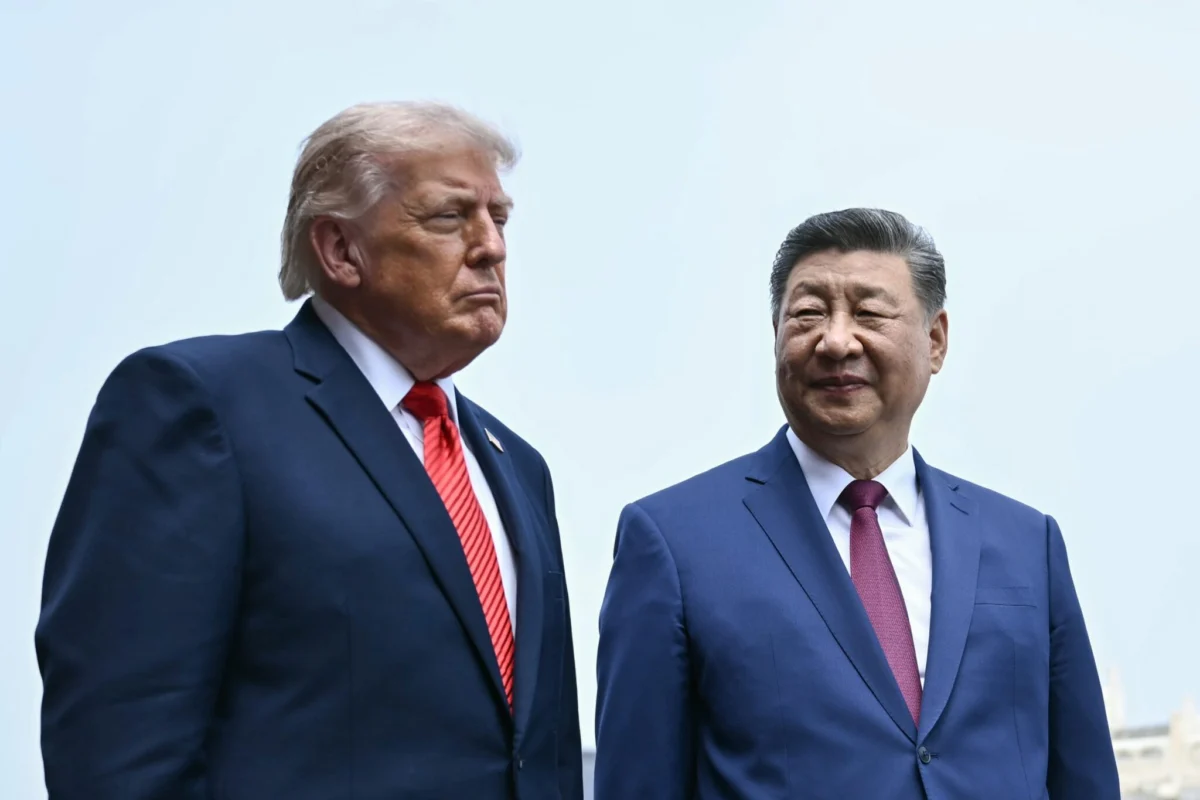
As the global race for artificial intelligence supremacy accelerates, a new geopolitical map is being drawn. At its poles sit the world’s two leading AI powers: the United States, championing a security-focused, high-end ecosystem dubbed "Pax Silica," and China, which is spearheading the "World AI Cooperation Organization" (WACO) with an emphasis on affordability and open-source accessibility.
For the rest of the world, this rivalry presents both a lucrative opportunity and a looming existential dilemma. While many nations are currently "hedging"—attempting to harvest the technological fruits of both blocs—experts warn that the window for such neutrality is rapidly closing. As AI becomes deeply integrated into national security and economic infrastructure, countries may soon be forced to make a binary choice between American cutting-edge hardware and Chinese-led digital ecosystems.
Main Facts: The Emergence of Two Competing AI Orders
The competition for AI dominance is no longer just about who has the fastest algorithms; it is about who controls the entire stack, from the raw minerals in the ground to the massive data centers and the standards that govern them.
Pax Silica: The US-Led Exclusive Club
The United States has pivoted toward a strategy of "trusted partnerships." Under the banner of Pax Silica—a term gaining traction in diplomatic circles—Washington is leveraging its control over the world’s most advanced semiconductors (primarily through Nvidia) and frontier models (OpenAI, Anthropic, Google). However, this access comes with strings attached. The U.S. State Department has signaled that participation in this bloc requires strict alignment with American security standards, specifically aimed at preventing the "distillation" or leakage of high-end capabilities to China.
World AI Cooperation Organization: China’s Inclusive Alternative
Conversely, Beijing is positioning itself as the leader of a more "inclusive" and "multipolar" AI world. By launching the World AI Cooperation Organization, China is courting the Global South and middle-income nations with the promise of affordable technology, infrastructure loans, and open-source models that allow for greater domestic customization. This strategy leverages China’s strength in manufacturing and its willingness to fund AI ecosystems in countries that the U.S. might overlook or deem "untrusted."
Chronology: A Summer of Dual-Track Diplomacy
The tension between these two blocs is best illustrated by the diplomatic activities of "swing states" like Kazakhstan, which have spent the last year performing a delicate balancing act.
- June 2024: Kazakhstan’s Minister of Digital Development, Zhaslan Madiyev, traveled to Washington D.C. His mission was to join a U.S.-led working group focused on strengthening AI supply chains. The move was seen as an effort to secure Kazakhstan’s place within the American high-tech manufacturing orbit.
- July 2024 (Early): Barely three weeks after his Washington visit, Madiyev was in Shanghai. There, he signed Kazakhstan on as a founding member of China’s World AI Cooperation Organization.
- July 2024 (Mid): Chinese leader Xi Jinping met with Kazakh President Kassym-Jomart Tokayev in Astana. The leaders discussed expanding cooperation under the Belt and Road Initiative, with a specific focus on digital infrastructure and AI development.
- September 2024: In Saudi Arabia, the AI startup Humain unveiled a platform built on an open-source model developed by a Chinese firm. Simultaneously, the Saudi government continued to finalize a massive deal with Nvidia to expand its high-end computing power, demonstrating that even the wealthiest Gulf states are playing both sides.
- Late 2024: The U.S. State Department sharpened its rhetoric, explicitly stating that countries cannot be "trusted partners" in Pax Silica while participating in initiatives that advance "competing visions" for super-intelligence.
Supporting Data: The Economic Stakes of AI Neutrality
The motivation for countries to avoid picking a side is rooted in significant economic incentives.
The Kazakhstan Case Study
Kazakhstan serves as the primary laboratory for this "hedging" strategy. The country possesses two assets that are increasingly valuable in the AI era: rich deposits of critical minerals and cheap electricity.
- The U.S. Investment: The Kazakh government recently signed an investment deal worth up to $10 billion involving Nvidia. The goal is to build a "data center valley," transforming the Central Asian nation into a regional hub for high-end computation.
- The Chinese Investment: Meanwhile, Chinese foreign direct investment (FDI) in Kazakhstan reached a record $2.8 billion in 2025. This funding is largely directed toward infrastructure that enables AI, such as 5G networks and regional connectivity.
China’s Global Reach
Data from the AidData research lab at William & Mary highlights the scale of China’s "AI diplomacy." Beijing has provided official sector grants and loans for AI-related projects to at least 77 low- and middle-income countries. Key recipients include:
- Africa: Nigeria, Zambia, Ghana, Senegal, Cameroon, and Kenya.
- South Asia: Bangladesh.
This financial outreach is yielding results in public opinion. According to the Pew Research Center, people in middle-income countries are increasingly positive and trusting of China regarding AI regulation and technology compared to their Western counterparts.
Official Responses: Conflicting Visions of Governance
The rhetoric from Washington and Beijing reveals a fundamental disagreement over the nature of technological power.
The United States Position:
The Trump administration has reinforced the view that AI is a "winner-take-all" domain. U.S. officials have accused China of "large-scale distillation"—essentially stealing the "intelligence" from American frontier models to boost their own. "Countries can’t be trusted partners in Pax Silica while substantively engaging in initiatives that advance a competing vision for super intelligence," the State Department noted, emphasizing that security and trust are the prerequisites for access to top-tier silicon.
The Chinese Position:
Beijing rejects the "monopoly" of American tech. In a statement from the Chinese embassy in Washington, officials argued: "As both major countries in AI, China and the United States should leverage respective strengths in AI rather than guarding against each other. AI should not be owned by major countries." China frames its World AI Cooperation Organization as a platform for "sovereignty," allowing nations to develop their own AI without being beholden to American export controls.
The "Swing State" Response:
Mari Pangestu, vice chair of the Indonesian National Economic Council, captured the sentiment of many non-aligned nations: "We should be able to be part of both… and choose the best system." Similarly, Dana Masalimova, a former Kazakh diplomat and scholar at Harvard University, noted, "Everyone is hedging. We don’t want this binary choice."
Implications: The Narrowing Path to AI Sovereignty
The current era of "having it both ways" may be a temporary phenomenon. The implications of this split are profound for global stability and technological development.
1. The Risk of a Binary Tech Divide
As the U.S. tightens export controls on chips and software, the interoperability between Pax Silica and the Chinese bloc may diminish. This could lead to a "splinternet" for AI, where models, data formats, and hardware in one bloc are incompatible with those in the other. For countries like the U.K. and Germany, which lack their own frontier models, this creates a state of dependency. Their access to the future of AI depends entirely on the "whims of policymakers in Washington and Beijing."
2. The Quest for "AI Sovereignty"
Aalok Mehta of the Center for Strategic and International Studies (CSIS) argues that "AI sovereignty" is becoming the primary goal for every nation. However, the barrier to entry is astronomical. Building a frontier model requires billions of dollars in hardware and specialized talent that only the U.S. and China currently possess at scale. This leaves most countries in a position where they must choose which "sovereignty" they prefer: the security-gated high performance of the U.S. or the open-source, infrastructure-heavy support of China.
3. The Emergence of Third-Way Contenders
Some nations are attempting to build a "third way." France, for instance, is backing Mistral AI, whose latest models are beginning to outperform Chinese counterparts and rival American ones. Japan, while strategically aligned with the U.S., has indicated it will not reject affordable Chinese models for "lower-risk applications," such as administrative automation or non-sensitive commercial use.
4. The Weaponization of Resources
Nations with critical minerals (like Indonesia’s nickel) or surplus energy (like Kazakhstan) are finding that their physical resources give them temporary leverage in the AI cold war. However, as the superpowers build out their own domestic supply chains, this leverage may evaporate, leaving these "swing states" vulnerable to pressure from whichever bloc they have become more integrated with.
In conclusion, while the world’s middle powers are currently enjoying a "bidding war" between the U.S. and China, the underlying infrastructure of AI—data centers, chips, and standards—is becoming increasingly polarized. The era of the "unaligned" technostate may soon give way to a world where the choice of an AI model is as significant a geopolitical alignment as a military treaty.