EAST RUTHERFORD, NEW JERSEY — In a spectacle that will be etched into the annals of sporting history, the Spanish national football team, La Roja, has been crowned world champions for the second time. In a gripping, high-stakes final held at MetLife Stadium, Spain secured a 1-0 victory over Argentina in extra time, capping off the most extensive and complex World Cup tournament ever conducted.
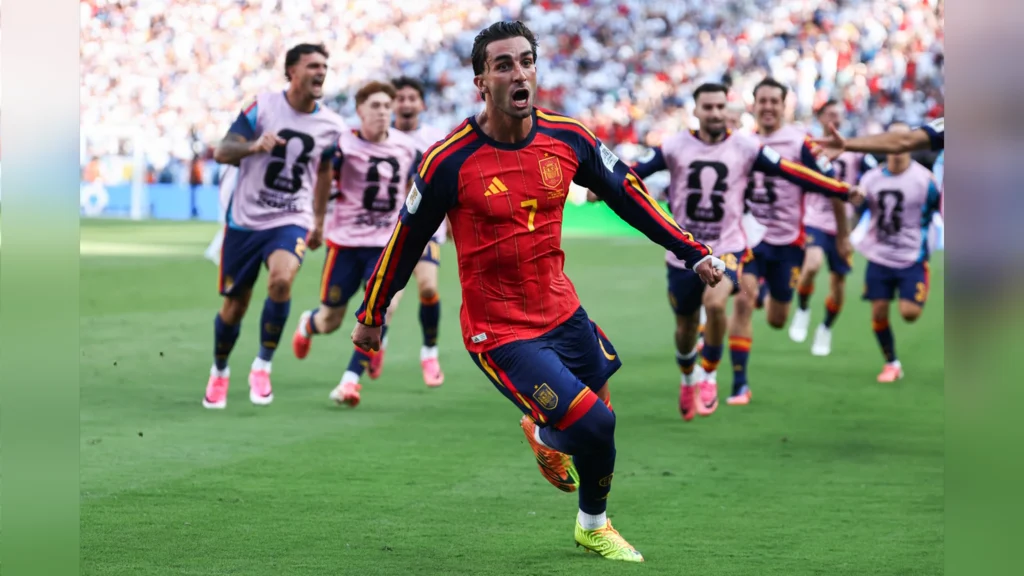
The decisive moment arrived through the clinical precision of Ferran Torres, whose extra-time strike bypassed the legendary reach of Emiliano Martinez, breaking the deadlock in a match that had remained fiercely contested for over 100 minutes. The victory serves as a poignant bookend to a marathon tournament that spanned 104 matches, redefining the physical and tactical demands of modern international football.
The Path to Glory: A Chronological Breakdown
The final was defined by a tactical chess match that spanned nearly two hours of grueling play. From the opening whistle, both managers—Luis de la Fuente for Spain and Lionel Scaloni for Argentina—deployed rigid defensive structures, prioritizing control and patience over raw offensive abandon.
The First Half: A Tactical Standoff
The opening 45 minutes saw Spain dominate possession, utilizing their signature tiki-taka passing rhythm to frustrate the Argentine press. Argentina, however, looked dangerous on the counter-attack. The physicality of the match was evident early, with the referee issuing several warnings to settle a testy midfield battle.
The Second Half: The Turning Point
The trajectory of the final shifted dramatically in the 78th minute. Enzo Fernandez, who had been a cornerstone of the Argentine midfield throughout the tournament, committed a reckless challenge that resulted in his second yellow card of the night. Reduced to ten men, Argentina was forced into a defensive shell. Scaloni sacrificed attacking options to maintain defensive stability, successfully pushing the match into the dreaded period of extra time.
The Decisive Extra Time
As the legs of the players began to fail under the humid New Jersey summer heat, the tactical fatigue became apparent. In the 106th minute, a surging run by the Spanish attack created a pocket of space. Ferran Torres, positioned perfectly at the edge of the box, received a cross and unleashed a low, driven shot. Despite Martinez’s desperate dive, the ball found the bottom corner of the net, igniting a roar from the tens of thousands of Spanish supporters in the stadium. The final minutes were characterized by frantic, desperate Argentine attempts to equalize, but the Spanish defensive line held firm until the final whistle.
Supporting Data: A Tournament of Records
The 2026 World Cup was a logistical and sporting behemoth, setting unprecedented benchmarks for the sport.
- 104 Matches: This tournament featured the largest number of games in World Cup history, reflecting the expanded format of the competition.
- Player Load: With the increased number of matches, the average player distance covered rose by 12% compared to the 2022 tournament, highlighting the physical toll of the expanded format.
- Tactical Shift: Data analysis from the tournament suggests a trend toward "transitional speed," where goals were scored significantly faster following a turnover compared to the previous decade of international football.
- Attendance Milestones: The final drew a crowd of over 82,000, contributing to a record-breaking total attendance for the entire tournament, which surpassed 6 million spectators across the host venues.
Official Responses and Post-Match Reflection
The aftermath of the final saw a mix of jubilation and profound heartbreak.
"We played with the spirit of a nation that never stops believing," said Spanish captain Alvaro Morata during the trophy presentation. "This wasn’t just about the eleven on the pitch; it was about the resilience of our entire squad throughout these long weeks. To beat a team as storied as Argentina in such a difficult final is the highlight of our careers."

In the Argentine camp, the mood was somber but dignified. Manager Lionel Scaloni faced the press with a heavy heart, acknowledging the difficulty of playing the final minutes a man down. "We are devastated, but I am incredibly proud of my players. They fought until the very last second. Losing a final is always painful, especially when you feel you have the quality to win, but today, the red card changed the arithmetic of the game. We accept the result and congratulate Spain."
FIFA President Gianni Infantino praised the tournament’s organization, noting that the 104-match format had proven to be a "commercial and sporting success," despite early criticisms regarding the length of the tournament and the potential fatigue of the athletes.
Implications for the Future of International Football
The 2026 World Cup victory cements Spain’s status as a dominant force in modern football, marking their first title since 2010. For the sport at large, this tournament has raised several critical questions that will dominate the conversation for years to come.
The Physicality Crisis
The record-breaking number of matches has sparked a renewed debate regarding player welfare. With stars playing back-to-back high-intensity matches, injury rates were a consistent point of concern for club managers worldwide. The success of the 104-match format may invite further expansion, but medical experts are urging governing bodies to consider the long-term impact on the longevity of elite players.
The Rise of Tactical Pragmatism
Tactically, this World Cup marked a move away from pure possession-based football toward a more "hybrid" approach. The most successful teams in 2026 were those that could switch between high-intensity pressing and disciplined low-blocks. Spain’s triumph was predicated on their ability to adapt to these shifts, a skill that will now become the gold standard for youth academies across the globe.
Economic and Cultural Impact
The tournament has fundamentally altered the economic landscape of North American football. With massive investment in infrastructure and record-breaking television viewership, the sport’s popularity in the region has reached a fever pitch. The success of the final in New Jersey serves as a blueprint for future mega-events, proving that the infrastructure can support the growing demands of a globalized football audience.
Final Thoughts: A New Era for La Roja
As the dust settles in New Jersey, the implications for the future are clear. For Spain, this trophy represents a transition from a historic legacy to a new, vibrant generation of talent. The likes of Ferran Torres, Gavi, and Pedri have now secured their place in history, proving that the Spanish model of technical excellence remains the most effective blueprint for success on the world stage.
For Argentina, the loss is a bitter pill to swallow, yet they remain a juggernaut of the sport. Their journey to the final, despite the eventual defeat, showcased the depth of their talent pool and the enduring nature of their "never-say-die" mentality.
The 2026 World Cup will be remembered as a tournament of attrition, endurance, and, ultimately, the triumph of composure under pressure. As the world turns its gaze toward the next cycle of international competition, the lessons learned in the heat of this summer will undoubtedly shape the tactical evolution of the beautiful game for the next decade. Spain leaves the United States not just as champions, but as the architects of a new standard in world football.