For generations, the narrative of avian evolution has been painted with a singular, linear brushstroke: a story of relentless progress toward the skies. In this classic model, the transition from terrestrial dinosaur to master of the air was viewed as a steady climb toward greater aerodynamic efficiency. However, a remarkable new discovery from the fossil-rich strata of southeastern China is shattering this orthodoxy.
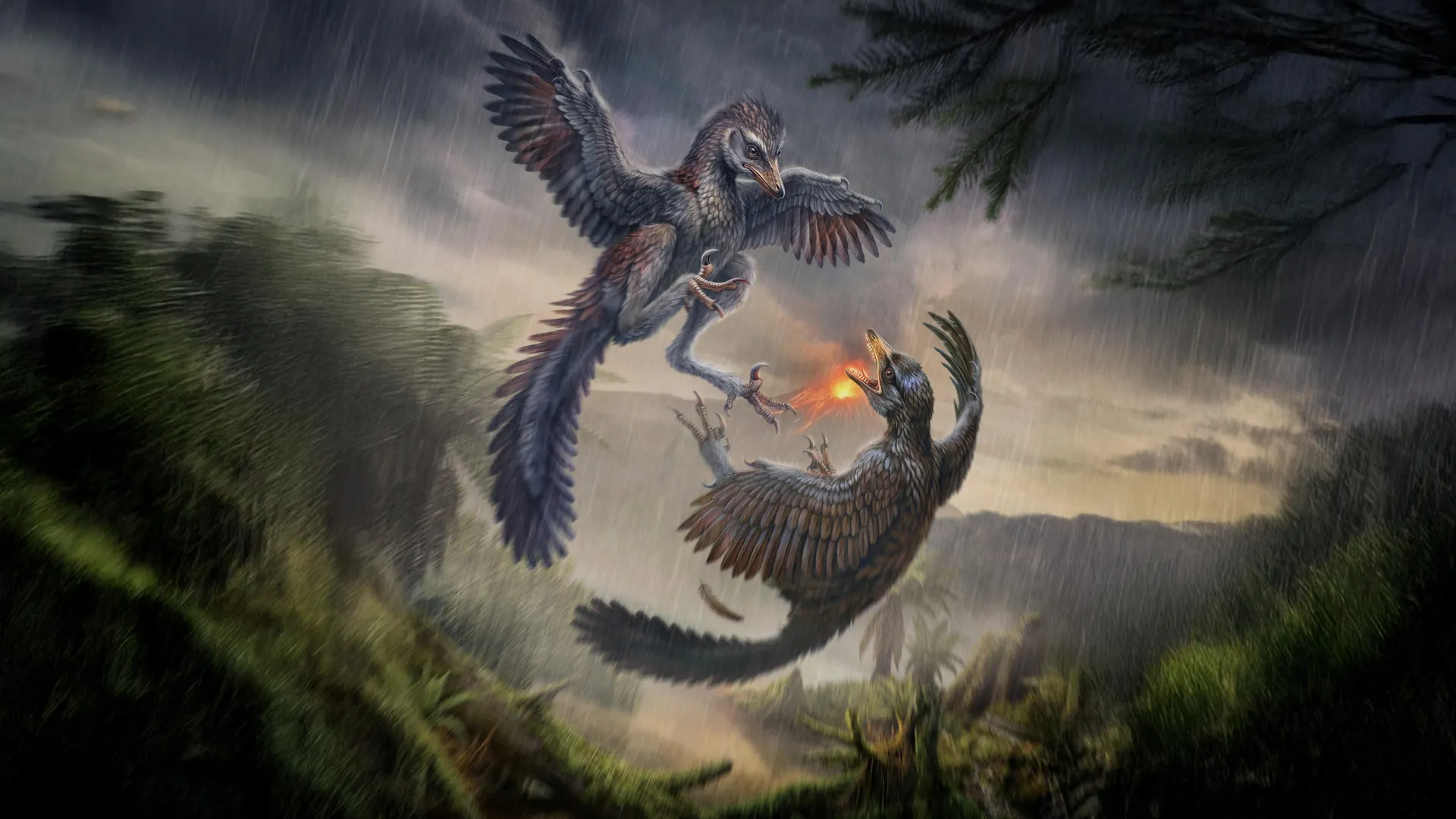
The unveiling of Yuezhuornis yangyuanensis, a 150-million-year-old avian creature, suggests that the dawn of birds was not a uniform ascent into the clouds, but a chaotic, experimental laboratory of biology. This crow-sized inhabitant of the Late Jurassic period appears to have walked away from the sky, marking the earliest known instance of a bird lineage abandoning flight in favor of a terrestrial existence.
The Discovery: A Window into the Zhenghe Fauna
The fossil was unearthed within the Zhenghe Fauna of Fujian Province, a site that is rapidly gaining international recognition as a treasure trove of prehistoric life. A collaborative team of researchers from the Institute of Vertebrate Paleontology and Paleoanthropology (IVPP) of the Chinese Academy of Sciences (CAS) and the Fujian Institute of Geological Sciences spent painstaking months excavating the site, eventually revealing the near-perfect remains of Yuezhuornis.
Dated to approximately 150–148 million years ago, Yuezhuornis sits at a critical juncture in the history of life. During the Late Jurassic, the lineage leading to modern birds was still in its infancy, often overshadowed by the larger, more dominant dinosaurs of the era. This new specimen, however, forces a reevaluation of the ecological diversity present during this formative epoch.
Anatomical Anomalies: A Chimera of Evolution
What makes Yuezhuornis a scientific sensation is its jarring, almost contradictory anatomy. At first glance, the specimen presents as a bird, possessing the delicate pelvic and hindlimb structures that characterize the early Avialae group. Yet, closer inspection reveals a biological "mash-up" that links it inextricably to the ferocious predators of the Mesozoic era.
The Teeth of a Predator
The creature’s jaws are lined with closely spaced, serrated teeth—a feature largely absent in the birds that followed. These dentitions bear a striking resemblance to those of deinonychosaurs, the agile, meat-eating dinosaurs that included famous relatives like Velociraptor. In the evolutionary timeline, these teeth represent a holdover from a predatory ancestry that the earliest birds had not yet shed.
The Sickle Claw
Perhaps the most diagnostic feature of Yuezhuornis is its second toe. The fossil displays a digit capable of an extreme backward bend, tipped with a distinct, curved, sickle-shaped claw. This specialized morphology is a hallmark of dromaeosaurids and troodontids—predatory dinosaurs that utilized such claws to subdue prey. Seeing this feature on a member of the Avialae group serves as a powerful reminder that the distinction between "bird" and "dinosaur" was, 150 million years ago, far blurrier than our modern categories suggest.
Chronology and Phylogenetic Positioning
To contextualize the place of Yuezhuornis in the grand tree of life, the research team employed rigorous analytical methods. By utilizing both maximum parsimony—which seeks the simplest explanation for evolutionary changes—and Bayesian tip-dating, which incorporates statistical estimates of timing and ancestral lineage, the team reconstructed the evolutionary history of the species.
Both analytical models yielded consistent, robust results. Yuezhuornis has been firmly placed within the Avialae, the clade that encompasses all modern birds and their closest extinct relatives. Specifically, it sits "crownward" of the famous Archaeopteryx, positioning it as a sister taxon to Zhengheornis.
This placement is of profound importance. Archaeopteryx, often hailed as the "first bird," lived during the same period. By identifying Yuezhuornis as a distinct, early branch of this tree rather than an evolutionary dead-end or a mere dinosaur misclassified as a bird, scientists have identified a period of rapid, divergent experimentation.
Scientific Perspectives: The Complexity of Early Flight
The lead researchers behind the study, published in the journal Nature, have emphasized that this finding serves as a corrective to a simplified historical narrative.
"When we examined Yuezhuornis, we were struck by its extraordinary mix of features," noted Dr. Min Wang, the study’s corresponding author. "It possesses bird-like pelvic and hindlimb structures yet retains the specialized predatory foot and teeth of a small meat-eating dinosaur. It shows us that early bird evolution was far more complicated than we previously realized."
Dr. Zhonghe Zhou, a co-author of the paper, elaborated on the implications of the phylogenetic placement. "The results consistently placed Yuezhuornis firmly within Avialae, just crownward of Archaeopteryx and as a sister taxon to Zhengheornis. This placement forces us to acknowledge that the ‘bird’ body plan was not a singular goal, but a flexible toolkit that early species were using to colonize a variety of niches."
Implications: The Decision to Stay Grounded
Perhaps the most significant takeaway from the study is the evidence regarding the creature’s locomotion. By analyzing the skeletal proportions of the limbs and comparing them against a vast database of both prehistoric dinosaurs and modern avian species, the team concluded that Yuezhuornis was built for the ground, not the air.
Its limb ratios—the length of the femur, tibia, and metatarsals—closely mirror those of modern ground-dwelling birds. The lack of aerodynamic features typically required for sustained flight suggests that Yuezhuornis had evolved into a terrestrial runner.
This is a paradigm shift. If a bird-like creature was already evolving to be flightless just millions of years after the divergence of the Avialae, it suggests that the "demands of flight" were not the only evolutionary pressure driving the development of early birds. Instead, it appears that these early creatures were exploring a wide range of ecological roles, including those that favored terrestrial agility over the energy-intensive and risky lifestyle of aerial navigation.
Rewriting the Evolutionary Roadmap
The story of Yuezhuornis suggests that the history of birds is defined by "evolutionary experimentation." The traditional view, which suggests a gradual improvement of wings and feather structures leading toward flight, fails to account for the diversity found in the Zhenghe Fauna.
Instead of a straight line, the trajectory of bird evolution appears to have been a branching, multidirectional process. Some lineages undoubtedly leaned into the skies, eventually leading to the masters of the air we see today. But others, like Yuezhuornis, found success by returning to the earth, specializing as terrestrial predators with a unique blend of avian and dinosaurian traits.
Conclusion: Looking Forward from the Fossil Record
The discovery of Yuezhuornis is more than just a new entry in the paleontology textbooks; it is a catalyst for a new era of research. As scientists continue to explore the Zhenghe Fauna, it is becoming increasingly clear that the Jurassic period was far more vibrant and diverse than previously captured by the fossil record.
Every new fossil discovered in this region of China serves to peel back a layer of mystery surrounding the transition from dinosaur to bird. By challenging our assumptions about flight and showing us that early birds were already diversifying into ground-based niches, Yuezhuornis reminds us that evolution does not move toward a specific destination. It is a messy, beautiful, and endlessly creative process, capable of turning the sky-bound into the grounded, and the dinosaur into the bird, in the blink of a geological eye.
As the scientific community continues to analyze the implications of this remarkable find, one thing is certain: our understanding of the origins of birds has been permanently altered, and the true story of how they took flight—or decided not to—is only just beginning to unfold.