Main Facts: The Resilience of an Icon
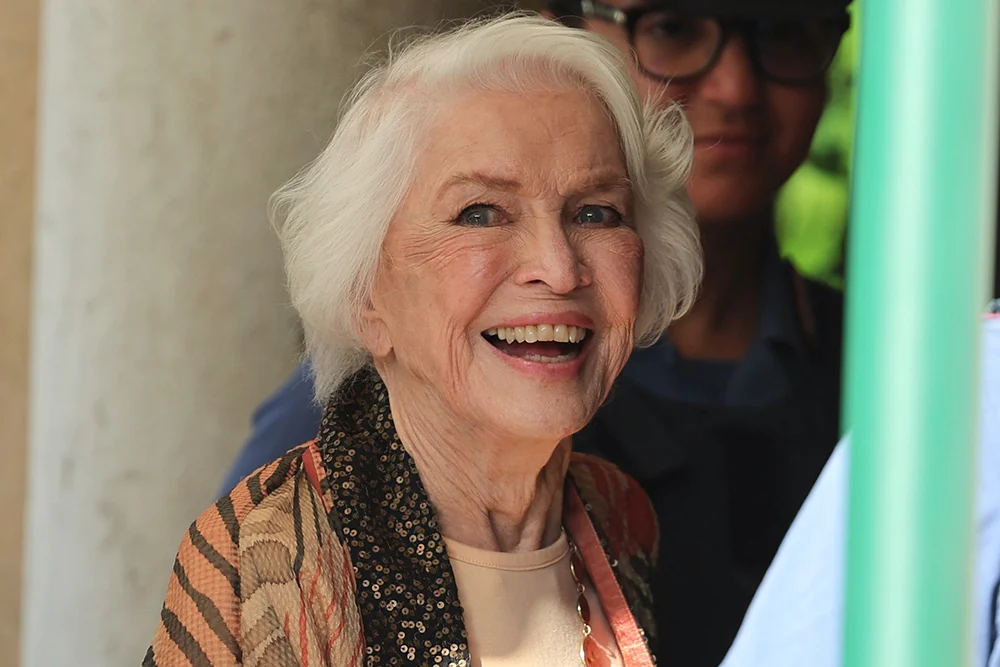
At 93 years old, Ellen Burstyn—an EGOT-adjacent powerhouse whose shelf of accolades includes an Academy Award, a Tony, and multiple Emmys—is doing something that would be considered a professional anomaly in almost any other industry: she is headlining a major feature film at one of the world’s most prestigious festivals.
Burstyn’s latest project, the quirky, character-driven drama Place to Be, made its grand debut at the Venice Film Festival this week. Directed by Kornél Mundruczó, the film pairs the nonagenarian acting legend with filmmaker and actor Taika Waititi. The narrative follows a no-nonsense elderly woman who embarks on an unexpected odyssey from New York to Chicago, tasked with returning a lost racing pigeon to its rightful owner. While the premise sounds eccentric, the film serves as a poignant exploration of aging, unexpected companionship, and the dignity of the individual. For Burstyn, the role is more than just another credit; it is a testament to a career that has defied every conventional expectation of Hollywood longevity.
Chronology: From 40 to Eternity
Burstyn’s reflection on her career path provides a fascinating window into the evolution of the film industry. During a press conference at the Lido, the actress—who has graced the screen in iconic works such as Alice Doesn’t Live Here Anymore, Same Time, Next Year, and the critically acclaimed series Political Animals—spoke with refreshing candor about her early perceptions of age.
"When I was in my 30s and I thought about how long my career would last, I was sure I’d be finished by 40," Burstyn admitted. "I didn’t think it would go on much longer than that. The fact that I’m 93 and still working is a miracle of some kind that I’ve attracted into my life. I’m totally amazed, and at the same time, deeply grateful."
The trajectory of her career has spanned the golden age of New Hollywood through the current era of streaming and global festival prestige. Her recent appearance in Venice was a dual-threat; beyond promoting Place to Be, she was also present for the premiere of Maggie Gyllenhaal’s short film Flesh Impact, a Marilyn Monroe-inspired project. This culminated in her receiving the Golden Lion for Lifetime Achievement, a moment that saw the legendary actress overcome with emotion, visibly breaking down in tears as the audience erupted into a sustained standing ovation.
Supporting Data: Behind the Scenes of Place to Be
The production of Place to Be was not without its logistical hurdles, particularly concerning its avian co-stars. Director Kornél Mundruczó, who penned the role of Brooke specifically with Burstyn in mind, noted that he spent months revisiting her extensive filmography to capture the nuances of her craft. "It was very beautiful to create a love story for her," Mundruczó remarked, referring to the platonic, soulful connection between Burstyn’s character and the arrogant, divorced man played by Waititi.
The presence of the pigeons, however, proved to be the film’s most "memorable" challenge. Mundruczó, who views pigeons as the "losers of history" that have been unfairly maligned by urban society, aimed to restore their dignity. "At the beginning, they were so important as messenger birds during war, and they delivered a ton of love stories," he explained. "And then they became city rats. I found something very touching from these little birds."
Taika Waititi, while appreciative of the birds’ symbolic value, was less enamored with their biological reality. "They shit a lot. Every minute. And that’s a scientific fact," Waititi joked during the press conference. "Physiologically, there’s something not right with them."
The production team, led by producer Jomon Thomas, even held formal meetings to discuss the possibility of fitting the 30 pigeons used in the film with custom diapers. The idea was ultimately scrapped, not just for the absurdity of the task, but for the technical complications involved. "It was tricky to take them off with visual effects," Thomas noted. Waititi provided the final word on the matter: "Nobody wants to take off a pigeon’s diaper."
Official Responses and Cast Dynamics
The supporting cast of Place to Be has garnered significant attention, particularly the inclusion of Pamela Anderson, who plays the daughter of Burstyn’s character. This casting choice is emblematic of the "Anderson Renaissance," which has seen the former Baywatch star transition from pop-culture icon to a serious dramatic force. Following her 2022 Broadway debut in Chicago and critical acclaim for Gia Coppola’s The Last Showgirl, Anderson’s role in Place to Be—alongside upcoming appearances in The Naked Gun and Rosebush Pruning—has solidified her pivot.
Burstyn, who admitted to initial surprise regarding the casting, was quickly won over. "I met her and thought, ‘Oh, for sure, she could be my daughter.’ I felt immediately loving toward her," Burstyn said. "She’s a wonderful person."
The press conference itself was a demonstration of the care and respect afforded to the veteran star. Burstyn, who has been utilizing a walker following a recent fall, was gently assisted to her seat by Taika Waititi. The gesture served as a quiet acknowledgment of the physical realities of being a nonagenarian on the festival circuit, yet the energy Burstyn brought to the room remained sharp, witty, and undeniably present.
Implications: The Legacy of a Lifetime Achievement
The presentation of the Golden Lion for Lifetime Achievement at the Venice Film Festival serves as more than just a formal recognition of past work; it highlights the changing landscape of how we view elderly performers in cinema.
"You can’t imagine how meaningful this is to me," Burstyn said during her acceptance tribute on Monday. "It’s one thing to win an Oscar, a Tony or an Emmy—all of which I’ve won. But this… it’s a lot."
The implications of Burstyn’s continued activity are profound. In an industry that has historically been criticized for "aging out" actresses once they pass a certain threshold, Burstyn’s late-stage career serves as a blueprint for longevity. By continuing to take on complex, leading roles that require emotional depth and physical stamina, she is dismantling the systemic biases that equate age with obsolescence.
Moreover, the success of projects like Place to Be suggests an audience hunger for stories that bridge the gap between generations. Whether it is the platonic love story between a 93-year-old woman and a younger man, or the reclamation of the reputation of a common pigeon, the film invites viewers to look closer at what society often deems disposable.
As the Venice Film Festival wraps up, the conversation surrounding Ellen Burstyn remains one of the most vibrant aspects of the event. She has moved beyond the status of "living legend" to become something more active—a working artist who is still discovering, still learning, and still, miraculously, acting. In the words of the actress herself, her current chapter is not just a career; it is a miracle, one that she continues to cultivate with every scene, every press conference, and every interaction. Whether she is navigating the red carpet with a walker or discussing the digestive habits of pigeons with a director, Ellen Burstyn reminds us that the narrative of a life does not have a predetermined end date—provided one has the courage to keep writing it.