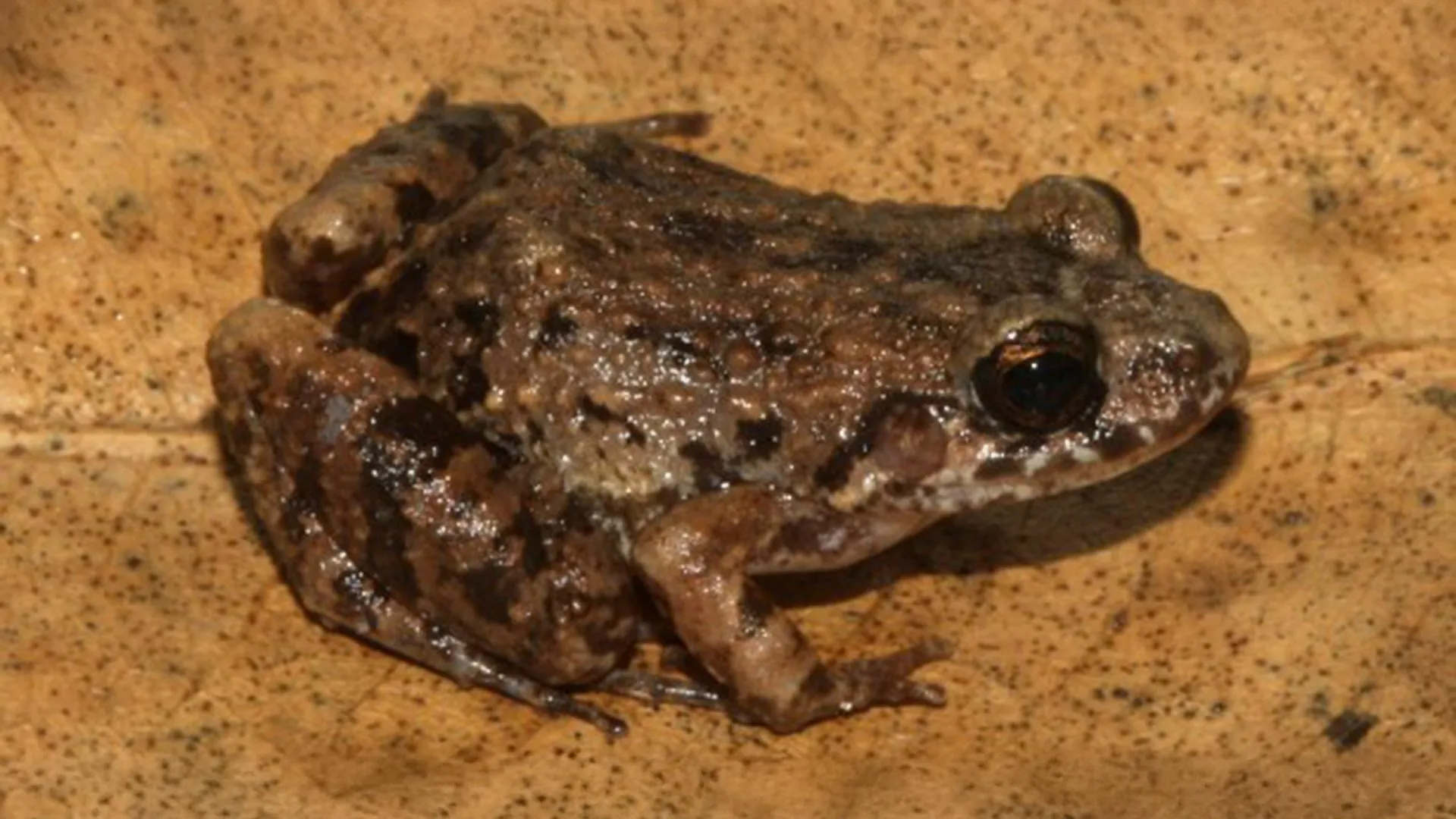
In the verdant, labyrinthine heart of the western Amazon, a silent evolution has been playing out, unnoticed by the human eye but captured in the nuances of sound and genetics. Scientists have officially announced the discovery of Adenomera varcena, a previously unknown species of frog found in the seasonally flooded forests of the Upper Juruá River region in Brazil. This finding, published in the journal Ichthyology & Herpetology, is far more than a mere addition to a checklist; it is a sobering reminder that the Amazonian rainforest remains a frontier of profound, yet fragile, biological mystery.
The discovery was spearheaded by a distinguished team of researchers, including Célio F. B. Haddad of São Paulo State University (UNESP) and Thiago R. Carvalho of the Federal University of Minas Gerais (UFMG). Both are key contributors to the Center for Research on Biodiversity Dynamics and Climate Change (CBioClima), a Research, Innovation, and Dissemination Center (RIDC) supported by the São Paulo Research Foundation (FAPESP). Their work highlights a critical biological phenomenon: "cryptic diversity," where distinct species evolve to look almost identical, masquerading as one another while maintaining unique evolutionary pathways.
The Genesis of a Discovery: Chronology of the Expedition
The road to identifying Adenomera varcena began deep in the western Acre state, near the borderlands of the Moa and Crôa rivers, in the vicinity of Cruzeiro do Sul. For years, the region has been a focal point for herpetologists interested in the transition zones of the Upper Juruá.
The process of cataloging this new species was a multi-year, multi-disciplinary endeavor:
- Field Surveys: Researchers conducted intensive expeditions through the dense, seasonally inundated forest fragments, known as várzea—the inspiration for the species’ name, varcena. Unlike the dryland forests typically associated with the Adenomera genus, these environments are characterized by complex, shifting water levels, posing unique challenges for amphibians.
- Collection and Comparison: The team gathered specimens, comparing them against existing records in scientific collections. Physical examination revealed subtle differences, most notably the absence of a tell-tale dark spot on the underside of the frog’s forearm—a feature common to its closest relatives.
- Genetic and Acoustic Analysis: Morphological evidence was only the beginning. The team performed rigorous DNA sequencing and recorded the mating calls of the frogs. Acoustic data revealed a distinct "signature"—a short, slow-rhythmic call that serves as a reproductive barrier between A. varcena and its neighbors.
- Formal Classification: After corroborating these findings, the team finalized the species description, cementing its place in the scientific record and ensuring it could be formally recognized in future biodiversity assessments.
Supporting Data: Why Adenomera varcena Matters
The classification of Adenomera varcena is significant because it challenges long-standing assumptions about the Adenomera genus. Historically, these frogs have been categorized as residents of dryland (terra firme) forests. The presence of A. varcena in a floodplain ecosystem indicates a specialized, previously undocumented habitat adaptation.
The "cryptic" nature of this frog suggests that the Amazon is host to a vast, hidden library of life. When species are visually indistinguishable, traditional field surveys often collapse multiple distinct lineages into a single category. By utilizing molecular phylogenetics—the study of evolutionary relationships based on DNA—researchers were able to peel back the layers of these "look-alike" species.
Furthermore, the research team employed a integrative taxonomic approach. By combining traditional morphology with bioacoustics and genomic analysis, they provided a robust evidentiary framework. This is essential in modern taxonomy, where the margin for error is slim and the potential for misclassification remains high due to convergent evolution.
Official Perspectives: The Experts Speak
The discovery of Adenomera varcena brings with it a sense of urgency regarding the environmental pressures facing the Amazon. For lead researchers like Thiago R. Carvalho, the frog is a canary in the coal mine for the region’s shifting climate.
"Since we don’t yet know in detail the species’ ecological requirements and its natural history, it’s difficult to predict the impacts of climate change," Carvalho noted. "Climate change may alter the seasonal flooding patterns of the floodplain forest. Since the species has a preference for this specific ecosystem, it’s possible to suggest that these changes in flood dynamics may influence—though we don’t know to what extent—the species’ reproductive behavior."
The implications are dire. If a species relies on specific flood cycles to trigger its breeding season, any disruption in the rainfall patterns—whether caused by global climate shifts or local deforestation—could lead to population collapse.
Célio F. B. Haddad emphasized the broader existential threat to undiscovered biodiversity. "Currently, the pace of ecosystem destruction outpaces the capacity of taxonomic studies to keep up," Haddad observed. "Consequently, species that haven’t yet been described are omitted from lists of threatened fauna and remain legally and environmentally vulnerable. Thus, describing new species serves as a tool that aids in their protection."
Implications for Conservation and Policy
The formal naming of Adenomera varcena is not merely an academic exercise; it is a vital step in environmental law and conservation strategy. In many nations, legal protections for endangered species apply only to those that have been formally described in scientific literature.
The "Ghost Species" Problem
There are thousands of "ghost species" in the Amazon—organisms that exist but are not yet recognized by science. These species often fall outside the purview of environmental impact assessments. When a tract of forest is cleared for agriculture or infrastructure, the "ghosts" vanish without a trace, often causing cascading ecological collapses that are poorly understood until it is too late.
Bridging the Knowledge Gap
The collaborative effort behind this discovery, involving institutions such as the University of São Paulo (USP), the Federal University of Uberlândia (UFU), and the University of Ecuador (PUCE-Quito), underscores the need for international cooperation. Protecting biodiversity requires a massive, coordinated effort to:
- Accelerate Taxonomy: Increasing funding for taxonomic research to ensure that the rate of discovery keeps pace with habitat loss.
- Integrate Data: Using digital biodiversity repositories to share findings across borders, ensuring that policymakers have the most accurate data available.
- Prioritize Micro-Habitats: Moving beyond the protection of large, charismatic animals to include the specific, niche ecosystems—like flooded forests—that harbor high levels of cryptic diversity.
A Race Against Time
The discovery of Adenomera varcena serves as a poignant illustration of the "race against time" currently defining the work of field biologists in Brazil. Every day, the Amazonian canopy is thinned by fires, logging, and infrastructure development. With every acre lost, the potential for discovering new species decreases, and the risk of permanent, silent extinction increases.
The researchers involved in this project are clear: the formal description of A. varcena is a victory for science, but it is also a call to arms. It reminds us that our map of the natural world is still riddled with blank spaces. To protect the Amazon is not just to protect the trees or the jaguars; it is to protect the hidden, vocal, and genetically unique inhabitants that share this complex, water-logged world.
As we look toward the future, the lessons learned from the Upper Juruá River must serve as a blueprint for conservation. We must value the "cryptic" as much as the "iconic." The discovery of Adenomera varcena provides a new chapter in our understanding of Neotropical amphibians, but it also asks a haunting question: How many other species are singing their mating calls in the dark, waiting to be named before they are lost to history?
The scientific community remains committed to the documentation of these life forms, but the clock is ticking. For now, Adenomera varcena stands as a testament to the resilience of life in the Amazon—and to the critical necessity of science in ensuring that this resilience is not tested beyond its breaking point.