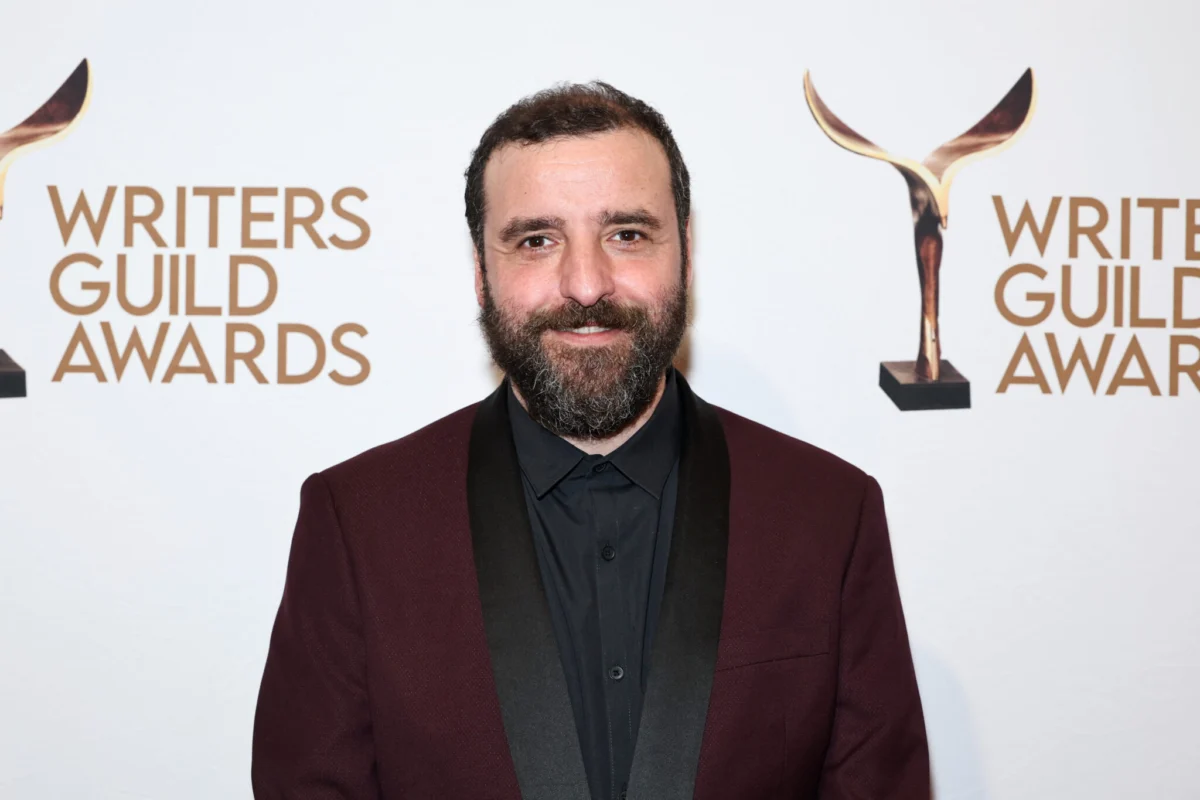
In a startling disclosure that has rippled through the entertainment industry, veteran character actor David Krumholtz—a fixture of American cinema and television for over three decades—announced on Monday that he is stepping away from his acting career. The actor, whose credits span from the cult classic Addams Family Values to Christopher Nolan’s blockbuster Oppenheimer, took to the social media platform Threads to declare his intention to start a "new life," citing a profound sense of exhaustion and disillusionment with the modern state of Hollywood.
Though Krumholtz later deleted the posts, the candid nature of his grievances provided a rare, unvarnished look at the internal pressures faced by working actors in an era of rapidly shifting studio economics. His sudden announcement has left fans, peers, and industry analysts questioning the stability of the traditional acting career path in the current climate.
The Announcement: A "Definitive" Step Into the Unknown
In his series of posts, Krumholtz described his decision to pause his career as a moment of profound psychological liberation. "I kinda sorta put my acting career on hold the other day," he wrote. "It’s been something I’ve been petrified to do for years. Specifically, the fear was that I’d go broke and not be able to handle being out of the game."
The actor, who has appeared in over 100 film and television projects, revealed that he had sent a "definitive email" to his representation to initiate this professional hiatus. The description of his emotional state was striking; he spoke of a "huge wave of relief" washing over him, emphasizing that he had finally shed a burden he had carried for the better part of his adult life.
"Not sure what I’m going to do for money instead, or how I’m going to do it, but I just removed a humongous burden, one that I truly didn’t fathom the weight of until it was gone," he wrote, describing himself as "frustrated, fed up, and fried."
The Chronology of Discontent: A Long-Standing Struggle
While this week’s announcement appeared definitive, it is not the first time Krumholtz has publicly contemplated walking away from the craft. The pressures of the "audition grind" have been a recurring theme in his life, and his peers have long been aware of his complicated relationship with the industry.
Longtime friend and collaborator Seth Rogen previously shared an anecdote on the Diary of a CEO podcast regarding Krumholtz’s recurring desire to trade the uncertainty of Hollywood for a more stable life. Rogen recounted a story in which Krumholtz seriously considered moving to Riverside, California, to sell BMWs—a stark departure from the glitz and high-stakes environment of Los Angeles.
This latest development, however, feels distinct in its finality. The actor noted that the events of the past year crystallized his decision. He expressed a deep-seated dissatisfaction with the current process of "fighting for parts," noting that the roles he is currently being offered—and the hoops he must jump through to secure them—no longer feel like a sustainable or respectful use of his decades of experience.
Supporting Data: The Economics of Exploitation
At the core of Krumholtz’s frustration lies a critique of how the industry treats its talent. His posts explicitly targeted the devaluation of the artistic process in the modern streaming and corporate-conglomerate era.
"It became clear to me this year, that if I were to continue fighting for parts… I’d be doing so for roles that exploit my talent and reputation for a drastically diminishing return," Krumholtz argued. He drew a sharp line in the sand, asserting, "Exploitative art isn’t art. And artists deserve a fair pay percentage for work that assists their employers in making profits."
Krumholtz’s perspective is rooted in a generational shift. He noted that he "came up in a time where movie studios and TV networks, no matter how big, were still mom & pop store entities." This nostalgic reflection points to a broader systemic issue: the transition from an industry built on long-term relationships and sustainable middle-class careers for actors to one dominated by algorithmic decision-making, precarious gig-work, and a lack of transparency in residual compensation.
A Career Defined by Versatility
To understand the weight of Krumholtz’s decision, one must look at the sheer breadth of his contributions to the cultural landscape. With a career spanning over 30 years, he has occupied a space as one of Hollywood’s most reliable and recognizable character actors.
His filmography is a tapestry of modern entertainment history:
- Coming-of-Age Classics: 10 Things I Hate About You (1999), Superbad (2007).
- Television Staples: Freaks and Geeks, ER, Numb3rs, The Deuce.
- Blockbusters and Indies: Oppenheimer (2023), Ray (2004), The Santa Clause 2 (2002).
- Cult Favorites: Harold & Kumar Go to White Castle (2004), Tenacious D in the Pick of Destiny (2006).
His recent work, including a role as Kor-El in this year’s Supergirl and an appearance in the series The Studio, shows that he remains a sought-after talent. The fact that an actor of his caliber and sustained employment status feels "fed up" with the system serves as a barometer for the current morale among performers.
Official Responses and Industry Silence
As of this writing, representatives for David Krumholtz have not responded to requests for comment regarding the status of his career or the deletion of his Threads posts. The silence from his camp, coupled with the deletion of the original messages, has invited rampant speculation from his fanbase.
Some observers suggest that the deletion may be a tactical move to avoid burning bridges while he weighs his options. Others wonder if the "new life" he speaks of is a permanent retirement or simply a mental health break from the industry’s relentless demands. Regardless of the intent, the discourse he ignited has already begun to circulate through talent agencies and production houses, highlighting a growing sentiment that the current "audition-and-compete" model is causing burnout among even the most successful veteran actors.
Implications: The "New Life" and the Future of Acting
The implications of Krumholtz’s potential retirement go beyond one man’s decision. His public frustration serves as a case study for the "hidden" cost of working in Hollywood. For many actors, the pressure to maintain a public profile, manage the anxiety of the next job, and navigate the diminishing returns of the streaming era creates a mental health crisis that is rarely discussed in the public eye.
If an actor with over 100 credits—who has worked with the likes of Christopher Nolan and Judd Apatow—feels that the industry is no longer "art," what hope is there for the next generation of performers?
Krumholtz’s critique of "exploitative art" echoes the primary concerns that fueled the 2023 SAG-AFTRA strikes. While the strike successfully addressed many contractual issues, the cultural shift—the feeling that an actor is a "product" to be managed rather than a creator to be nurtured—remains a lingering wound in the industry.
As Hollywood continues to grapple with the rise of artificial intelligence, the contraction of streaming budgets, and the consolidation of media power, Krumholtz’s voice represents a breaking point. Whether he returns to the screen or successfully transitions to a life away from the limelight, his departure—should it prove permanent—will mark the end of an era for the type of "working actor" he represents.
For now, the industry watches and waits. The burden has been removed from Krumholtz’s shoulders, but the weight of his words remains, serving as a sobering reminder that even the most successful players in Hollywood’s game are susceptible to the exhaustion of a system that often forgets the humans behind the performances.