Iranian filmmaker Ali Asgari, a resonant voice in contemporary world cinema known for his unflinching gaze at social realities, is set to make a significant leap in his career. After earning critical acclaim last year in the Venice Horizons sidebar with his dark satire Divine Comedy, Asgari is returning to the Lido this September—this time, competing for the prestigious Golden Lion with his latest feature, A Bit of Light.
The film, which serves as a meditative exploration of existential despair and the subtle, restorative power of human connection, has been unveiled via a first-look clip courtesy of Variety. As global audiences prepare for the upcoming Venice Film Festival (running September 2–12), the anticipation surrounding Asgari’s work highlights a growing international interest in Iranian cinema that manages to find beauty and empathy amidst systemic hardship.
A Narrative of Resilience in Contemporary Iran
Set against the backdrop of modern-day Iran, A Bit of Light tells the story of a disillusioned doctor whose life has been upended by state intervention. Following an arrest that results in the forced closure of his medical practice, the protagonist finds himself stripped of his professional identity and, subsequently, his will to live.
The narrative follows a harrowing yet intimate trajectory: the doctor, having reached a point of profound alienation, decides to end his life. However, before he can do so, he embarks on a final journey to visit his mother and siblings. These encounters, intended as a farewell, transform into a subtle process of reconciliation. Through the quiet compassion and care of his family, the doctor is forced to confront the reality of his existence, gradually shifting from a state of total resignation to a precarious, newfound engagement with the world.
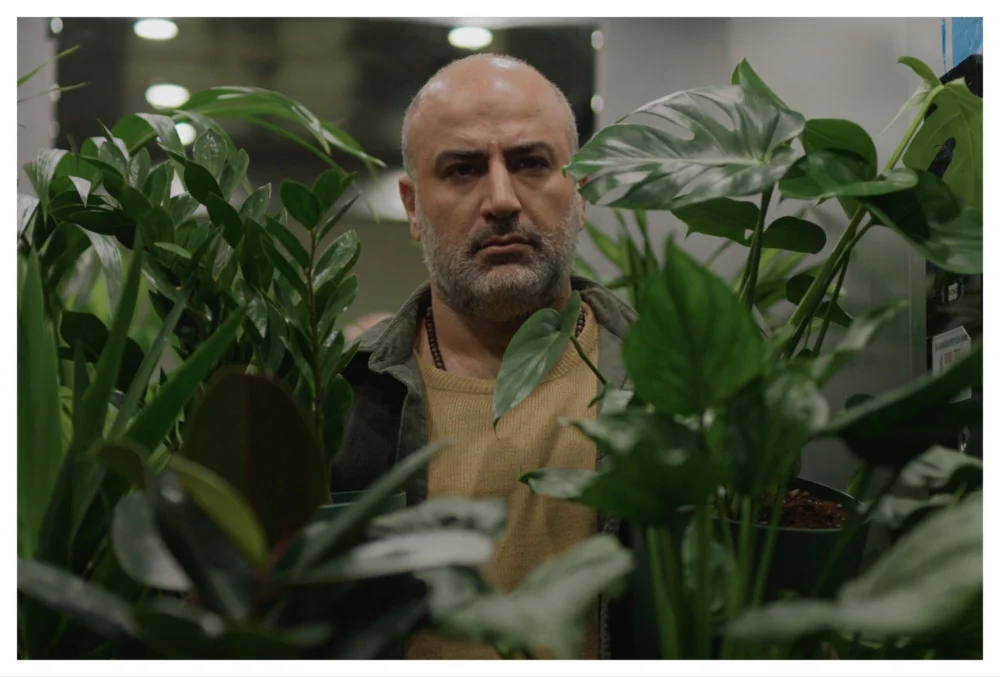
The tension of the setting is captured in the film’s newly released clip. The protagonist is shown in a domestic space, assisted by another individual in clearing out plants. The scene is permeated by an ominous, rhythmic thumping—the sound of helicopter blades overhead—a sensory reminder of the constant political instability that characterizes the film’s environment.
"This Trump guy is threatening to bomb here every day," the helper remarks, gesturing to the expansive window panes. "God forbid they should shatter and hurt you." The dialogue serves as a stark juxtaposition: the immense, terrifying scale of geopolitical threats versus the mundane, fragile safety of a single human life.
Chronology: A Rising Career in World Cinema
Ali Asgari’s path to the Venice main competition has been paved by a consistent and rigorous body of work. Over the last decade, he has established himself as a master of the "social realist" genre, often focusing on the struggles of the marginalized and the suffocating pressures of bureaucracy.
- 2017: Disappearance: Marking his feature debut, this film premiered in Venice, signaling his arrival as a director with a keen eye for the ethical dilemmas of youth in Iran.
- 2022: Until Tomorrow: Asgari expanded his international footprint with this feature, which was presented at the Berlinale, further cementing his reputation for empathetic, character-driven narratives.
- 2023: Terrestrial Verses: Selected for the Un Certain Regard section at Cannes, this film showcased a more experimental approach to social critique.
- 2024: Higher Than Acidic Clouds: Presented at IDFA, this documentary-adjacent project displayed the breadth of his storytelling capabilities.
- 2023: Divine Comedy: Asgari returned to Venice in the Horizons section, proving his long-standing relationship with the festival circuit.
- 2024: A Bit of Light: Asgari’s sixth feature becomes his first to compete for the festival’s top prize, representing a maturation of his directorial vision.
The Director’s Vision: A Philosophy of Connection
In his official director’s statement, Asgari provides a window into the thematic scaffolding of A Bit of Light. He rejects the notion that the film is a mere tragedy, framing it instead as an inquiry into the nature of human value in the face of insurmountable external pressure.
"I have often wondered: when suffering becomes an inseparable part of our daily existence, what gives life its value?" Asgari asks. He posits that in a society marked by economic hardship and the constant shadow of conflict, the individual is never truly isolated. The film, he argues, is an investigation into the "invisible connections" that bind people together.
Asgari writes: "Living in Iran, where economic hardship, political uncertainty, and the constant shadow of war have become part of everyday life, I have witnessed how people continue to endure, to care for one another, and to create small moments of hope. Perhaps what allows us to keep going is not the absence of suffering, but the invisible connections that bind us together."
He describes the film as an exploration of the "fragile space between despair and the quiet forces that keep us connected to life." By focusing on the "gentle touch of a mother’s hand" or a "shared silence," Asgari seeks to elevate the mundane to the profound. "For me, this film is not a story about sorrow, but about the invisible bonds that make life worth holding onto," he concludes.
Supporting Data: Production and Industry Impact
A Bit of Light is a testament to the collaborative nature of contemporary independent cinema, involving a wide array of international partners. The film is lead-produced by Milad Khosravi of Seven Springs Pictures. The expansive production team reflects the global appeal of Asgari’s work, with additional support from:
- Sunny Independent Pictures
- Zoe Films
- Good Measure Productions
- Haurvatat Film
- MeMo Films
- Salt for Sugar Films
- Avantika Singh Desbouvries
The film is being sold internationally by the French sales company Salaud Morisset, which has a track record of backing bold, auteur-driven projects. In Italy, where the film will find its primary audience during the festival, it is being distributed by Teodora Film Distribuzione.
The ensemble cast, which carries the emotional weight of the film, includes Misagh Zareh, Sadaf Asgari, Forouzan Jamshidnejad, Ramtin Daghigh, and Mina Rahimzadeh. Their performances are expected to be pivotal in conveying the "small, significant encounters" that Asgari highlights as the heart of his storytelling.
Implications: Cinema as a Witness to History
The selection of A Bit of Light for the Venice main competition carries significant implications for both the director and the Iranian film industry at large. Asgari’s work consistently walks a tightrope between personal introspection and political observation. By focusing on a doctor—a figure of knowledge and healing—who is rendered helpless by the state, Asgari offers a metaphor for the broader professional and intellectual classes in Iran.
The inclusion of the helicopter scene in the film’s promotional clip is a calculated choice. It anchors the story in the "here and now," forcing the viewer to acknowledge that the characters’ emotional struggles are inseparable from the geopolitical volatility of their environment. This is not a film that attempts to escape reality; it is a film that insists on finding humanity within the wreckage of it.
As the industry converges on the Lido in September, A Bit of Light stands out as a contender that is likely to generate significant discourse. It asks difficult questions about the responsibility of the individual to their community, and whether, in a world that seems to be falling apart, the simple act of staying alive—and allowing oneself to be cared for—is an act of resistance.
In a cinematic landscape often dominated by spectacle, Ali Asgari’s commitment to the "invisible bonds" of human existence offers a refreshing, albeit haunting, alternative. As he moves from the Horizons section to the main competition, the film stands as a testament to the enduring power of the Iranian auteur to turn the lens inward, revealing the universal light that persists even in the deepest, darkest corners of the human experience.