Introduction: A Triumphant Exit Amidst an Ongoing Hunt
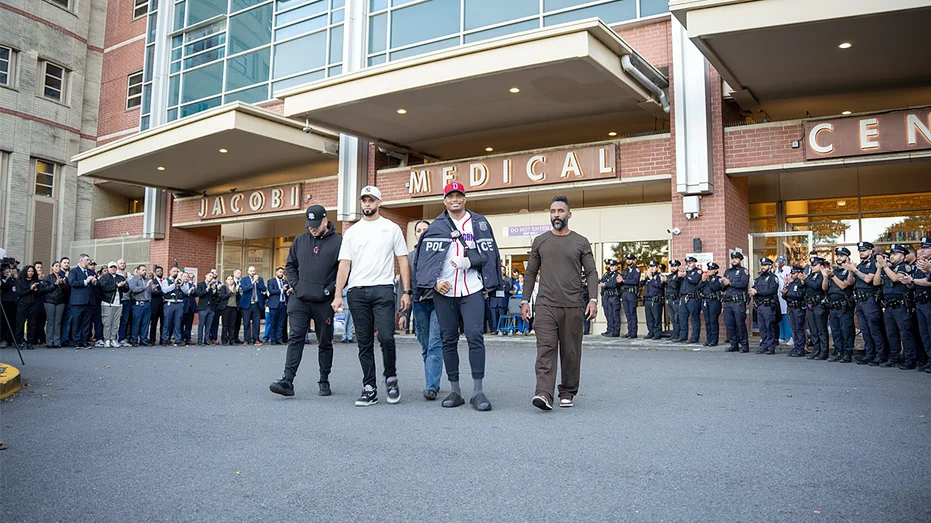
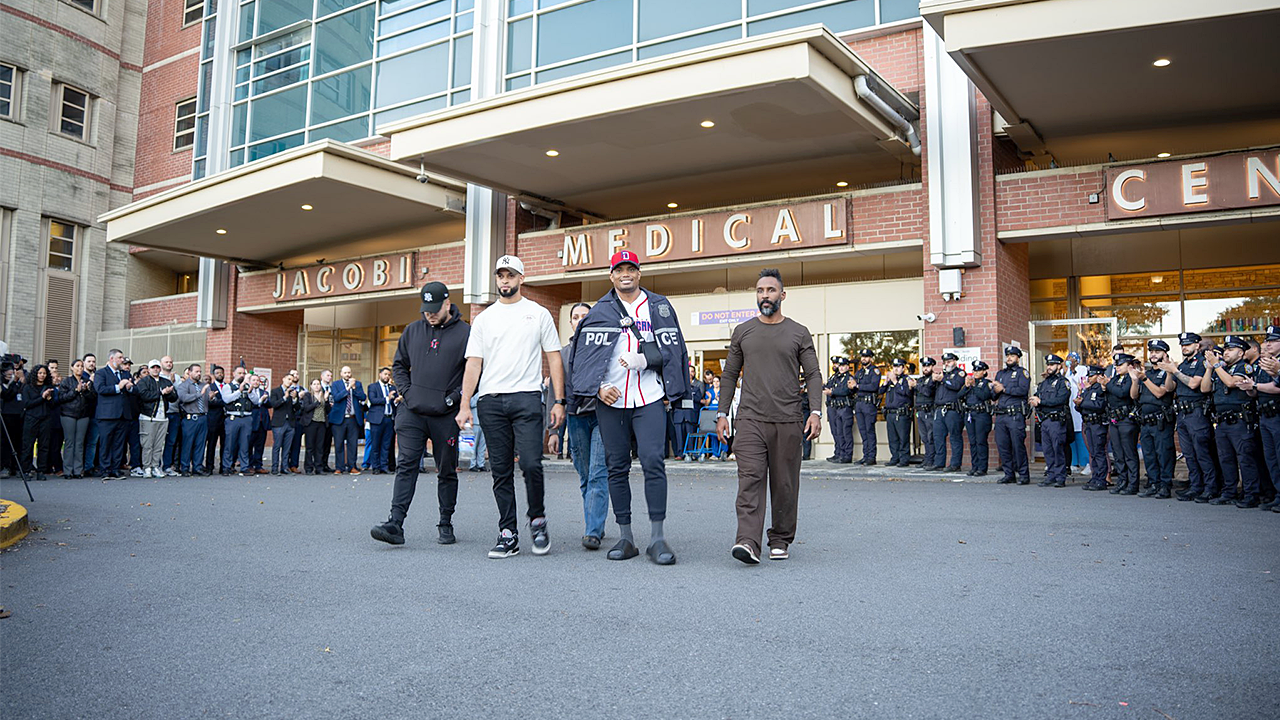
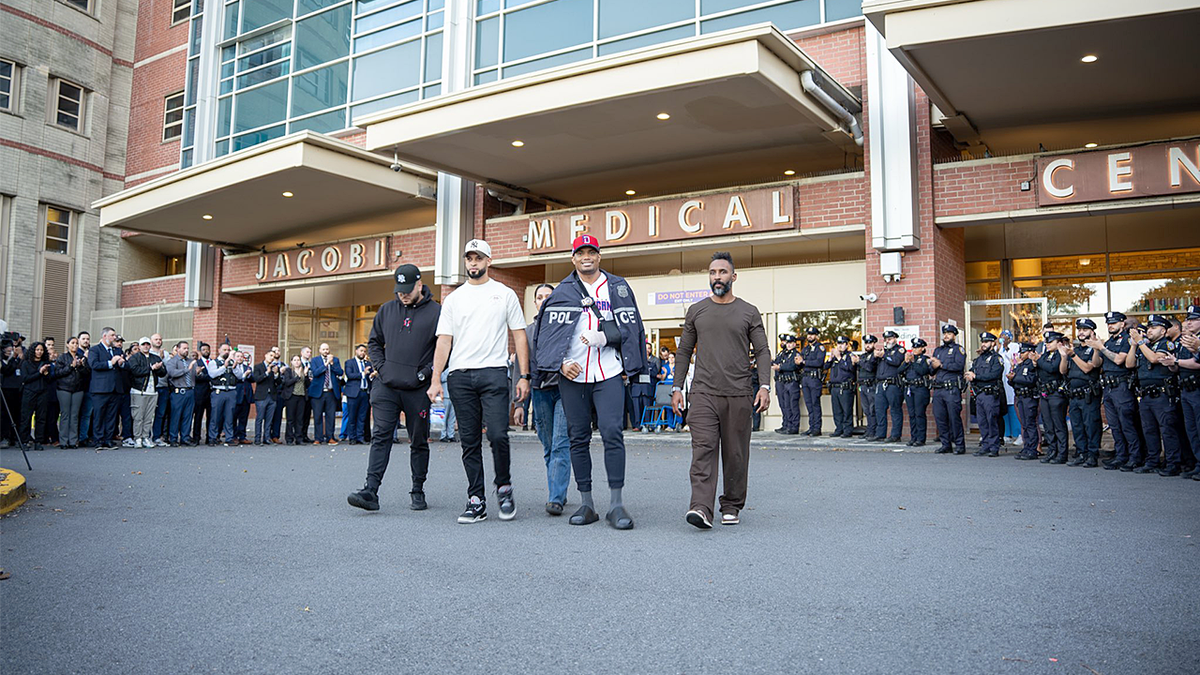
In a powerful display of resilience and solidarity, New York City Police Department (NYPD) Detective Jose Mercedes walked out of Jacobi Medical Center on Monday, October 26, just days after surviving a brutal, near-fatal stabbing during an off-duty robbery in the Bronx. Surrounded by hundreds of his fellow officers, who lined the corridors and streets of Morris Park in a sea of blue, Detective Mercedes transitioned from his wheelchair to his own feet—a moment celebrated by police leadership as an extraordinary feat of physical and mental strength.
The triumphant hospital discharge, however, stands in stark contrast to the urgent law enforcement mobilization unfolding across the city. The two suspects responsible for the attack, who targeted Detective Mercedes for his gold jewelry before stabbing him seven times, remain at large. The incident has once again cast a harsh spotlight on the rising trend of motorized-vehicle-enabled robberies in New York City, sparking renewed discussions about public safety, the vulnerability of off-duty officers, and the regulation of electronic bikes (e-bikes) on city streets.
Main Facts: The Attack and the Recovery
The incident occurred on the afternoon of Friday, October 23, in the Norwood section of the Bronx. Detective Jose Mercedes, an experienced member of the NYPD, was off-duty and tending to his personal vehicle when he was ambushed by two individuals riding an e-bike. The encounter quickly escalated into a violent struggle as the assailants attempted to forcibly rip a gold chain from the detective’s neck.
Despite being off-duty and facing a sudden, armed assault, Detective Mercedes fought back. During the violent altercation, he was stabbed and slashed seven times across his body. Despite sustaining severe, life-threatening injuries and hemorrhaging blood, the detective’s training and instinct took over: he pursued his attackers on foot for two blocks before his physical strength failed him, causing him to collapse on a Bronx street corner.
He was rushed to Jacobi Medical Center, a Level 1 trauma center in Morris Park, where medical staff worked to stabilize his multiple puncture wounds. Over the weekend, Mercedes underwent emergency treatment, showing rapid signs of improvement that culminated in his emotional release on Monday afternoon.
As Mercedes was wheeled out of the hospital lobby, he paused, stood up from his wheelchair, and walked under his own power to an awaiting vehicle. The moment was met with thunderous applause, salutes, and cheers from hundreds of NYPD officers, detectives, and high-ranking officials who gathered to honor his survival and bravery.
Chronology of the Incident
To fully comprehend the severity of the attack and the rapid sequence of events that followed, the timeline of the incident can be reconstructed as follows:
Friday Afternoon, October 23: The Ambush
- Approx. 2:00 PM: Detective Jose Mercedes, off-duty and dressed in civilian clothing, is standing at the trunk of his parked car in the residential neighborhood of Norwood, Bronx.
- The Approach: Two unidentified males operating a motorized e-bike navigate onto the sidewalk/curbside near Mercedes. Observing the gold chain around his neck, they seize an opportunity for a "snatch-and-grab" robbery.
- The Confrontation: The passenger on the e-bike dismounts and lunges at Mercedes, attempting to tear the gold chain from his neck. Refusing to submit, Mercedes engages in a physical struggle with the assailant.
- The Escalation: The struggle turns highly violent. The attacker produces a sharp weapon—identified by investigators as a knife or cutting instrument—and repeatedly stabs and slashes Mercedes. The detective sustains seven distinct wounds to his torso and extremities.
The Immediate Aftermath and Pursuit
- The Flight: The suspects, failing to secure the chain or realizing the severity of the altercation, flee the scene on their e-bike.
- The Chase: Despite bleeding heavily from seven stab wounds, Detective Mercedes pursues the fleeing suspects on foot, attempting to apprehend them or identify their escape route. He chases them for approximately two blocks.
- The Collapse: Upon reaching the intersection of East 206th Street and Rochambeau Avenue, the physical toll of his injuries and blood loss overcomes him. Mercedes collapses onto the pavement.
- Emergency Response: Eyewitnesses and responding officers administer immediate first aid. Emergency Medical Services (EMS) arrive rapidly, stabilizing Mercedes before rushing him to Jacobi Medical Center.
The Weekend of October 24–25: Hospitalization and High-Level Visits
- Medical Evaluation: Trauma surgeons at Jacobi Medical Center treat Mercedes for multiple lacerations and puncture wounds. He is listed in serious but stable condition.
- Official Visits: Newly appointed NYPD Police Commissioner Jessica Tisch and New York City Mayor Zohran Mamdani rush to Jacobi Medical Center to meet with Mercedes’ family, express solidarity, and receive briefings from medical staff and homicide/robbery investigators.
- The Investigation Intensifies: The NYPD’s Bronx Robbery Squad and local precinct detectives scour the Norwood area for surveillance footage, eyewitness testimony, and digital forensics to trace the path of the e-bike.
Monday, October 26: The Discharge
- Afternoon: Having made a remarkably swift recovery, Detective Mercedes is cleared for discharge.
- The Walkout: Hundreds of NYPD officers gather outside Jacobi Medical Center. Mercedes is wheeled to the exit, stands up, and walks out on his own feet, symbolizing his resilience and determination to recover.
Supporting Data and Contextual Analysis
The attack on Detective Mercedes is not an isolated incident; rather, it reflects a broader, highly challenging criminal trend currently facing metropolitan law enforcement agencies: motorized-vehicle-enabled robberies.
NYPD Reported Transit/Micro-Mobility Robbery Trends (Contextual Estimate)
+------------------------------------------------------------------+
| Year | E-Bike/Moped-Assisted Robberies | Growth Rate (Y-o-Y)     |
+------------------------------------------------------------------+
| 2022 | Low-to-moderate baseline        | Reference Year          |
| 2023 | Significant upward trend        | +40%                    |
| 2024 | High-density urban concern      | +25% (Est. citywide)    |
+------------------------------------------------------------------+
The Rise of E-Bike and Moped-Enabled Crime
Over the past two years, the NYPD has reported a dramatic rise in robberies committed by suspects utilizing unregistered mopeds, scooters, and high-speed e-bikes. These vehicles offer criminals several distinct advantages:
- High Mobility and Rapid Escape: Suspects can quickly mount sidewalks, navigate narrow alleyways, and ride against traffic, making vehicular pursuit by standard police cruisers extremely difficult and dangerous.
- Anonymity: Many of these micro-mobility vehicles do not carry license plates, and operators frequently wear full-face helmets or masks, making identification via traditional closed-circuit television (CCTV) cameras exceptionally difficult.
- Targeting Pedestrians: "Snatch-and-grab" operations targeting high-value jewelry, such as gold chains, and mobile devices have become highly organized, with crews scouting neighborhoods for unsuspecting targets.
The Neighborhood Context: Norwood, Bronx
The Norwood neighborhood, located in the northern portion of the Bronx, is a densely populated residential and commercial area. While policed by the NYPD’s 52nd Precinct—which has seen varying fluctuations in property and violent crime over the last decade—the area’s heavy pedestrian traffic and transit hubs make it a prime target for opportunistic thieves operating highly mobile vehicles.
The NYPD "Walkout" Tradition
The ceremony surrounding Detective Mercedes’ release is a deeply rooted tradition within the NYPD. Known as a "hospital walkout," the event serves multiple institutional purposes:
- Morale Boosting: It provides a vital psychological lift to the injured officer, their family, and the rank-and-file workforce.
- Public Demonstration of Unity: It signals to the public and to criminal elements that an attack on one officer is viewed as an attack on the entire department.
- Public Relations: It highlights the inherent dangers faced by law enforcement officers, even when they are off-duty.
Official Responses
The violent assault on an off-duty detective drew immediate, high-level condemnation from New York City’s top leadership, emphasizing both support for the officer and an unyielding commitment to bring the perpetrators to justice.
Police Commissioner Jessica Tisch
Police Commissioner Jessica Tisch, who recently assumed leadership of the nation’s largest police force, was highly vocal in her praise of Detective Mercedes’ courage. Taking to the social media platform X (formerly Twitter), Tisch stated:
"Today, in another incredible feat of strength and determination, Detective Mercedes got up from his wheelchair and walked out of Jacobi Medical Center on his own two feet. Hundreds of members of the NYPD were there to cheer their brother on. The entire department stands behind Detective Mercedes as he continues his recovery. And the greatest detectives in the world will relentlessly pursue those responsible for this crime."
Tisch also emphasized the sheer bravery of the detective’s actions during the attack, noting, "Despite his serious injuries, Detective Mercedes chased after his attackers on foot."
Mayor Zohran Mamdani
New York City Mayor Zohran Mamdani, who visited the injured detective alongside Commissioner Tisch on Friday night, expressed his gratitude for the officer’s survival and reinforced the city’s commitment to public safety.
"I visited the detective and his family at Jacobi Hospital with Police Commissioner Tisch," Mayor Mamdani said. "I am hoping for his quick and complete recovery. We will not tolerate violence against our officers, or any New Yorkers, on the streets of our city."
Police Unions and Advocacy Groups
While official statements focused on recovery and determination, police advocacy groups and unions, such as the Detectives’ Endowment Association (DEA), used the incident to highlight the ongoing dangers of street-level crime in New York. Union representatives reiterated calls for stricter penalties for individuals who assault law enforcement officers and demanded a more aggressive crackdown on the illegal use of unregistered motorized scooters and e-bikes, which have become synonymous with street-level robberies.
Implications and Broader Impact
The stabbing of Detective Jose Mercedes carries profound implications for municipal policy, policing strategies, and the ongoing debate surrounding urban transit and micro-mobility.
Policy Implications: Regulating Micro-Mobility
The utilization of an e-bike in this attack adds fuel to an ongoing legislative and regulatory battle in New York City regarding micro-mobility. City Council members and community advocates have increasingly called for:
- Mandatory Registration: Requiring all motorized e-bikes and mopeds to be registered with the state or city, complete with visible license plates or identification tags.
- Point-of-Sale Enforcement: Penalizing retailers who sell illegal, unregistered, or excessively fast motorized vehicles that bypass safety and licensing laws.
- Confiscation Sweeps: Increasing NYPD operations aimed at seizing unregistered mopeds and e-bikes parked on city streets or operated illegally on sidewalks.
The Vulnerability of Off-Duty Officers
This incident underscores a sobering reality for law enforcement: police officers are never truly "off the clock." When off-duty officers find themselves victims of random street crimes, they face a complex dilemma. Trained to react, intervene, and apprehend, their instinctual drive to protect themselves and others can lead to highly dangerous confrontations, particularly when they are unarmed or lack the immediate tactical support of their precinct colleagues.
Community-Police Relations and Public Safety Perception
For everyday New Yorkers, an attack of this nature—occurring in broad daylight in a residential neighborhood against an experienced detective—fuels anxieties regarding public safety. If a trained, physically fit police detective can be targeted and brutally stabbed seven times over a piece of jewelry, citizens question their own safety.
Consequently, the NYPD is under immense pressure to quickly apprehend the suspects. A swift arrest would serve as a powerful deterrent and reassure a nervous public; conversely, a prolonged, unsuccessful investigation could exacerbate concerns regarding the impunity with which mobile robbery crews operate.
Conclusion: The Long Road Ahead
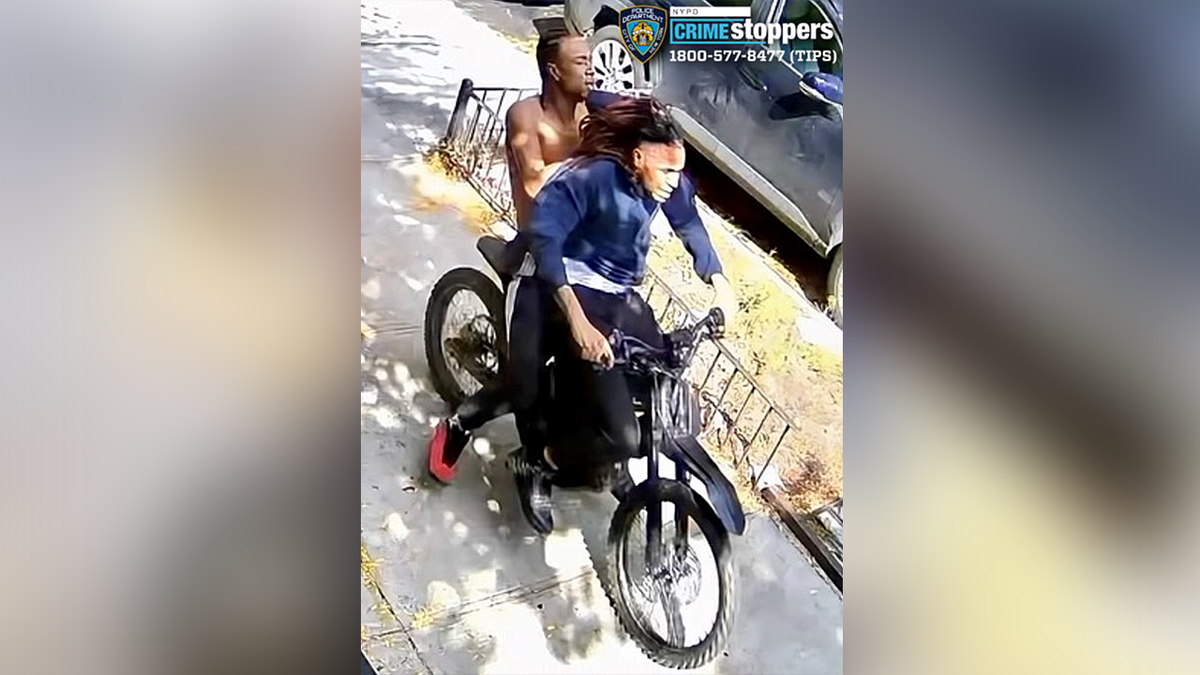
As Detective Jose Mercedes begins his physical and psychological rehabilitation at home, the NYPD’s Robbery Squad continues to follow leads. Police have released surveillance images of the two suspects riding the e-bike and are urging anyone with information to contact the NYPD’s Crime Stoppers Hotline. For a city grappling with the complexities of modern, mobile-enabled crime, the survival of Detective Mercedes is a testament to human resilience, but the vacant chairs at the investigation table serve as a stark reminder of the work that remains to be done.