KYIV – The administration of Ukrainian President Volodymyr Zelensky has been thrust into a period of profound uncertainty following the abrupt dismissal of Iryna Mudra, the deputy head of the presidential office, on Wednesday, August 19, 2026. The decree, published on the official presidential website, serves as the latest seismic shift in a government currently grappling with the dual pressures of a protracted war and a domestic crisis of institutional integrity.
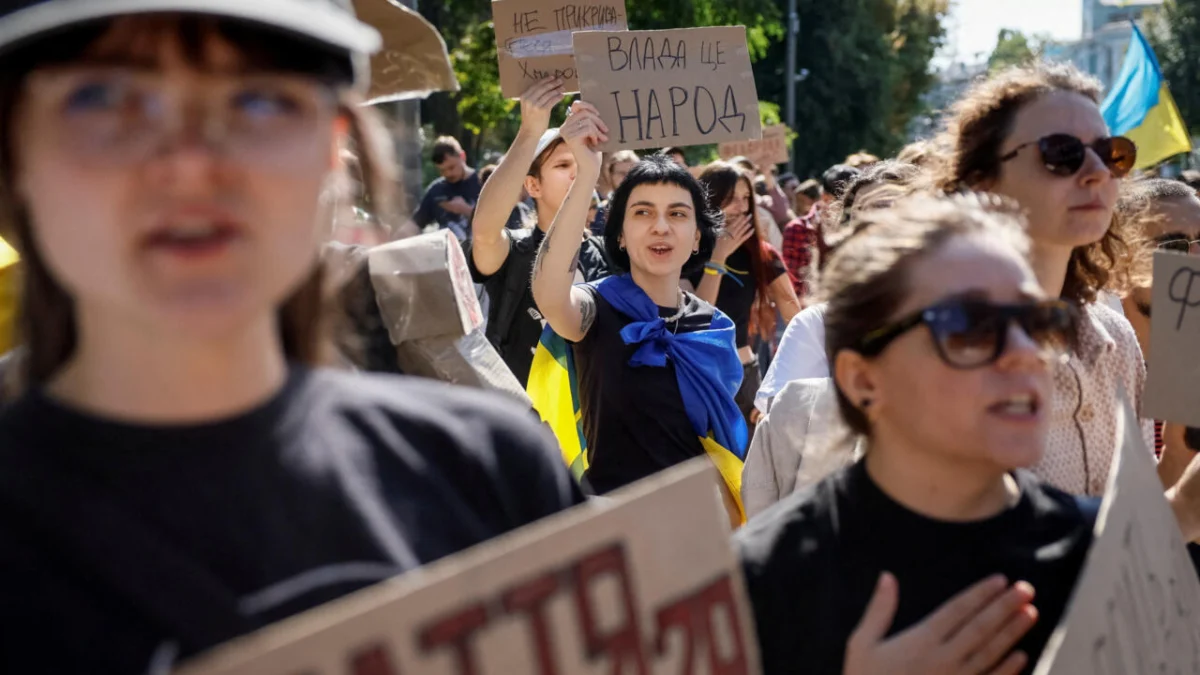
The dismissal follows allegations by Ukraine’s premier anti-corruption agencies that they have dismantled a sophisticated money-laundering network with alleged links to senior officials within Zelensky’s own inner circle. As citizens gather outside the Parliament building in Kyiv to voice their anger and demand transparency, the administration faces its most significant internal test since the early days of the full-scale invasion.
The Core Facts: A Breach of Public Trust
On the morning of August 19, 2026, the presidential office confirmed the immediate termination of Iryna Mudra. While the official statement remained characteristically brief, citing the need for “administrative optimization,” the timing of the move has left little doubt as to its true cause.
For months, the National Anti-Corruption Bureau of Ukraine (NABU) and the Specialized Anti-Corruption Prosecutor’s Office (SAPO) have been conducting a clandestine investigation into illicit financial flows originating from state-funded infrastructure projects. The investigation, codenamed "Operation Integrity," reportedly uncovered a shell-company structure used to siphon millions of euros designated for the wartime reconstruction of border regions.
The scandal reached the highest echelons of power when investigators presented evidence suggesting that Mudra’s office may have facilitated the regulatory "green-lighting" of contracts awarded to these fraudulent entities. While Mudra has not yet been formally charged, her removal signals that the President is attempting to contain the fallout by purging officials associated with the allegations before the investigation widens further.
Chronology: From Battlefield Valor to Administrative Scandal
To understand the gravity of the current situation, one must look at the timeline of events that led to this Wednesday’s volatility.
- January 2026: The Ukrainian government announces a massive transparency initiative, promising to modernize the procurement process for defense and reconstruction funds to secure further Western aid.
- April 2026: Investigative journalists from several Ukrainian outlets publish a joint report highlighting irregularities in the allocation of funds meant for the rehabilitation of the Kharkiv region.
- June 2026: NABU officials launch a series of raids across several ministries. The investigation begins to focus on the intersection of the presidential office and private construction firms.
- August 10, 2026: The anti-corruption agencies present a confidential report to President Zelensky, detailing the involvement of senior staff in the money-laundering ring.
- August 18, 2026: News of the impending arrests leaks to the public. Protests begin to form spontaneously outside the Parliament in Kyiv.
- August 19, 2026 (11:20 AM): The decree firing Iryna Mudra is officially published.
- August 19, 2026 (1:20 PM): Protests intensify as citizens demand a broader investigation into the cabinet and the dismissal of other high-ranking officials implicated in the report.
Supporting Data: The Cost of Corruption
The economic and military implications of this scandal are profound. Ukraine relies heavily on the continued financial support of the European Union and the United States, both of which have made anti-corruption reforms a strict prerequisite for ongoing aid.
According to data released by the Ministry of Finance earlier this summer, the "reconstruction deficit"—the gap between required funds and available resources—stands at approximately €40 billion for the 2026 fiscal year. The potential misappropriation of even a fraction of this amount is not merely a legal issue; it is a threat to the nation’s fiscal survival.
Furthermore, public sentiment, which remained remarkably unified throughout 2024 and 2025, is showing signs of fragmentation. A snap survey conducted by the Kyiv International Institute of Sociology on the morning of August 19 indicated that 68% of respondents believe the government is not doing enough to hold "high-level officials" accountable for financial crimes, a significant increase from the 42% recorded in early 2026.
Official Responses and Political Maneuvering
The reaction from within the government has been a mix of damage control and defiant calls for unity.

A spokesperson for the presidential office stated, “The President’s commitment to the rule of law is absolute. No individual, regardless of their position or past service, is above the standard of integrity that our soldiers are fighting for on the front lines. The removal of Ms. Mudra is a necessary step to ensure the efficacy and moral standing of this office.”
Conversely, the political opposition has seized the moment. In a fiery address to reporters outside the Parliament, opposition leader Dmytro Razumkov described the situation as "a systemic rot that can no longer be masked by individual resignations." He called for a special parliamentary session to discuss a vote of no confidence in the broader cabinet, arguing that Mudra was merely a "symptom of a much larger infection."
International observers, including representatives from the International Monetary Fund (IMF), have issued statements urging Ukraine to ensure the investigation is "independent, thorough, and free from political interference."
Implications: A Nation at a Crossroads
The ramifications of this scandal extend far beyond the corridors of the presidential office. There are three primary areas of concern as Ukraine navigates this crisis:
1. The Stability of the Cabinet
Zelensky’s government has been defined by its stability during the war. However, the current purge suggests that the "wartime consensus" is fraying. If further dismissals follow—particularly if they reach the level of ministers—the government could face a period of administrative paralysis, which would be catastrophic during the ongoing conflict.
2. The Relationship with Western Allies
Ukraine’s ability to secure the next tranche of financial aid depends on its credibility. While the firing of Mudra shows that the anti-corruption apparatus is working, it also raises questions about why such a high-level official was able to operate with alleged impunity for so long. Western capitals will be watching closely to see if this is a genuine cleansing of the system or a cosmetic move designed to appease donors.
3. The Morale of the Frontline
Perhaps most critically, the news of elite corruption is reaching soldiers who have endured years of grueling combat. The perception that a political class is profiting while the country bleeds creates a dangerous narrative that could impact recruitment and morale. The government’s ability to communicate that the investigation is genuine and that the culprits will be prosecuted to the full extent of the law will be the defining challenge of Zelensky’s presidency in the coming weeks.
Conclusion: The Path Ahead
As evening falls over Kyiv, the protests outside Parliament show little sign of dissipating. The demonstrators are not just calling for the removal of a deputy; they are calling for a fundamental reassessment of how power is exercised in a wartime state.
President Zelensky finds himself in a precarious position. He must maintain the unity required to sustain the war effort while simultaneously proving that the democratic values for which Ukraine fights—transparency, accountability, and the rule of law—are not just slogans, but the foundational pillars of the Ukrainian state.
The dismissal of Iryna Mudra is a starting point, not an end. Whether this crisis leads to a stronger, more transparent government or a period of prolonged political instability remains the central question for Ukraine as it faces an uncertain autumn. The world is watching, and for the people of Ukraine, the stakes could not be higher.