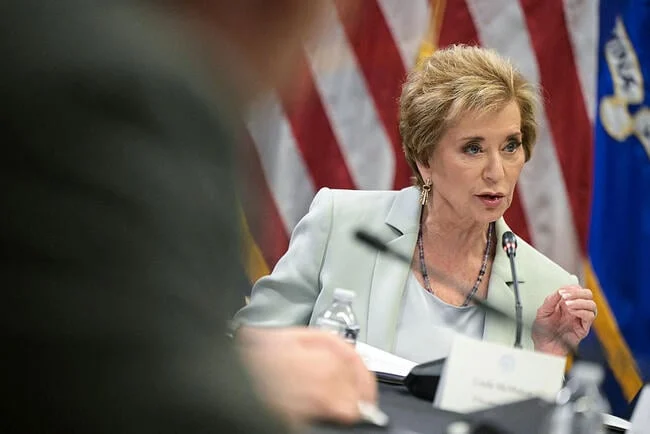
The tension between the U.S. Department of Education and the American higher education sector has reached a fever pitch. Following an August 3rd mandate from Education Secretary Linda McMahon—which demanded that colleges and universities commit to a series of “essential reforms”—the nation’s two most prominent academic unions have fired back. In a pointed, formal letter released this Thursday, the American Association of University Professors (AAUP) and the American Federation of Teachers (AFT) issued their own list of demands, effectively flipping the script on the administration’s oversight efforts.
The move marks a significant escalation in the ongoing struggle over the autonomy of American universities, the role of federal funding in research, and the boundaries of executive power within the education system.
The Chronology of Conflict: From “Call to Action” to Formal Dissent
The current standoff began in early August, when Secretary McMahon issued a formal “Call to Action” to college administrators nationwide. The document requested that institutions commit to specific, department-prescribed reforms, sparking widespread concern among faculty and academic leaders who viewed the move as an attempt to enforce ideological alignment through the threat of withholding federal funds.
For weeks, university presidents and boards of trustees weighed how to respond to what many viewed as a coercive request. While Trump administration officials later claimed that institutions would not be penalized for failing to comply with the August 3rd letter, the skepticism within the academic community remained palpable.
By late August, the discord intensified as academic unions began coordinating a strategic response. On Thursday, AAUP President Todd Wolfson and AFT President Randi Weingarten published their formal rebuttal. The letter, which mirrors the structure of McMahon’s original request, is not merely a critique; it is a direct challenge to the legitimacy of the Department of Education’s current policy trajectory.
The Core Arguments: Union Leaders Accuse the Administration of Authoritarianism
In their letter, Wolfson and Weingarten did not mince words, accusing the Department of Education of abandoning its statutory purpose in favor of partisan weaponization.
“Having used federal power to punish and attempt to punish educational institutions for resisting your political demands, you now call upon colleges and universities to commit to federally prescribed reform,” the union leaders wrote. “Given that you have not accounted for the Education Department’s departure from law and statutory purpose, this letter is particularly galling. Before demanding answers from universities, you owe answers to the American people.”
The union leaders argue that the administration’s strategy—which involves linking research grants and other federal support to compliance with political agendas—constitutes a fundamental threat to democratic accountability. By framing these actions as “the methods of authoritarian rule,” the AAUP and AFT are positioning themselves as the primary defenders of academic freedom against what they characterize as executive overreach.
Examining the Seven Pillars of Inquiry
Much like the Secretary’s original questionnaire, the unions organized their demands into seven thematic areas. This structural choice was tactical, signaling that if the Department of Education intends to set the agenda for higher education, it must be prepared to answer for its own conduct in these same categories.

1. Transparency and Fidelity to the Law
The unions are demanding a full accounting of how enforcement decisions are made. They ask whether these decisions are guided by statutory mandate or by the personal political preferences of the Trump administration.
2. Free Speech and Peaceful Protest
This section addresses the ongoing debates regarding campus protests. The unions are pushing back against federal efforts to dictate how universities manage student expression, questioning the department’s legal authority to interfere in internal campus governance.
3. Academic Freedom and Shared Governance
A cornerstone of American higher education is the principle of shared governance between faculty and administration. The unions are challenging the department to explain how its mandates respect the autonomy of faculty in determining curriculum and research direction.
4. Student Debt, Affordability, and Opportunity
The unions are calling for a transparent discussion on how federal policy impacts the accessibility of higher education, particularly for marginalized populations who have been disproportionately affected by recent changes in student loan management.
5. Academic Standards and Rigor in the Age of AI
Acknowledging the technological shifts currently rocking academia, the unions ask for a federal strategy that supports pedagogical integrity rather than one that uses technological disruption as a pretext for oversight or defunding.
6. Safeguarding Research Integrity from Political Interference
This is perhaps the most contentious point. The unions are demanding that federal research funding be decoupled from political agendas, citing concerns that scientists and scholars are being forced to alter their findings or research goals to align with administration viewpoints.
7. Serving the American People
The final point is a call for a return to public service as the department’s primary mandate, rather than the pursuit of a partisan ideological agenda.
Implications for Research and International Collaboration
A particularly urgent concern raised by the AAUP and AFT is the impact of current policies on international collaboration. American universities have long served as global hubs for research and innovation, fueled by the free exchange of ideas across borders.
“What will you do to preserve international collaboration, which has long driven and enriched science, the humanities and arts, and social science research and innovation?” the letter asks. There is a widespread fear within the academic community that the current administration’s “America First” approach to higher education policy will lead to isolationism, potentially causing the U.S. to lose its competitive edge in the global scientific community.

The Demand for Accountability: A 30-Day Ultimatum
The unions have not only asked questions but have set a formal timeline for a response. They are demanding that Secretary McMahon publish a statement detailing “concrete actions and timelines” to address the concerns raised.
Furthermore, they have requested a categorical written assurance within 30 days that no college or university will receive favorable or adverse federal treatment based on their response—or lack thereof—to the Secretary’s initial August 3rd letter. This demand for written assurance highlights the deep-seated lack of trust currently existing between the academic sector and the federal government.
Supporting Data and Historical Context
The current conflict is the latest in a series of legal and political battles between the Trump administration and labor unions. Both the AAUP and the AFT have repeatedly challenged the administration in federal court over various education policy shifts, including Title IX changes, financial aid regulations, and research grant oversight.
The data suggests that these conflicts are not merely symbolic. The threat of losing federal funding is a significant leverage point for the Department of Education, given that many research-heavy universities rely on federal grants for a substantial portion of their budgets. When the administration threatens to tie these grants to policy compliance, it creates an environment where academic institutions must choose between fiscal stability and institutional independence.
Conclusion: A Turning Point for Higher Education
As of this writing, the Department of Education has not issued a formal response to the AAUP and AFT’s letter. The administration’s past statements—insisting that institutions will not be penalized—have failed to assuage the fears of university leaders who have witnessed the administration’s willingness to use regulatory mechanisms to advance its agenda.
The situation leaves higher education at a crossroads. If the Department of Education continues to press for federally prescribed reforms, it risks a long-term breakdown in the relationship between the government and the institutions that educate the next generation of American leaders. Conversely, if the administration backs down, it may signal a retreat from its broader efforts to reshape the cultural and academic landscape of the United States.
For now, the academic community is watching closely, waiting to see if Secretary McMahon will engage with the substance of these questions or if the standoff will escalate into a new round of litigation and open defiance. The outcome of this exchange will likely define the parameters of academic freedom and federal oversight for years to come.