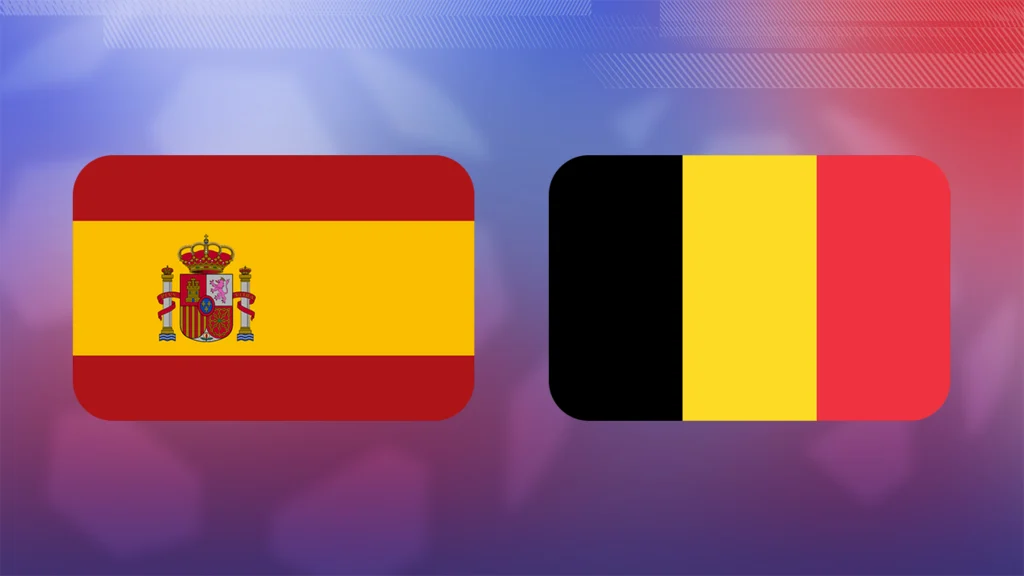
The stage is set for a tactical masterclass in the World Cup quarter-finals as Spain and Belgium lock horns this Friday. This encounter is far more than a standard knockout fixture; it is a nostalgic nod to their historic 1986 clash and a collision of two distinct footballing philosophies. As the sun sets on the stadium, one nation will emerge to face France in the final four, while the other will see their tournament aspirations extinguished in a high-stakes display of continental pride.
The Main Facts: A Clash of Ideologies
Spain enters this fixture as the tournament’s defensive gold standard. Under the tutelage of Luis de la Fuente, La Roja has evolved from a team that simply keeps the ball into a clinical, suffocating machine. Having navigated the group stage and the Round of 16 without conceding, their backline—marshalled by Aymeric Laporte and anchored by Unai Simón—has proven nearly impenetrable. Their possession-based approach is not merely aesthetic; it is a weapon used to starve opponents of rhythm.
Conversely, Belgium arrives with a blueprint built on pragmatism and lethal transitions. The Red Devils have shed the label of "perennial underachievers" by adopting a compact, disciplined defensive structure that invites pressure before springing traps through the pace of Jeremy Doku and the clinical vision of Charles De Ketelaere. For Belgium, this is an opportunity to rewrite their recent history and secure a path toward the semi-finals, echoing the intensity of their 2018 campaigns while seeking a breakthrough victory against a Spanish side that has dominated the headlines.
Official Lineups: The Tactical Setup
The team sheets released moments ago indicate that both managers are leaning into their respective core strengths, with no room for sentimentality in these high-stakes rotations.
Spain (4-3-3):
- Goalkeeper: Simon
- Defenders: Porro, Cubarsi, Laporte, Cucurella
- Midfield: Rodri (C), Fabian, Baena
- Forwards: Yamal, Olmo, Oyarzabal
Belgium (4-2-3-1):
- Goalkeeper: Courtois
- Defenders: Castagne, Mechele, Theate, De Cuyper
- Midfield: Vanaken, Raskin
- Forwards: Lukebakio, Tielemans, Doku, De Ketelaere
The inclusion of Rodri as the heartbeat of the Spanish midfield suggests a desire to control the tempo from the opening whistle, while Belgium’s decision to field both Raskin and Vanaken indicates a focus on winning the physical battle in the center of the pitch.
Chronology: The Road to the Quarter-Finals
To understand the weight of this match, one must look at the paths both nations carved to reach this point.
Spain’s Path: The Perfectionists
Spain began their campaign with a statement of intent, dismantling their group-stage opponents with a blend of youthful exuberance—embodied by Lamine Yamal—and the seasoned composure of their veterans. Throughout the tournament, La Roja has showcased a patient build-up play that tires out opposition defenses before striking with surgical precision. Their Round of 16 victory was a testament to their defensive maturity; despite being challenged, the back four remained unflappable, securing a clean sheet that has become the hallmark of their success.
Belgium’s Path: The Resilient Underdogs
Belgium’s journey has been defined by tactical discipline. After a shaky start to their qualification cycle, the Red Devils stabilized, prioritizing defensive shape. In the group stages, they proved that they could grind out results, often conceding possession but rarely conceding high-quality chances. Their progression to the quarter-finals is a validation of the squad’s mental fortitude. By limiting the space behind their defensive line, they have successfully neutralized high-pressing opponents, setting the scene for a defensive clinic against Spain’s creative sparks.
Supporting Data: By the Numbers
When analyzing the statistics of the tournament so far, the contrast between the two sides becomes stark:
- Possession Metrics: Spain leads the tournament with an average of 68% possession per match. Their passing accuracy in the final third remains the highest in the competition (89%).
- Defensive Efficiency: Spain has faced the fewest shots on target among all remaining teams. Belgium, however, leads in "interceptions per 90 minutes," highlighting their reliance on breaking up play and disrupting opponent rhythm.
- Counter-Attacking Threat: Belgium has recorded the highest number of direct attacks (defined as sequences starting in their own half and ending in a shot or touch in the opposition box) in the tournament. With Doku on the wing, they possess the fastest transition speed of any team in the final eight.
- The Goalkeeper Duel: The match features two of the world’s elite shot-stoppers. Thibaut Courtois returns to the lineup with a point to prove, while Unai Simón aims to extend his streak of clean sheets, which currently stands at 360 minutes of tournament play.
Official Responses and Managerial Mindsets
In the pre-match press conferences, the atmosphere was one of mutual respect underscored by fierce determination.
Luis de la Fuente, speaking for Spain, emphasized the need for patience: "We know that Belgium is a team that thrives on our mistakes. We cannot afford to be reckless. Our objective is to control the space, not just the ball. We respect their experience, but we trust our process."
On the Belgian side, the tone was one of calculated ambition. The Belgian coaching staff noted, "Spain is the favorite in terms of statistics, but football is played on the pitch, not on paper. We have a plan to frustrate them. If we can keep the game tight for the first 60 minutes, the pressure will shift to their shoulders. We are here to reach the semi-finals, and we have the players to execute that mission."
Implications: A Gateway to the Final Four
The implications of this match are immense. For Spain, victory would reinforce their status as the dominant force in European football, a validation of their post-tiki-taka evolution. It would also set up a mouth-watering semi-final clash against France, a heavyweight showdown that many pundits have been anticipating since the group stage draw.
For Belgium, an upset would represent a pinnacle moment for this generation of players. Having faced significant scrutiny regarding their ability to perform in high-pressure knockout games, a victory over a side as disciplined as Spain would be a monumental achievement. It would effectively exorcise the ghosts of previous tournament failures and signal to the world that the Red Devils remain a top-tier international threat.
Beyond the result, the game represents a fascinating case study in modern football strategy. Can Spain’s technical dominance dismantle the most organized defense in the tournament, or will Belgium’s counter-attacking efficiency provide the shock of the World Cup?
As the players take to the pitch, the narrative is clear: Spain will try to suffocate, and Belgium will try to sting. It is a classic encounter between the protagonists and the opportunists. Whether the match is decided by a moment of individual brilliance from Yamal or a tactical trap sprung by Doku, one thing is certain: the winner will move one step closer to football immortality, while the loser will be left to contemplate what might have been.
Follow our liveblog throughout the match for minute-by-minute updates, tactical breakdowns, and real-time analysis as this quarter-final drama unfolds.