The landscape of global finance shifted on its axis this week as the SpaceX Initial Public Offering (IPO) transitioned from a long-rumored "moonshot" to a history-making reality. While the headlines have naturally gravitated toward Elon Musk, whose personal net worth has surged into the unprecedented territory of the world’s first trillionaire, a quieter but equally profound transformation has occurred within the ranks of the company itself. From senior executives to skilled-trade welders on the Starbase floor, the IPO has minted thousands of new millionaires, fundamentally altering the wealth profile of the aerospace industry.
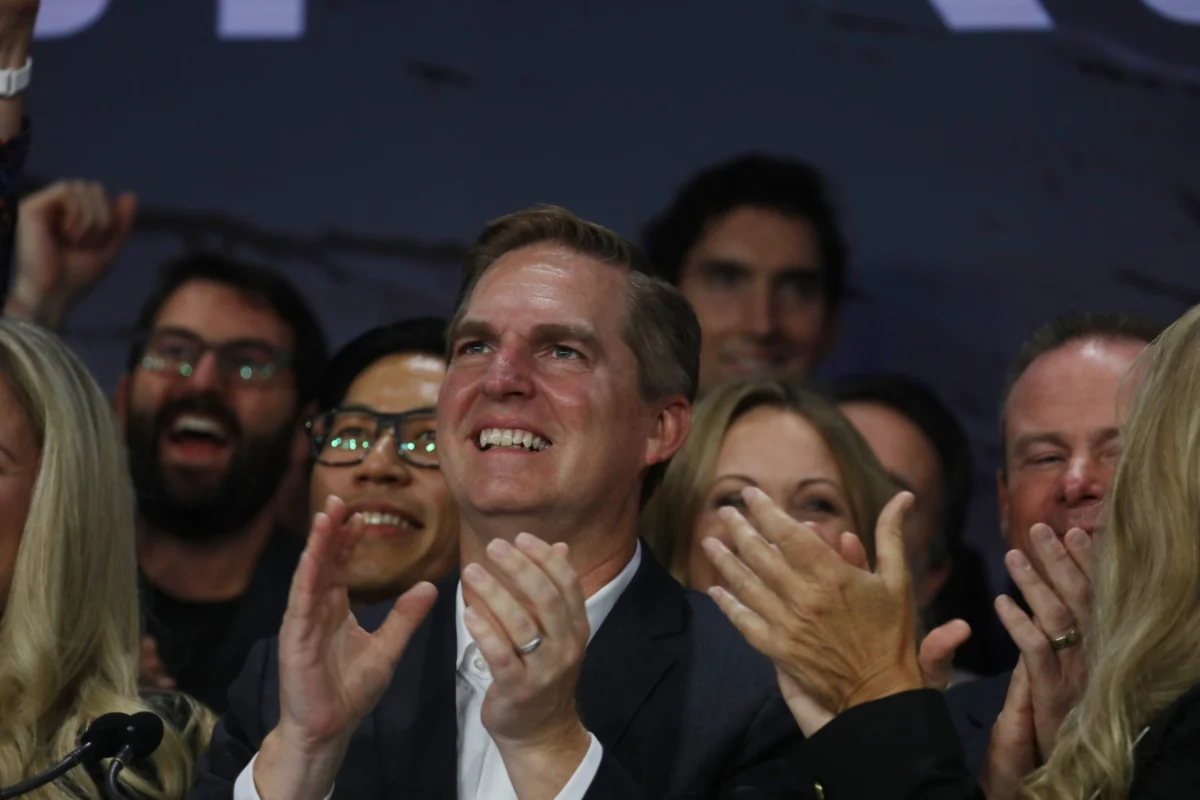
At the center of this financial whirlwind is Bret Johnsen, SpaceX’s Chief Financial Officer. A man who has spent over a decade eschewing the limelight, Johnsen has emerged from the IPO as a billionaire in his own right, with a stake now valued at approximately $1.4 billion. As the "quiet architect" behind what is being termed the largest and most complex IPO in history, Johnsen’s journey from a "wartime" CFO during the 2008 financial crisis to the steward of a $1.25 trillion space and AI conglomerate offers a masterclass in strategic patience and fiscal discipline.
The Main Facts: A Trillion-Dollar Milestone
The SpaceX IPO did not merely go public; it rewrote the playbook for how "deep tech" companies interface with public markets. The offering raised a staggering $75 billion, but the sheer scale of the capital influx is only part of the story. Following a strategic all-stock merger with Musk’s artificial intelligence venture, xAI, in February, the combined entity entered the public markets with a valuation of $1.25 trillion.
This valuation is supported by a robust revenue engine. Last year, SpaceX reported $18.7 billion in revenue, driven by its dominance in the launch market and the rapid expansion of the Starlink satellite internet constellation. However, the IPO’s most unique feature was its allocation: 30% of the shares were reserved for retail investors. This move, championed by Musk and executed by Johnsen, bypassed traditional institutional gatekeepers to a degree rarely seen in large-cap offerings, effectively turning Musk’s massive social media following into a foundational pillar of the company’s capital structure.
For the employees, the IPO represented the culmination of years of "sweat equity." The company’s long-standing practice of issuing stock options to staff across all levels—not just the C-suite—has resulted in a broad distribution of wealth. Internal reports suggest that long-term employees in technical trades, such as specialized welding and composite manufacturing, have seen their holdings appreciate to the point of seven-figure valuations, a rarity in the traditionally stagnant manufacturing sector.
Chronology: From a 10% Chance of Success to Global Dominance
To understand the magnitude of Johnsen’s achievement, one must look back to 2011. At that time, SpaceX was a volatile startup that had only recently achieved its first successful orbital launches. Musk, recognizing that the company’s ambitions would eventually require the rigor of public markets, sought a CFO who could bridge the gap between "mad scientist" engineering and Wall Street expectations.
Upon Johnsen’s hiring in 2011, Musk was explicit about the mission: "His experience will be invaluable to SpaceX as we implement the financial standards and processes needed to allow for the possibility of becoming a public company."
Johnsen arrived with a reputation for "cleaning house." During his tenure at Mindspeed Technologies, he navigated the 2008 financial crisis by aggressively cutting costs, restructuring debt, and monetizing intellectual property. He famously increased Mindspeed’s valuation 15-fold during one of the worst economic downturns in history. This "wartime" mentality was exactly what SpaceX needed as it transitioned from a company with what Musk described as a "10% chance of success" to a reliable partner for NASA and the Department of Defense.
Over the next 13 years, Johnsen operated in the shadows. While Musk handled the visionary rhetoric and the public-facing controversies, Johnsen focused on the "cost per kilogram." He oversaw the financial scaling of the Falcon 9 program, the high-stakes development of the reusable Starship system, and the capital-intensive rollout of Starlink. By 2026, he had positioned the company to not only survive but to absorb xAI, creating a vertically integrated powerhouse of compute and transport.
Supporting Data: The Economics of the "Lowest Cost to Space"
The financial justification for SpaceX’s trillion-dollar valuation rests on its unprecedented efficiency. In a recent interview with investor Gavin Baker, Johnsen highlighted the company’s core competitive advantage: "We’re now the lowest cost per kilogram to space ever in the industry. It’s the enablement for all of the other businesses."
Key data points supporting the company’s fiscal health include:
- Revenue Growth: A jump to $18.7 billion in the previous fiscal year, a significant portion of which is high-margin recurring revenue from Starlink.
- Launch Cadence: SpaceX now accounts for over 80% of all payload mass launched to orbit globally, creating a de facto monopoly on modern space logistics.
- AI Synergy: The acquisition of xAI integrated the "Colossus" data center in Memphis, Tennessee, into the SpaceX ecosystem. This facility, bolstered by a compute-sharing deal with Anthropic, provides the AI "brains" for autonomous space navigation and Starlink’s global routing.
- Retail Participation: The 30% retail allocation is roughly triple the standard 10% seen in most major IPOs, creating a "meme-stock" level of liquidity and brand loyalty that serves as a buffer against institutional short-selling.
Official Responses and Expert Commentary
The reaction from the financial community has been a mix of awe and cautious skepticism. Shivaram Rajgopal, a professor of accounting and auditing at Columbia Business School, noted that Johnsen’s role is fundamentally different from a standard CFO.
"Most IPO CFOs have to clean up the accounting and sell the story of the firm," Rajgopal told Fortune. "But because of Musk’s moonshot promises… Johnsen has the added responsibility of selling what is essentially a tech conglomerate to Musk’s followers. He can do all of this because Musk has a massive retail investor following, and the institutions getting in now are hoping to make a buck riding the momentum."
Johnsen himself remains characteristically focused on the mission rather than the market cap. In his rare public comments, he emphasizes the utility of the company’s assets. "I tell people it’s hard to be a space company and not have assured access to space," he told Gavin Baker, underscoring that SpaceX’s primary value is its ability to provide its own infrastructure for Starlink and future AI compute projects.
Internally, Johnsen is described by staff as the "boring suit"—a term used with affection. In a company culture often driven by Musk’s high-octane and sometimes erratic leadership, Johnsen provides the "boring" stability of balanced ledgers and long-term planning. His lack of a public persona—boasting only 3,000 followers on X and zero public posts—stands in stark contrast to Musk’s polarizing social media presence.
Implications: The Rise of the Musk Conglomerate
The successful IPO and the minting of Bret Johnsen as a billionaire signal a new era for the "Muskonomy." The implications stretch far beyond the aerospace sector:
1. The "Everything Company" Convergence:
With SpaceX, xAI, and potentially Tesla moving toward a merger or closer structural alignment, Musk is building a conglomerate that controls the transport of people (Tesla/SpaceX), the transport of information (Starlink), and the processing of intelligence (xAI). Johnsen’s role is to ensure these disparate pieces function as a single financial engine.
2. A Shift in Wealth Distribution:
The "welders to millionaires" phenomenon may force a reckoning in how industrial companies compensate their labor force. By using equity as a primary retention tool, SpaceX has created a workforce that is personally invested in the success of every launch, potentially setting a new standard for the "blue-collar" tech sector.
3. The Retail Investor Influence:
By carving out 30% for retail, SpaceX has democratized—and perhaps complicated—its governance. Johnsen must now manage the expectations of millions of individual investors who may be more influenced by Musk’s social media posts than by quarterly earnings reports. This creates a "valuation floor" driven by brand loyalty, but also a potential for volatility if that loyalty wavers.
4. Geopolitical and Economic Leverage:
As SpaceX becomes a public entity with a trillion-dollar valuation, its role as a state actor is solidified. The company’s control over global internet (Starlink) and AI compute (Colossus) gives it leverage that rivals many sovereign nations. Bret Johnsen, the man who once spent his days restructuring debt at a semiconductor firm, is now the treasurer of a global superpower.
As SpaceX enters its first year as a public company, the focus will remain on whether it can deliver on its "moonshot" promises: the colonization of Mars, the perfection of point-to-point Earth travel, and the integration of AI into every facet of the space economy. For Musk, the IPO is a means to fund his interstellar ambitions. For Bret Johnsen, it is the ultimate validation of a decade spent building the most formidable balance sheet in the history of the stars.