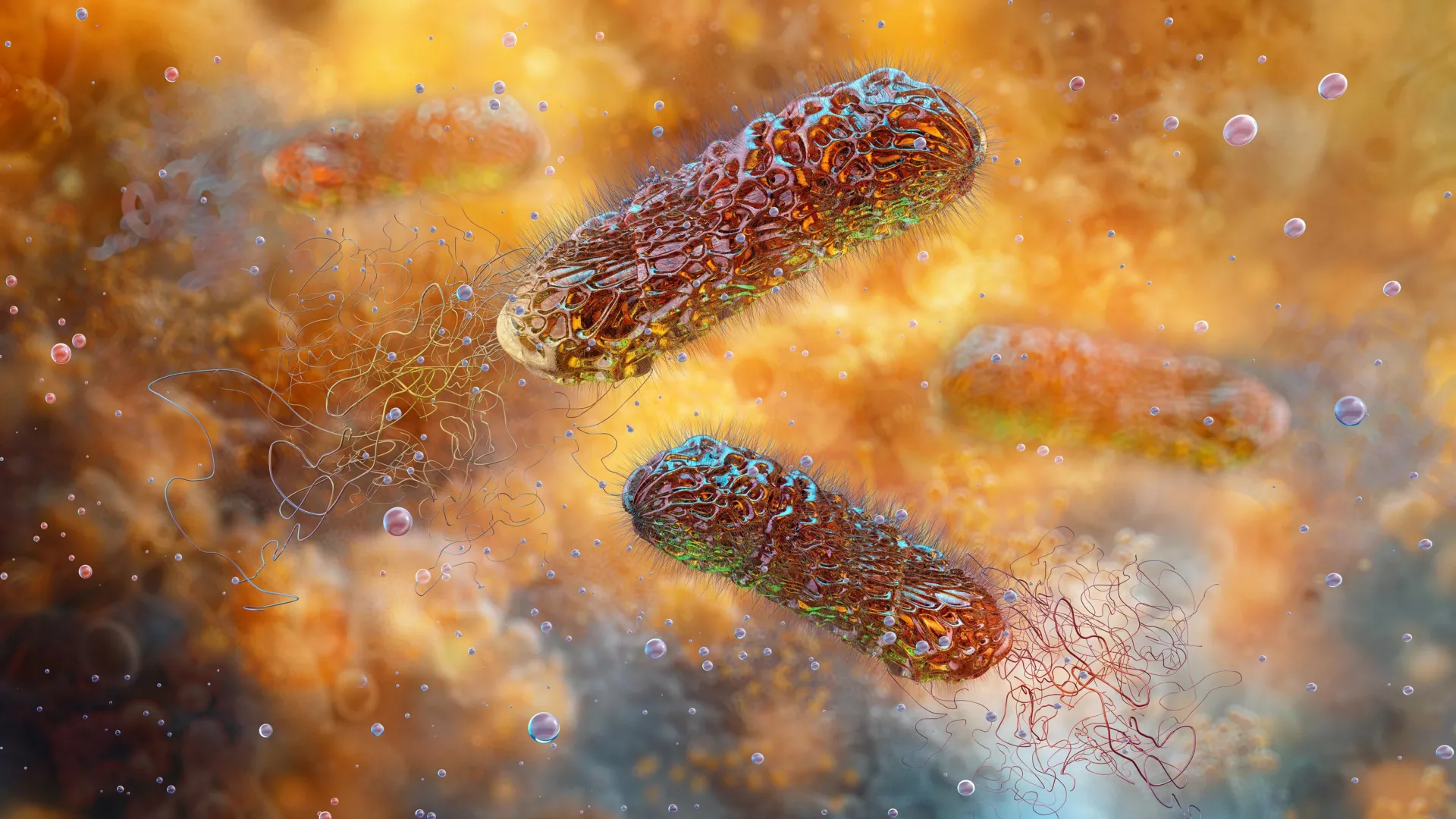
In the high-stakes arena of modern medicine, humanity is losing ground in a war that has raged for millennia. Antibiotic resistance—the phenomenon where bacteria evolve to survive the very drugs designed to kill them—has been declared a global health emergency by the World Health Organization. As once-reliable treatments fail, the medical community is facing a "post-antibiotic era" where routine surgeries and minor infections could once again become life-threatening.
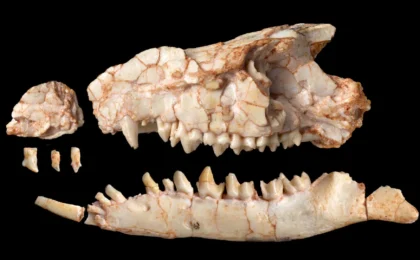
Now, a team of evolutionary biologists at the University of Oregon (UO) has turned to a radical, unconventional source for a solution: the deep past. By peering 160 million years into the history of placental mammals, researchers have successfully "resurrected" ancient proteins that once served as the first line of defense for our ancestors. This pioneering work, published in the journal PLOS Biology, suggests that the key to surviving the future of infectious disease might lie in the biological relics of the Jurassic Period.
The Evolutionary Archive: A New Frontier in Pharmacology
At the heart of the study is a protein known as lactoferrin. Found in nearly every bodily secretion—including breast milk, saliva, tears, and mucus—lactoferrin is a cornerstone of the mammalian immune system. Its primary function is a biological sleight-of-hand: it sequesters iron, a mineral essential for bacterial growth, effectively starving pathogens of the nutrients they need to replicate.
However, beyond its role as a nutrient-thief, lactoferrin possesses a more aggressive weapon: an antimicrobial peptide. This short chain of amino acids acts like a biological needle, piercing bacterial membranes and causing the cells to rupture and die.
Matt Barber, a senior author of the study and an evolutionary biologist at the UO College of Arts and Sciences, views the natural history of this protein as a vast, untapped laboratory. "Evolution is essentially a billions-year-old science experiment," Barber explains. By analyzing how lactoferrin evolved over 160 million years, his team has been able to observe the results of millions of years of "trials" conducted by nature to see what defensive strategies proved most effective against microbial threats.
Chronology of a Defense: From Jurassic Origins to Modern Marvels
The researchers set out to trace the evolutionary timeline of placental mammals—the group that includes humans and nearly all modern mammals—beginning at the end of the Jurassic Period.
The Dawn of Placental Mammals (160 Million Years Ago)
Approximately 160 million years ago, the common ancestor of all placental mammals emerged. It was during this era that the lactoferrin protein first began to take its distinct form. By comparing the genetic sequences of living species like humans and cows, Titas Sil, the study’s lead author and a doctoral student in the Barber lab, used sophisticated statistical methods to perform "ancestral sequence reconstruction."
The "Resurrection" Process
Using techniques pioneered by former UO scientist Joseph Thornton, Sil predicted the genetic sequences of extinct ancestors. Once these sequences were determined, the team synthesized the genes in the lab and inserted them into living cells to produce the proteins. This allowed the scientists to physically "bring back to life" molecules that had not existed in the natural world for millions of years.
Testing the Ancient Arsenal
The researchers tested these reconstructed proteins against notorious human pathogens, including Pseudomonas aeruginosa, Staphylococcus aureus, Escherichia coli, and Streptococcus. The results were striking. While the oldest, most ancient versions of the peptides showed the ability to disrupt bacterial membranes, the bacteria were often able to repair the damage and survive. However, as the team tested versions reconstructed from more recent mammalian ancestors—those dating back a few million years—the potency of the peptides increased significantly. In some instances, these ancestral versions proved even more effective than the human version of the peptide existing today.
Supporting Data: The Power of a Single Mutation
Perhaps the most startling discovery of the research is how seemingly trivial changes in biology can yield monumental results in medical efficacy.
When the team analyzed why the "more recent" ancestral peptides outperformed their older counterparts, they found the answer in a single amino acid mutation. A tiny change in the sequence of the protein’s building blocks was sufficient to radically enhance its antimicrobial activity.
"What was surprising and unexpected was how small changes in these domains could have such large effects," Barber noted. This finding is particularly significant because it challenges current approaches in synthetic drug design. Many clinical trials have attempted to use derivatives of modern human lactoferrin to treat infections with limited success. The UO research suggests that by "tweaking" these molecules based on evolutionary patterns, scientists may be able to achieve superior performance without reinventing the wheel.
Official Perspectives: Bridging the Gap Between Evolution and Medicine
The researchers are careful to temper expectations regarding immediate clinical applications. The resurrected antimicrobial peptides, while potent, face a significant hurdle: stability. Unlike conventional antibiotics, which are designed for longevity and systemic circulation, these peptides are structurally fragile and break down rapidly within the human body.
Despite these hurdles, the team remains optimistic about the broader implications of their work. "For anybody who studies pathogenic bacteria, it’s always in the back of our minds that antibiotics are one of the most important breakthroughs in medicine in the 20th century," says Barber. "But bacteria are, and have been for a long time, evolving resistance to them."
The goal is not necessarily to use the 160-million-year-old protein exactly as it was, but to use the knowledge gained from its evolution to create better, more resilient therapies. By understanding the "evolutionary path" that allowed these peptides to succeed, scientists can better predict how bacteria will respond to new treatments and design "combination therapies" that make it nearly impossible for pathogens to develop resistance.
Future Implications: Outsmarting the Superbugs
The work conducted at the University of Oregon represents a paradigm shift in how we approach the antibiotic crisis. Rather than relying solely on the trial-and-error chemistry of the 20th century, researchers are now leveraging the "big data" of the evolutionary record.
Why This Matters for Public Health
- Anticipatory Medicine: By mapping how evolution successfully navigated the arms race between host defense and bacterial evasion, researchers can "outpace" bacteria, creating drugs that hit pathogens in their most vulnerable, evolutionary-conserved spots.
- Overcoming Existing Resistance: Since these peptides function by physically damaging bacterial membranes—a mechanism very different from standard antibiotics—they are less likely to be blocked by the existing resistance mechanisms that modern superbugs possess.
- Refined Synthetic Engineering: The discovery that single mutations can drive massive increases in efficacy provides a blueprint for synthetic biologists. Instead of synthesizing thousands of random variants, they can target specific sites identified through ancestral reconstruction.
A Long-Term Vision
While a "Jurassic pill" is not hitting pharmacy shelves tomorrow, the research funded by the National Institutes of Health has provided a roadmap for the next generation of drug development. The study of evolutionary biology, once thought to be a purely academic pursuit, is now moving to the forefront of clinical medicine.
As we continue to struggle against the tide of antibiotic resistance, the answer may not be found in the latest synthetic chemical compound, but in the biological secrets of our own ancient ancestors. By understanding the defenses that kept the earliest placental mammals alive in a microbe-rich world, we may finally secure the tools necessary to protect our own. The evolution of the immune system is a story that is far from finished, and for modern medicine, the most important chapters may have been written millions of years ago.