For decades, the study of mammalian evolution during the Cretaceous period—the twilight of the dinosaurs—has been a puzzle defined by fragments. Paleontologists, following the 19th-century wisdom of Georges Cuvier, often attempted to reconstruct the entire history of an extinct creature from a single, fossilized molar. However, a monumental discovery in the windswept expanses of Mongolia’s Gobi Desert has shattered this paradigm, proving that while teeth tell a story, they often tell the wrong one.
The discovery of a remarkably complete skeleton of a previously unknown species, Tamirkhan balcarceli, is forcing a major reappraisal of the "zhelestids," an enigmatic group of mammals that thrived alongside the dinosaurs. Published in the journal Nature, the study—a collaborative effort involving the American Museum of Natural History (AMNH), Stony Brook University, the University of Arizona, and Arcadia University—reveals that these creatures were not the early placental pioneers we once thought, but rather members of a vastly different, specialized evolutionary lineage.
The Chronology of a Scientific Misconception
The saga of the zhelestids began nearly 40 years ago. Since their initial identification, these mammals have been categorized largely through isolated teeth or fragmented jawbones. Because their dentition featured low, rounded cusps—strikingly different from the sharp, shearing teeth of typical Cretaceous insectivores—paleontologists long suspected that zhelestids were a primitive group of hoofed mammals or perhaps even early placental mammals.
This interpretation gained traction because the teeth looked suspiciously like those of later, more modern herbivores. As molecular clock studies began to suggest that the ancestors of humans and other modern placental mammals may have originated deep in the Cretaceous, the "zhelestid-as-placental" hypothesis became a popular, albeit unproven, consensus.
The turning point occurred in 2004 during a museum-sponsored expedition to the Gobi Desert. Then-graduate student Andres Giallombardo unearthed a specimen that would eventually defy the status quo. For years, the fossil remained a subject of intense preparation and analysis, hidden away in the rock until it could be properly understood. It was not until the team utilized advanced comparative frameworks—such as the MorphoBank research platform—that the true identity of the animal began to emerge. When the skeleton was fully exposed, the scientists realized that the teeth had been leading them down a blind alley for four decades.
Unmasking Tamirkhan balcarceli
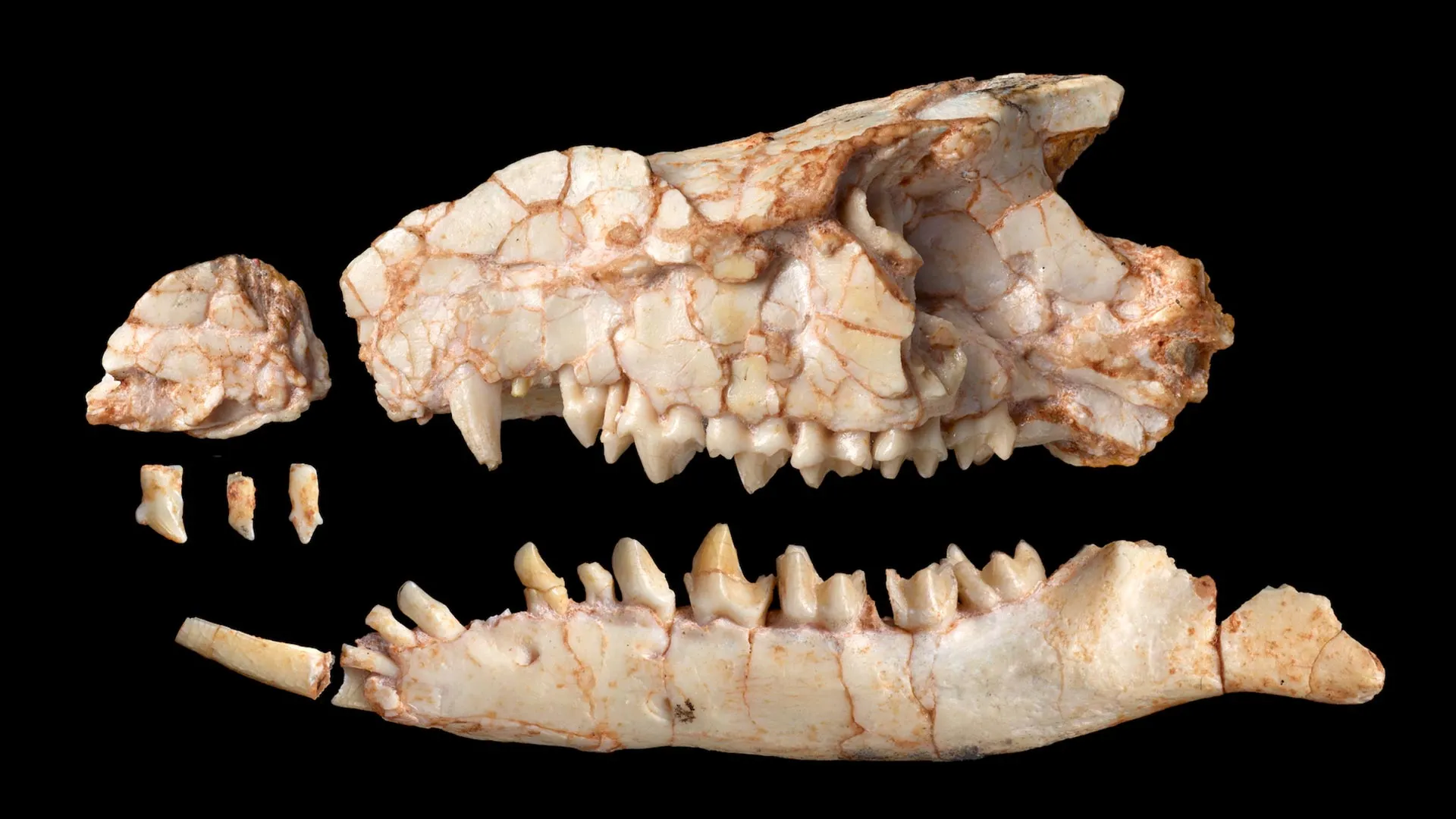
The fossil of Tamirkhan balcarceli is the most complete zhelestid specimen ever recovered. Measuring a modest 6 to 7 inches from nose to tail, the creature was small, agile, and anatomically complex. While its teeth remained consistent with previous zhelestid finds, the rest of its body told a radically different story.
The skeleton revealed long, continuously growing incisors and specific cranial features that immediately linked the species to "zalambdalestoids"—a group of small, shrew-like mammals that were previously considered distinct from the zhelestids. Furthermore, the hind limbs of Tamirkhan were long and slender, possessing a unique ankle structure that is a hallmark of the zalambdalestoid lineage.
"The hind legs are unmistakably zalambdalestoid," noted Shawn Zack, a paleontologist at the University of Arizona and a coauthor of the study. By comparing the entire skeletal structure rather than just the dental morphology, the researchers concluded that the zhelestids were not the ancestors of modern placental mammals, but were instead a specialized branch of the zalambdalestoid group.
The implications are profound. This discovery suggests that the "rabbit-like" appearance of zhelestids—often dubbed "Cretaceous rabbits" by researchers—was not a sign of a close relationship to modern placental mammals, but rather a classic case of convergent evolution. The zhelestids had evolved similar teeth and limbs to cope with their environment, independently arriving at solutions that mimicked the later, more successful placental herbivores.
Challenging the Cuvierian Paradigm
The discovery serves as a cautionary tale for modern paleontology. For over two centuries, the influence of French naturalist Georges Cuvier has loomed large over the field. Cuvier famously argued that the anatomy of an entire organism could be predicted from a single tooth, a concept known as "correlation of parts."
"While teeth remain among the most informative fossils available, this work demonstrates that teeth cannot always tell us how the whole animal looked," says Maureen O’Leary, a paleontologist at Stony Brook University and a research associate at the AMNH.
The study highlights the danger of "dental-centric" taxonomy. By relying on teeth, researchers were inadvertently grouping unrelated animals together simply because they had developed similar ways of processing food. This "convergent evolution" acts as a biological mirage, making distinct evolutionary paths look like a single, straight line.
Paul Velazco, a comparative biologist at Arcadia University, emphasized the necessity of physical evidence in testing the models generated by modern technology. "Molecular models based on living animals can predict the past, but fossils provide the evidence needed to test those predictions," he noted. In this case, the fossil evidence flatly contradicted the molecular theories that had placed zhelestids within the placental lineage.
The Gobi Desert: A Crucible of Evolution
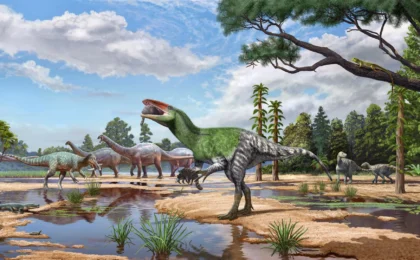
The Gobi Desert continues to hold its status as the world’s most significant "open-air laboratory" for Cretaceous mammal evolution. Along with sites in Kazakhstan, Kyrgyzstan, and Uzbekistan, the Gobi provides a rare window into a time when mammals were diversifying in the shadows of the dinosaurs.
Michael Novacek, a curator in the Museum’s Division of Paleontology and a veteran of expeditions to the Gobi since 1990, emphasizes the rarity of such findings. "The Gobi is one of the only places where we routinely recover such remarkably complete Cretaceous mammals," Novacek said. "These extraordinary fossils continue to transform our understanding of mammalian evolution."
The collaboration with the Mongolian Academy of Sciences has been essential to these discoveries. The ability to bring such fragile specimens back to laboratories for high-resolution analysis—and then cross-reference them against global databases like MorphoBank—has allowed scientists to place Tamirkhan precisely within the mammal family tree. This digital framework, which has been growing for over a decade, ensures that each new discovery helps refine the entire picture of early mammalian history.
The Road Ahead: Why Fieldwork Still Matters
As the team notes in their Nature paper, the discovery of Tamirkhan was a "thrill of a career" for Andres Giallombardo. It is a stark reminder that even in an age of AI, satellite imagery, and high-tech genetic sequencing, there is no substitute for the physical labor of digging in the dirt.
The study underscores a fundamental truth about scientific progress: every leap forward requires us to be willing to discard our most cherished assumptions. For 40 years, the scientific community operated under the assumption that zhelestids were related to placental mammals. The fossil record, however, had the final say.
What does this mean for our understanding of the Cretaceous? It implies that the diversity of early mammals was far more nuanced than we previously understood. If a group as distinct as the zhelestids could be mistaken for placental ancestors for four decades, it raises the possibility that other "placental" classifications in the fossil record might also be subject to revision.
As paleontologists continue to catalog the vast treasures of the Gobi, the story of Tamirkhan balcarceli will serve as a guiding light. It is a story of how a small, 6-inch creature, preserved in the arid sands of Mongolia, managed to shift the entire trajectory of how we understand the history of life on Earth.
The research was supported by the U.S. National Science Foundation, alongside the Margaret and Will Hearst Paleontological Research Fund and the Frick Laboratory Endowment at the American Museum of Natural History. As these institutions look toward future expeditions, one thing is clear: the Gobi Desert has many more secrets buried in its strata, waiting for the right pair of eyes to find them.