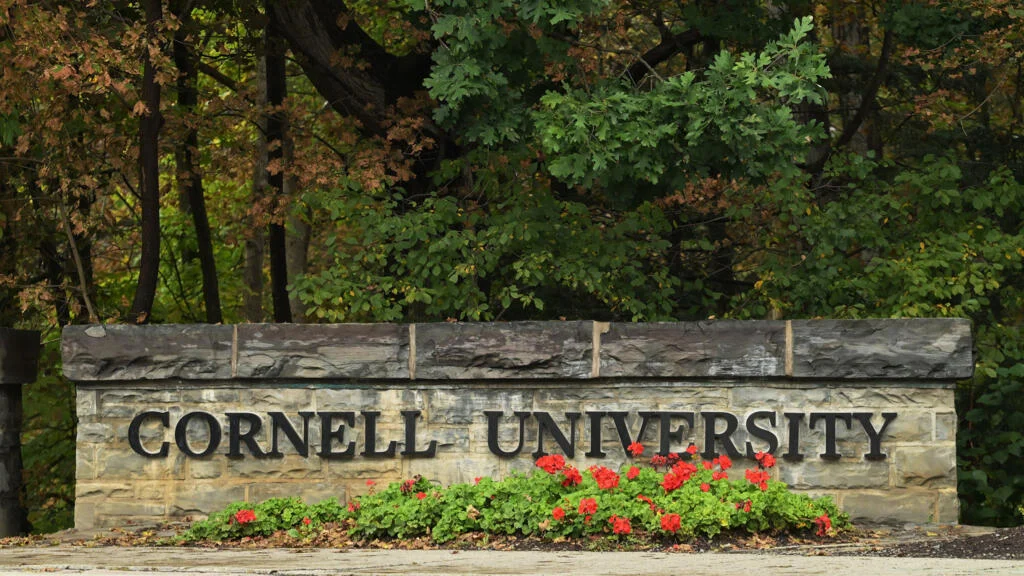
In a development that has sent shockwaves through the American higher education landscape, prosecutors in Tompkins County, New York, have officially reopened a criminal investigation into a harrowing case of alleged gang rape at Cornell University. The move follows the filing of a damning 101-page civil lawsuit that accuses the Ivy League institution of systemic negligence, providing a platform for the victim to detail a night of violence that allegedly went unpunished by the school’s internal administrative processes.
The case, which centers on allegations involving seven members of the Chi Phi fraternity, has reignited a fierce national debate regarding the adequacy of university disciplinary systems, the persistent “culture of silence” within Greek life, and the blurred lines between institutional protectionism and the pursuit of justice for survivors of sexual violence.
The Allegations: A Night of Horror
According to the civil lawsuit filed earlier this month, the victim—whose identity remains protected under the pseudonym “Jane Doe”—was drugged with ketamine during a social event hosted by the Chi Phi fraternity in 2024. The complaint alleges that while she was incapacitated, she was subjected to a coordinated sexual assault by seven male students.
Perhaps the most chilling piece of evidence unveiled in the legal filing is a screenshot of a Snapchat group chat, allegedly used by the perpetrators during the incident. The message, which invited other members of the fraternity to join the assault, used dehumanizing and predatory language, explicitly advertising "free pussy." This digital footprint has become a focal point of the prosecution’s renewed interest, serving as potential evidence of premeditation and a culture of dehumanization within the fraternity.
The lawsuit asserts that the victim has suffered profound and lasting “severe emotional and psychological distress” as a direct result of the assault, and it seeks significant financial damages from both the university and the seven individual defendants.
A Chronology of Institutional Failure and Legal Reversal
The timeline of this case reveals a complex interplay between campus adjudication and the criminal justice system:
- 2024 (The Incident): The alleged assault occurs at the Chi Phi fraternity house. Initial reports are made to university authorities.
- 2024 (The Initial Decision): The Tompkins County District Attorney’s office, under the leadership of Matthew Van Houten, reviews the case. At the time, prosecutors conclude that the evidence—specifically the victim’s testimony—does not sufficiently establish a lack of consent under the strict requirements of criminal law. Consequently, no criminal charges are filed.
- 2024 (Administrative Action): Cornell University moves to close the Chi Phi chapter and suspends the involved students. Reports indicate that several of these students were eventually expelled, though the severity of these punishments is now a central point of contention in the civil litigation.
- September 2026 (The Lawsuit): The survivor files a 101-page civil lawsuit against Cornell and the seven men, introducing new details and characterizing the university’s internal response as a “slap on the wrist” that prioritized the reputation of the institution over the safety of its students.
- September 2026 (The Reopening): Following the public outcry and the submission of new context regarding the survivor’s trauma and the nature of the evidence, District Attorney Van Houten reverses his office’s previous stance, announcing that his team will now pursue criminal charges against the seven suspects.
The District Attorney’s Rationale
District Attorney Matthew Van Houten’s decision to reopen the case represents a rare, public acknowledgement of the complexities surrounding trauma-informed investigation. In a statement released on Monday, Van Houten addressed the initial decision not to prosecute, emphasizing the disconnect between legal standards and the realities of sexual violence survivors.
“I recognize the reality that it can take years of therapy and healing for victims of sexual assaults to fully process and understand what happened to them,” Van Houten stated. “Seeking justice sometimes requires us to reconsider or reopen cases when we are provided with additional evidence.”
This shift is being hailed by legal advocates as a critical step toward a more empathetic judicial process. However, it also raises questions about how many other cases of campus assault might be gathering dust in district attorneys’ offices across the country, dismissed prematurely due to an inability to navigate the nuances of survivor trauma.
Cornell University’s Defense
The administration at Cornell University has found itself on the defensive. Kyle Kimball, the university’s vice president of university relations, issued a firm rebuttal to the allegations of leniency. Kimball emphasized that the university took the matter seriously from the outset, noting that the fraternity was shuttered and the perpetrators were held accountable through the university’s internal conduct code.
Regarding specific claims in the lawsuit—most notably the assertion that the university allowed the accused students to write essays to mitigate their disciplinary outcomes—Kimball was categorical. “Any suggestion that the university did not impose consequential punishments for those involved is false,” he stated. The university has also expressed its full support for the District Attorney’s decision to reinvestigate, signaling a desire to cooperate with law enforcement to clear its name.
The Broader Implications: A Reckoning for Elite Education
The Cornell case has transcended the boundaries of a single campus, becoming a lightning rod for broader societal anger.
The Political and Cultural Backlash
The case has drawn high-profile condemnation. Representative Alexandria Ocasio-Cortez (D-NY) took to social media to excoriate the environment that allows such incidents to occur. “Jane Doe, that survivor, lost her education because you can’t stay in school when something like that happens to you,” Ocasio-Cortez remarked. She further criticized the institutional protectionism inherent in Ivy League culture, arguing that the men involved were “granted an Ivy League degree as a reward” while the survivor was forced to abandon her academic path.
British actor Florence Pugh also publicly expressed her outrage, noting that the case left her feeling “uneasy and sick and anxious.” Her commentary highlights a growing trend of public figures using their platforms to challenge the status quo on college campuses. Pugh’s sentiment—that colleges “repeatedly fail women around the world”—reflects a deepening lack of public trust in the ability of universities to self-regulate.
The Problem with Greek Life
The involvement of the Chi Phi fraternity has once again turned a spotlight on the controversial role of Greek organizations in American higher education. Critics argue that these institutions, which often operate with a degree of autonomy and secrecy, foster environments where misogyny, toxic masculinity, and binge drinking intersect to create the perfect conditions for sexual violence. While many universities have implemented reforms, the persistence of “rape culture” within these social clubs remains a systemic challenge that many argue cannot be solved by expulsion alone.
Moving Forward: What Now?
As the criminal investigation begins in earnest, the implications for the seven defendants are grave. If convicted, they face significant prison time, but beyond the legal outcome, the case has already permanently altered the trajectory of their lives. For the survivor, the process is a grueling continuation of a battle that began in 2024.
For Cornell University, the challenge is existential. The institution must reconcile its prestige with the grim reality that its halls were the site of an alleged coordinated assault. The case serves as a stark reminder that in the eyes of the public and the law, the duty of care that a university owes its students cannot be discharged through administrative memos or internal disciplinary hearings.
The reopening of this case is not just a victory for one survivor; it is a mandate for change. It signals to elite institutions that the era of protecting institutional brand equity at the expense of student safety is facing a terminal decline. As the legal proceedings unfold, the nation will be watching, waiting to see if justice can truly be served where it was once denied.