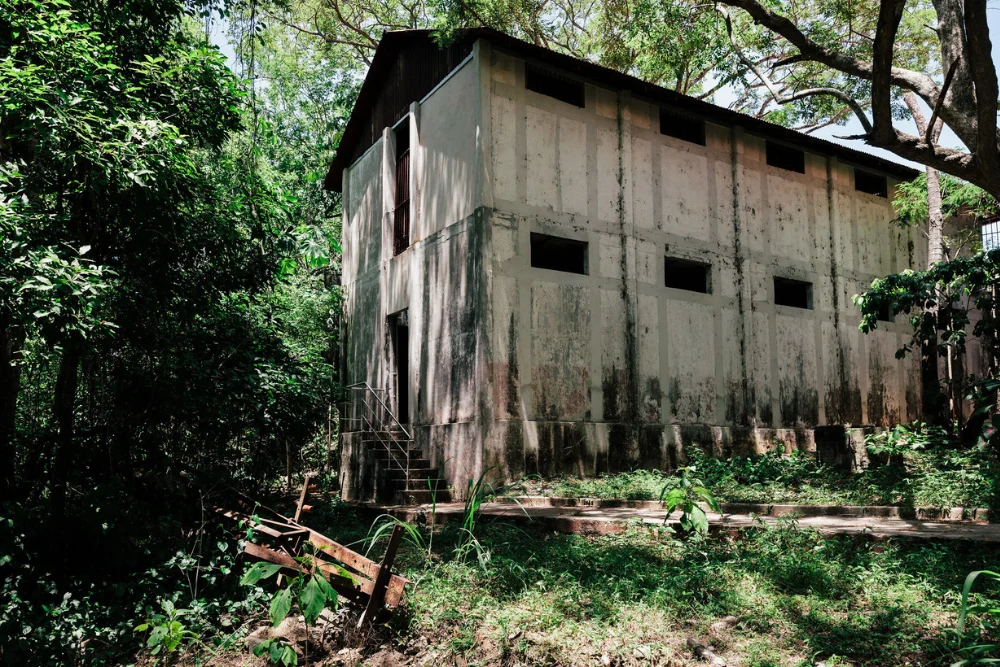
The crystalline waters lapping against the pebbled shores of San Lucas Island are deceptively serene. Today, the island is a sanctuary of nature and history, but from 1873 to 1991, these same shores were stained by the grim realities of Costa Rica’s most notorious penitentiary. Often dubbed "Costa Rica’s Alcatraz," the island housed the country’s most hardened criminals in a setting defined by isolation and systemic brutality.
While the facility’s dark chapter has concluded, a new, more creative legacy is beginning to take shape. As international production houses look for fresh, visually arresting, and logistically sound filming locations, San Lucas and the broader Costa Rican landscape are emerging as the industry’s next "it" destination.

A Legacy of Shadows: The San Lucas Penitentiary
The history of San Lucas is not merely one of stone and mortar; it is a repository of human suffering and resilience. During its 118-year operation, the prison was a place of short, often lethal sentences where medical care was practically non-existent. A haunting reminder of this era is the prison’s infirmary—a small, white-and-grey wooden structure that remains preserved today. Visitors are often struck by the contrast between the beautifully tiled floors and the harrowing photographs of emaciated prisoners who waited in vain for the island’s only doctor: a veterinarian.
The site is filled with chilling artifacts, most notably the "hole," a subterranean chamber once used as a water tank but repurposed as a torture dungeon. Poorly behaved inmates were cast into the pitch-black space, where they often perished in the sweltering heat, their bodies left in situ as a warning to others. On the concrete walls of the cells, one can find haunting graffiti—ranging from a desperate mural of a woman in a bikini, a testament to the prisoners’ longing for a life they had lost, to a jarring, disorienting portrait of football legend Pelé.

A New Cinematic Frontier
Despite its cinematic potential, the island has remained largely untouched by major fiction productions. The most significant effort to capture its history—an adaptation of José León Sánchez’s Island of Lonely Men—remained a frustrated initiative. However, the Costa Rica Film Commission is now actively positioning the site as a premier location for period dramas, psychological thrillers, and survival epics.
The island’s current status as a National Historical-Architectural Heritage Site and a National Wildlife Refuge ensures that while it is open for production, it is protected with a reverence that maintains its atmosphere. Its isolation, once a source of terror for inmates, is now its greatest asset for filmmakers seeking a controlled, high-production-value environment without the interference of modern urban sprawl.

The Geography of Production: The Gulf of Nicoya
Logistically, San Lucas is the jewel in the crown of the Gulf of Nicoya, Costa Rica’s largest Pacific estuary. This region serves as a strategic maritime corridor, connecting the mainland to the Nicoya Peninsula. For production teams, the proximity of the Puntarenas District—a bustling hub with a population of over 500,000—is a significant advantage.
Located just 30 to 40 minutes from the prison island, Puntarenas provides essential infrastructure: marinas, hotels, financial services, and technical suppliers. This allows productions to operate with the logistical efficiency of a major city while accessing the remote, rugged aesthetic of the surrounding islands, such as the tranquil, fishing-centric Isla Venado or the secluded, forest-laden coves of Isla Jesucita.

Expert Perspectives: Why Costa Rica?
Lyall Gardiner, a veteran location scout whose credits include Mission: Impossible – Dead Reckoning Part One, The Mummy, and John Wick: Chapter 3 – Parabellum, recently toured the region. His assessment of the country’s potential is bullish.
"For me, Costa Rica’s rich and inviting landscape has the potential to transform your imagination and your film," Gardiner tells Variety. "Incredible location diversity, an inviting and beautiful culture mixed with amazing people. So much still to be discovered, and I can’t wait to see more."

Gardiner’s sentiment is echoed by domestic producers like Ana Lucía Arias, who recently filmed Love Is the Monster in Golfito. She notes that while remote shooting in Costa Rica brings inherent challenges, the "support of the local community and authorities was key in the process of making our movie."
Diversity Beyond the Prison Walls
While San Lucas offers a haunting, historical backdrop, Costa Rica’s geographic diversity allows it to double for a wide variety of global settings.

1. Golfo Dulce and Golfito
The "Sweet Gulf" is one of the world’s few tropical fjords. Here, lush rainforests descend directly into the Pacific, creating a rare ecosystem. Golfito, a town shaped by the mid-20th-century influence of the U.S. United Fruit Company, offers a unique aesthetic: Colonial and Victorian-style wooden buildings set against a backdrop of dense, biodiverse jungle. It is a visual bridge between North American architectural nostalgia and Central American biodiversity.
2. The Caribbean Coast: Limón
Limón offers a completely different texture. The port city’s Afro-Caribbean heritage, wooden architecture, and waterfront boulevards provide an urban setting that is distinct from the Pacific coast. As "Zippy" Melissa Downing of COlabs notes, "In a remarkably compact area, you have volcanoes, rivers, Caribbean beaches, and the distinctive architecture of Limón. The landscapes offer incredible storytelling potential, and Limón’s unique textures can convincingly double for locations around the world."

3. Turrialba Volcano and the "Burnt Forest"
Perhaps the most surreal setting in the country is the "Burnt Forest" (Bosque Quemado). Decades of volcanic activity have left behind a skeletal, ash-covered landscape. It is a natural set for post-apocalyptic films, alien worlds, or survival dramas. It stands in stark contrast to the nearby lush highlands and coffee farms, allowing for dramatic visual shifts within a single day of shooting.
4. Bajos del Toro: The Land of Waterfalls
With over 30 waterfalls in one valley, this region remains largely undiscovered by international productions. As Location Manager Mickey Ryan highlights, "Because it remains relatively undiscovered compared with destinations like La Fortuna, filmmakers can capture spectacular scenery that feels fresh and unique while avoiding the logistical challenges associated with heavily visited locations."

Implications for the Future
The push to turn Costa Rica into a cinematic powerhouse is supported by more than just scenery; it is backed by a commitment to education, environmental protection, and the "Pura Vida" spirit. The infrastructure is maturing, with domestic airports and established tourism services making the most remote corners of the country accessible.
As production budgets tighten and the demand for "fresh" visual identities increases, Costa Rica stands at a threshold. It is no longer just a destination for eco-tourists or luxury travelers; it is a land of untapped, high-fidelity storytelling environments. From the dark, silent walls of San Lucas to the azure falls of Alajuela, the country is proving that it has the depth, the diversity, and the infrastructure to become a cornerstone of global film production. The next great cinematic masterpiece may well be waiting in the shadows of an island, the mist of a volcano, or the streets of a historic port town—all nestled within the borders of this small, vibrant, and increasingly cinematic nation.