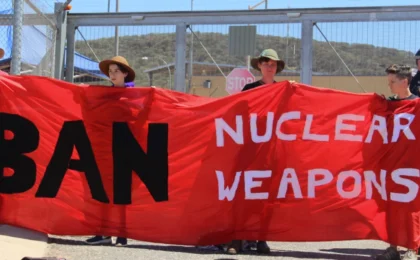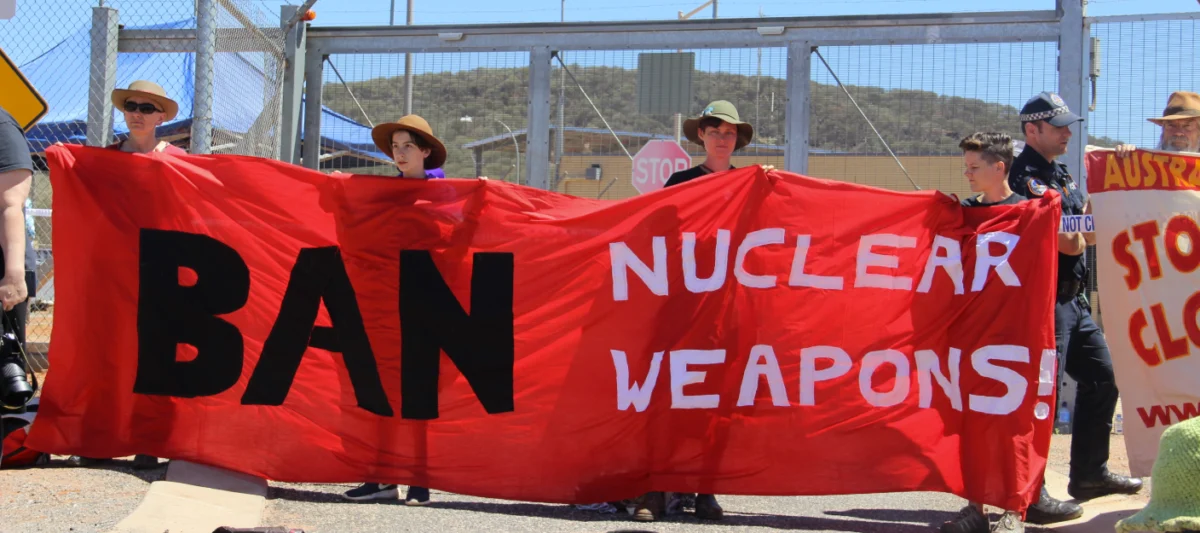
As the United Nations marks the International Day for the Total Elimination of Nuclear Weapons this Saturday, September 26, 2026, the global security architecture faces its most precarious moment since the height of the Cold War. Established by UN General Assembly Resolution 68/32 in 2013, this annual observance is intended to serve as a beacon of hope for a world free of atomic threats. However, in 2026, the day serves less as a celebration of progress and more as a somber reflection on a crumbling regime of international restraint.
The promise of a nuclear-free future—once the cornerstone of post-WWII diplomacy—is currently unraveling under the weight of geopolitical rivalry, the expiration of key treaties, and the emboldened rhetoric of rogue states.
The Landscape of Disarmament: Main Facts
The architecture of global nuclear restraint is built upon two primary pillars: the Treaty on the Non-Proliferation of Nuclear Weapons (NPT) and the newer, more stringent Treaty on the Prohibition of Nuclear Weapons (TPNW).
The NPT, which entered into force in 1970, remains the foundational treaty of global non-proliferation. Article VI mandates that all parties—most crucially the world’s declared nuclear powers—pursue negotiations in good faith toward effective measures for nuclear disarmament. Yet, after 56 years, critics argue that the "good faith" requirement has been hollowed out by the refusal of major powers to dismantle their strategic stockpiles.
In response to this stagnation, the TPNW was developed as a humanitarian-led initiative, entering into force in 2021. It provides a comprehensive ban on the development, possession, and use of nuclear weapons. As of September 2026, the treaty has secured 75 states parties. While this represents a significant moral victory for the Global South and non-nuclear-armed states, the TPNW is notably ignored by the nine nations that currently possess nuclear arsenals, creating a deepening divide between the "norm-setters" and the "norm-breakers."
A Chronology of Erosion
The decline of the disarmament regime is not a sudden event, but a steady erosion marked by specific milestones:
- 2003: North Korea invokes Article X of the NPT, formally withdrawing from the treaty. This act of defiance shattered the regional security status quo and set the stage for the country’s subsequent nuclear testing.
- 2006: Following the expulsion of International Atomic Energy Agency (IAEA) inspectors, North Korea conducts its first successful nuclear test, confirming its transition to a de facto nuclear state.
- 2013: The UN General Assembly establishes the International Day for the Total Elimination of Nuclear Weapons, attempting to re-center disarmament in global discourse.
- 2021: The Treaty on the Prohibition of Nuclear Weapons (TPNW) officially enters into force, marking a new, albeit polarized, chapter in international law.
- 2024: North Korea and Russia sign a Comprehensive Strategic Partnership Treaty, signaling a deepening military alliance that undermines international efforts to contain Pyongyang’s nuclear ambitions.
- February 5, 2026: The New Strategic Arms Reduction Treaty (New START) between the United States and Russia expires. For the first time in decades, there is no active bilateral treaty imposing caps on the world’s two largest nuclear arsenals.
Supporting Data: The Economics of Proliferation
The persistence of nuclear programs in states like North Korea is inextricably linked to their ability to circumvent international sanctions. A recent report by the Multilateral Sanctions Monitoring Team (MSMT) reveals that Pyongyang has developed a sophisticated "shadow economy" to fund its nuclear ambitions.
Despite UN Security Council Resolution 2397 (2017), which explicitly bans member states from allowing North Korean nationals to earn income within their jurisdictions, the MSMT found that the regime generated between $450 million and $800 million in 2025 alone. This capital is largely sourced from the deployment of state-sponsored laborers abroad and illicit cyber activities. These funds, funneled directly into the state’s research and development apparatus, illustrate the failure of traditional "pressure-based" diplomacy when divorced from rigorous enforcement mechanisms.
Furthermore, intelligence satellite imagery has confirmed the expansion of a large-scale uranium enrichment facility in North Korea. This physical infrastructure, combined with the regime’s refusal to engage in denuclearization talks, underscores a permanent shift in the regional power balance.
Official Responses and Geopolitical Tensions
The international community remains deeply divided on how to address these threats. The recent trilateral joint statement issued by the United States, Japan, and the Republic of Korea in New York emphasized a "united front" against nuclear provocation. However, this move was met with immediate, aggressive pushback from Pyongyang.
North Korean Foreign Minister Choe Son Hui recently issued a statement declaring the country’s status as a nuclear-armed power to be "permanent and irreversible." Her pledge to "keep its nuclear weapons forever" serves as a direct rebuke to the UN’s goals and signals that the era of "denuclearization" as a diplomatic objective for North Korea has effectively ended.
In the Middle East, the situation is equally fraught. Recent military escalations involving US-Israel strikes on Iranian infrastructure have created significant domestic pressure within Tehran to reconsider its commitment to the NPT. Reports suggest that key factions within the Iranian political establishment are advocating for a formal withdrawal from the treaty, potentially triggering a regional arms race that would threaten the stability of the entire Gulf region.
Implications for Global Security
The expiration of New START has created a "legal vacuum" that emboldens nuclear-armed states to modernize their arsenals without fear of reciprocal oversight. When the world’s two largest nuclear powers—the US and Russia—operate without a treaty, the risks of miscalculation, accidental escalation, and rapid, unchecked expansion become significantly higher.
1. The Death of Arms Control
The current geopolitical environment suggests that the traditional model of "step-by-step" disarmament is no longer functional. Without a successor to New START, the world is returning to an era of unconstrained competition. The lack of transparency measures means that strategic postures are now governed by speculation rather than verified data.
2. The Rogue State Dilemma
The proliferation of nuclear weapons to regimes that operate outside the international legal order poses an existential threat. When a state can effectively use its nuclear status as a shield to violate human rights, deploy foreign labor in defiance of UN mandates, and ignore Security Council resolutions, the credibility of the entire UN system is diminished.
3. The Path Forward: A High-Level Reckoning
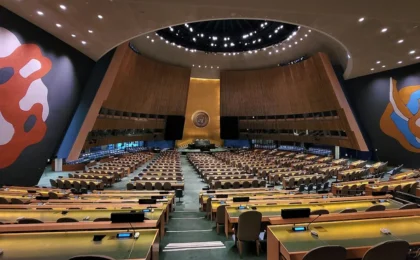
As the UN General Assembly prepares for its high-level meeting on September 29, 2026, the agenda will be dominated by a fundamental question: Can global commitments survive the geopolitical reality?
The meeting is intended to be a platform for Member States to address the implementation of existing commitments. However, observers remain skeptical. For the International Day for the Total Elimination of Nuclear Weapons to be more than a symbolic gesture, the international community must move beyond non-binding resolutions.
Enforcement remains the missing link. Without mechanisms that impose real, tangible costs on states that violate the NPT or ignore the prohibition against nuclear testing, the "promise" of 2013 remains a promise without an advocate. As we reflect on this day in 2026, the challenge is clear: we must either find the political will to modernize our enforcement tools or accept that the era of global nuclear restraint is rapidly drawing to a close. The world sits at a crossroads—between a future governed by the rule of law and a future defined by the shadow of the mushroom cloud.