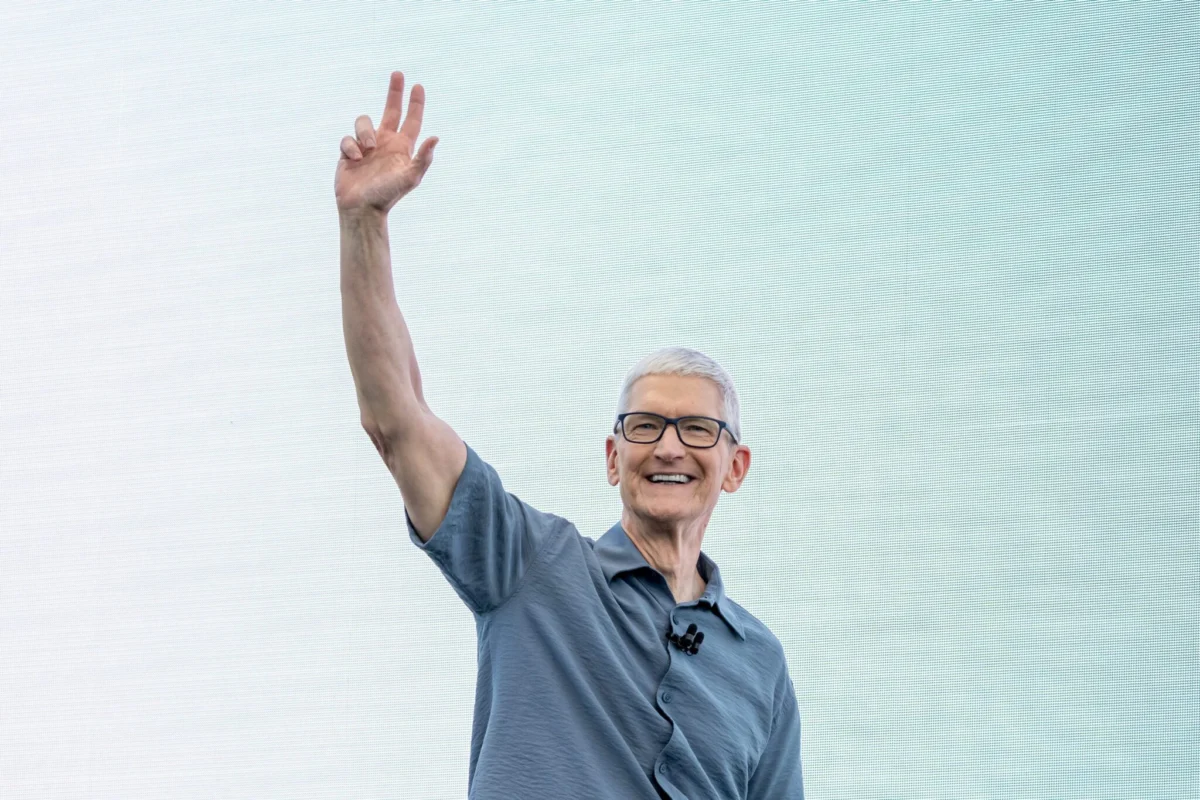
In the history of corporate America, few successions were viewed with as much skepticism as the transition of power at Apple Inc. in 2011. When Tim Cook took the helm from the legendary Steve Jobs, the prevailing narrative was one of inevitable decline. Jobs was the "artist-CEO," the mercurial genius who conjured products out of thin air. Cook, by contrast, was the "operations whiz," a man of spreadsheets and supply chains.
Now, looking back from the vantage point of late 2026, that narrative has been utterly dismantled. As Fortune examines the trajectory of Apple over the past two decades, it is clear that Tim Cook did not just maintain the house that Jobs built; he expanded it into a global empire that redefined the intersection of technology, finance, and social responsibility.
Main Facts: The Architect of the Modern Titan
Tim Cook’s tenure as CEO has been defined by a transition from a product-centric company to an ecosystem-centric superpower. While Steve Jobs focused on the "insanely great" individual device, Cook focused on the "insanely efficient" integration of hardware, software, and services.
Under Cook’s leadership, Apple’s market capitalization surged from approximately $350 billion in 2011 to peak valuations exceeding $3.5 trillion. This growth was driven by more than just iPhone sales. Cook oversaw the diversification of Apple’s revenue streams, turning the "Services" division—comprising the App Store, iCloud, Apple Music, and Apple Pay—into a Fortune 50 company in its own right.
Furthermore, Cook redefined the role of a Big Tech CEO. He moved Apple into the center of global conversations regarding user privacy, environmental sustainability, and human rights. By the time Fortune published its "Becoming Tim Cook" retrospective in the October/November 2026 issue, Cook had proven that a "calm pragmatist" could be every bit as visionary as a "combustible genius."
Chronology: From "Blank Slate" to Global Icon
2008: The Under-the-Radar Genius
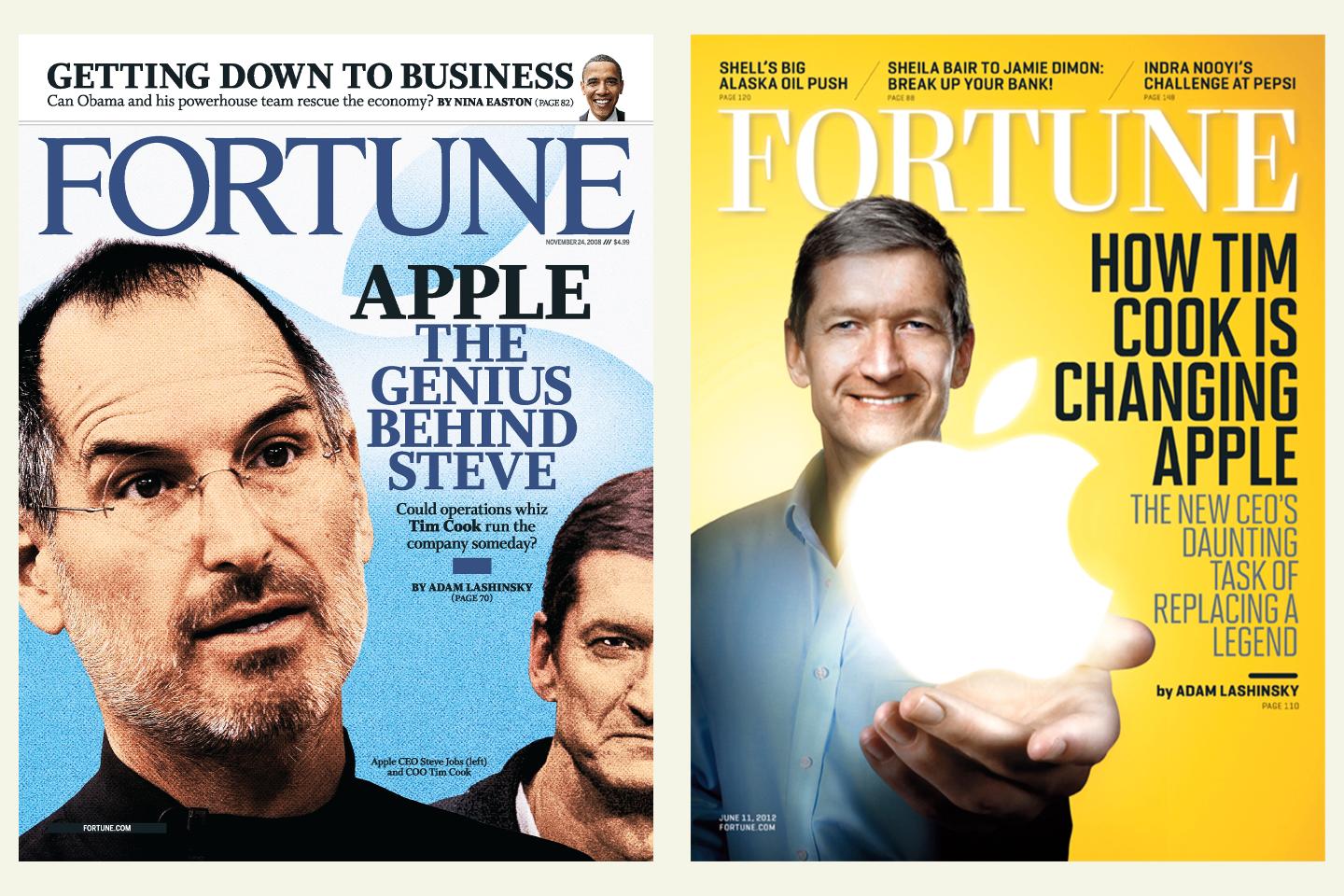
When Fortune writer Adam Lashinsky first profiled Tim Cook in 2008, Cook was the man behind the curtain. As Chief Operating Officer, he was credited with the "miracle" of Apple’s supply chain—slashing inventory levels and securing long-term deals for flash memory that crippled competitors. To the public, however, he was a "blank slate." He was the "quiet one" who ensured that Jobs’ visions were physically possible to manufacture at scale. Even then, whispers of him being the heir apparent were met with his own humble resistance: "Come on, replace Steve? No. He’s irreplaceable."
2011–2012: The Burden of Succession
The transition came sooner than anyone hoped. Following Jobs’ resignation and subsequent passing in late 2011, Cook assumed the mantle during a period of intense mourning and scrutiny. By mid-2012, Lashinsky found a CEO who was "in complete control," yet still navigating the shadows of his predecessor. Cook’s early strategy was one of "homage without apology." He honored Jobs’ design-first philosophy but immediately began making pragmatic changes, such as initiating Apple’s first dividend and share buyback programs—moves Jobs had famously resisted.
2015: Defining the Cook Era
By 2015, the "Cook Era" had officially arrived with the launch of the Apple Watch. This was the first major product category developed entirely under his watch. It signaled a shift toward health, fitness, and wearables. Apple was no longer just a computer or phone company; it was becoming a "lifestyle and health" company. Executives noted that Cook had stopped trying to emulate Jobs’ management style. He wasn’t the guy in the design lab at 2:00 AM obsessing over the curve of a bezel; he was the leader building a corporate culture of collaboration and long-term scaling.
2020–2024: Resilience and Spatial Computing
The early 2020s tested Cook’s operational brilliance like never before. Amidst a global pandemic and fractured geopolitical relations, Apple’s supply chain—Cook’s crowning achievement—remained remarkably resilient. During this period, he also oversaw the transition to Apple Silicon (M-series chips), a move that gave Apple unprecedented vertical integration. The 2024 launch of the Vision Pro marked his entry into "spatial computing," a final proof point that Cook could still bet the company on a futuristic, "visionary" platform.
2026: The Legacy Solidified
As of late 2026, Tim Cook stands as the longest-serving CEO in Apple’s history. The "blank slate" of 2008 has been filled with a record of staggering financial success and a fundamental reshaping of how technology companies interact with society.
Supporting Data: The Metrics of a Decade-Plus Reign
The scale of Apple’s growth under Cook is best understood through the lens of hard data. These figures illustrate the shift from a high-growth hardware startup to a mature, diversified industrial giant.
- Market Capitalization: In August 2011, Apple was valued at roughly $350 billion. By 2025, it had spent significant time as the world’s most valuable company, crossing the $3 trillion threshold multiple times.
- Revenue Diversification: In 2011, Services accounted for less than 7% of Apple’s revenue. By 2026, that figure has climbed to nearly 25%, providing a high-margin "safety net" that makes the company less dependent on annual hardware cycles.
- The Wearables Explosion: The "Wearables, Home, and Accessories" category, which includes AirPods and Apple Watch, now generates more revenue than many Fortune 100 companies. This segment was virtually non-existent when Cook took over.
- R&D Investment: Under Cook, Research and Development spending skyrocketed from $2.4 billion in 2011 to over $30 billion annually by the mid-2020s, fueling the move into custom silicon and augmented reality.
- Operational Footprint: Cook successfully navigated the "de-risking" of Apple’s supply chain, moving significant production to India and Vietnam to mitigate reliance on a single geographic region.
Official Responses and Internal Perspectives
The internal culture of Apple underwent a tectonic shift during the "Becoming Tim Cook" years. While Steve Jobs led through a "hub-and-spoke" model where all roads led to him, Cook empowered his lieutenants.
An Apple executive, speaking to Fortune during the 2015 profile, encapsulated the transition: "He never tried to be Steve. He tried to always be himself." This sentiment has become the internal mantra of the Cook administration. By allowing leaders like Jeff Williams (Operations), Craig Federighi (Software), and formerly Jony Ive (Design) more autonomy, Cook created a more sustainable, albeit less "theatrical," corporate structure.
Outside the company, industry analysts initially criticized Cook for a perceived lack of "innovation." However, by 2026, the consensus has shifted. "Cook’s innovation wasn’t just a product; it was the machine that builds the products," says one veteran Silicon Valley analyst. "He turned Apple into a perpetual motion machine of cash flow and brand loyalty."
Cook’s own public statements have focused increasingly on his "North Star" values. In various commencement speeches and interviews, he has emphasized that "privacy is a fundamental human right" and that "companies should have a soul." These weren’t just slogans; they became baked into the product architecture, often putting Apple at odds with other tech giants like Meta and Google.
Implications: The Future of Leadership and the Post-Cook Era
The evolution of Tim Cook offers several profound implications for the future of business leadership and the technology industry.
1. The Successor’s Blueprint
Cook has provided a masterclass in "following a founder." His success suggests that the best way to honor a legendary predecessor is not to mimic them, but to apply one’s own unique strengths to the company’s core values. He proved that an operations-minded leader could maintain a creative culture by providing the stability and resources that "creatives" need to thrive.
2. The CEO as a Social Diplomat
Cook’s tenure has signaled the end of the "neutral" CEO. By taking stances on climate change, immigration, and encryption, Cook forced other corporate leaders to realize that in a hyper-connected world, silence is a stance. His ability to navigate the political minefields of both Washington D.C. and Beijing simultaneously has become a prerequisite skill for any global CEO.
3. The "Service-ification" of Tech
The "Apple Model" under Cook—locking users into a seamless web of hardware and subscription services—is now the standard for the industry. This shift has implications for antitrust regulation, as governments worldwide continue to grapple with the "walled garden" approach that Cook perfected.
4. Preparing for the Next Chapter
As 2026 draws to a close, the question of "Who follows Cook?" is the most pressing topic in Cupertino. Unlike the 2011 transition, which felt like a crisis, the next handover is expected to be a reflection of Cook himself: orderly, pragmatic, and meticulously planned. Whether it is Jeff Williams or a younger executive from the "Services" or "Silicon" teams, they will inherit a company that is vastly more complex and powerful than the one Jobs left behind.
In the final analysis, Tim Cook’s greatest achievement was perhaps his most quiet one: he proved that Apple could survive, and indeed thrive, without the man who founded it. He transformed a "blank slate" into a blueprint for 21st-century leadership. While Steve Jobs gave Apple its heart, Tim Cook gave it its backbone.