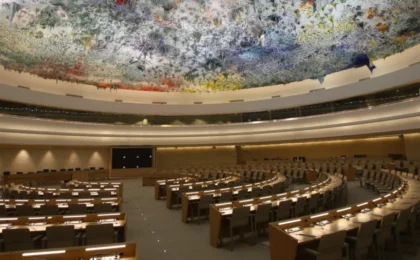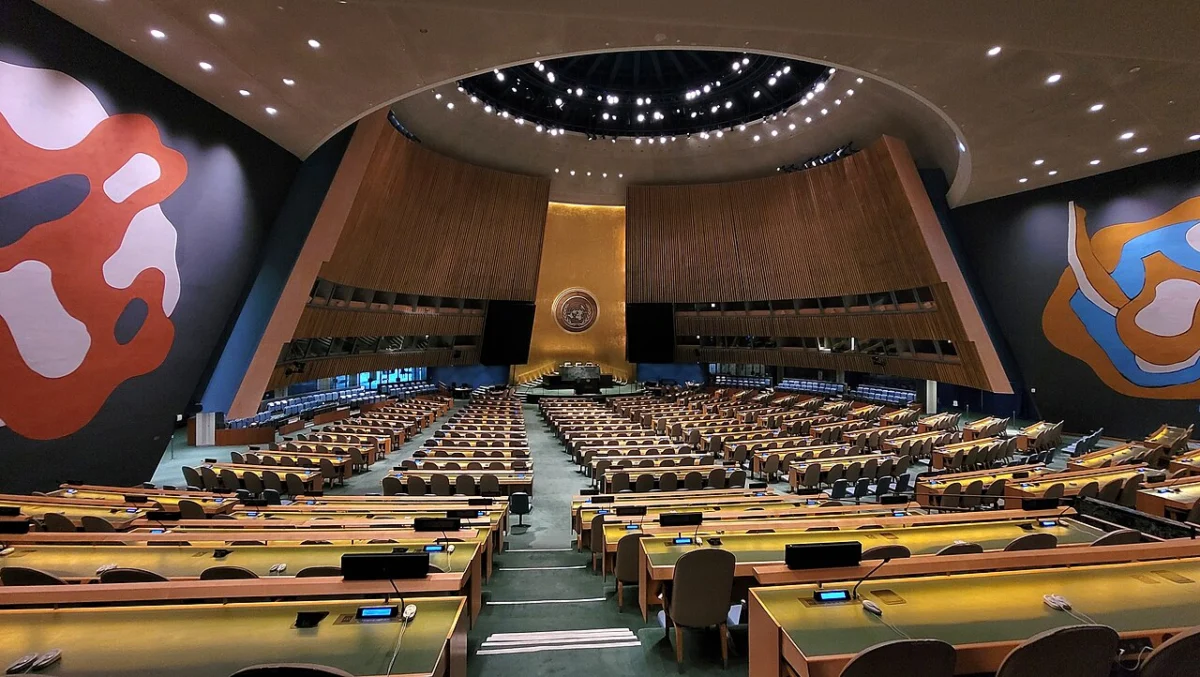
In a historic convergence of diplomacy and existential urgency, world leaders gathered at the United Nations General Assembly in New York this week to adopt the UN Declaration on Sea Level Rise. This consensus-based agreement represents the first global political framework dedicated exclusively to addressing the cascading legal, humanitarian, and developmental crises precipitated by the warming of our oceans. As the climate crisis shifts from a distant threat to a present-day reality, the declaration serves as both a recognition of the peril facing low-lying nations and a foundational attempt to codify the legal standing of countries that may soon find their territories submerged.
The Gravity of the Situation: Main Facts
The declaration arrives at a tipping point. UN Secretary-General António Guterres, speaking to the General Assembly, painted a harrowing picture of the current trajectory: global sea levels rose by nearly six millimeters in 2024 alone—the largest annual increase ever recorded. With nearly 900 million people currently residing in low-lying coastal zones and more than one billion expected to face severe coastal hazards by 2050, the humanitarian implications are staggering.
The document serves as a high-level commitment to four primary pillars:
- Strengthened International Cooperation: Moving beyond fragmented climate action toward a unified, global policy response.
- Accelerated Emissions Reductions: A recognition that legal frameworks are moot if the physical cause—global warming—remains unaddressed.
- Resilience Financing: A call for massive capital mobilization to support adaptation in small island developing states (SIDS) and low-lying nations.
- Legal Continuity: A crucial acknowledgment that sovereignty and statehood must persist, even in the event of territorial loss due to inundation.
A Chronology of Crisis and Legal Inquiry
The road to this declaration was paved by years of mounting concern and deliberate legal study.
- 2019: The UN International Law Commission (ILC) formally adds "sea-level rise in relation to international law" to its agenda, recognizing the need to move beyond environmental science into the realm of jurisprudence.
- 2023–2024: Regional powerhouses, including the Pacific Islands Forum and the Alliance of Small Island States (AOSIS), issue landmark declarations affirming that statehood is not contingent upon the physical stability of land.
- May 2024: The International Tribunal for the Law of the Sea (ITLOS) issues a historic advisory opinion, declaring that greenhouse gas emissions constitute a form of marine pollution, thereby triggering state obligations under the UN Convention on the Law of the Sea (UNCLOS).
- September 2024: The General Assembly adopts Decision 78/558, setting the stage for the high-level meeting.
- 2025: The ILC completes its multi-year report, providing the technical legal bedrock for the current declaration.
- September 2026: The UN adopts the Declaration on Sea Level Rise, establishing the first global framework for the phenomenon.
Supporting Data: The Science of Inundation
The scientific consensus underpinning the declaration is unequivocal. Without significant, immediate reductions in greenhouse gas emissions, average sea levels are projected to rise by approximately one meter by the end of the 21st century.
This is not merely a statistical projection; it is a demographic catastrophe. The concentration of global populations in coastal areas—often in rapidly growing urban centers—means that the economic disruption will be felt across every continent. The ILC’s findings highlight that while the physical land may disappear, the maritime baselines—the invisible lines that determine a nation’s exclusive economic zone (EEZ) and resource rights—must be protected. If a state’s sovereignty were to vanish with its land, the legal chaos regarding fisheries, mineral rights, and oceanic jurisdiction would be unprecedented in modern history.
Official Responses and Legal Interpretations
The debate within the UN chamber centered heavily on the interpretation of UNCLOS. For decades, maritime zones were understood to be tethered to the physical presence of coastline. However, the ILC’s final report has shifted the narrative. The commission concluded that the Convention does not mandate that states update their baselines or geographical coordinates once they have been duly deposited with the UN Secretary-General.
This "frozen baseline" theory provides a vital legal shield for island nations. It effectively decouples a state’s maritime sovereignty from the physical integrity of its shoreline.
"This is not just about geography; it is about identity and the rule of law," noted one delegate during the deliberations. "By recognizing that sovereignty survives the water, we are protecting the legal personality of the most vulnerable nations on Earth."
The International Tribunal for the Law of the Sea has reinforced this by elevating the climate duty of states. By classifying emissions as marine pollution, ITLOS has empowered nations to bring climate-related grievances before international courts, effectively turning the law of the sea into a tool for climate litigation.
Implications: The Unresolved Frontiers
Despite the landmark nature of the declaration, it is an aspirational framework rather than a binding treaty. Significant legal and humanitarian gaps remain, which the UN has pledged to address before the end of the 84th session of the General Assembly.
The Problem of Relocation and Nationality
While the declaration affirms that statehood can survive territorial loss, it offers no immediate roadmap for the physical relocation of millions. If a population is forced to evacuate, what happens to their citizenship? Can a government exercise authority from abroad? These questions remain the "third rail" of international law, touching upon the sensitive concepts of national sovereignty and migration.
The Question of Compensation
The declaration acknowledges the need for support, but the mechanism for compensation remains vague. Affected nations have long argued for "Loss and Damage" funds that move beyond voluntary aid toward mandatory, liability-based reparations. As legal precedent grows, it is likely that international courts will see an increase in claims for damages caused by the inaction of high-emitting, industrialized nations.
Human Rights and Self-Determination
The ILC has been clear that even in the face of environmental displacement, affected persons do not lose their human rights. The right to self-determination, the right to nationality, and the right to be free from statelessness are fundamental pillars that the UN must now protect as the map of the world begins to change.
Conclusion: A New Era of Climate Diplomacy
The UN Declaration on Sea Level Rise is a testament to the international community’s recognition that the physical environment is fundamentally changing the rules of global engagement. As the General Assembly transitions from the "recognition" phase of this crisis toward the "implementation" phase, the focus will turn to the complex, gritty reality of financing, border management, and international legal enforcement.
The declaration is a starting point, not a solution. It provides a shield for the legal existence of nations, but the challenge of ensuring their physical survival remains the defining task of the 21st century. For the small island states that led this charge, the declaration is a lifeline. For the rest of the world, it is a warning: the tide is rising, and the law must rise to meet it.