Paris, France – In a moment that will undoubtedly be etched into the annals of ecclesiastical and French history, Pope Leo XIV arrived in Paris this week for a landmark visit, culminating in a ceremonial procession toward the newly restored Notre-Dame Cathedral. The atmosphere in the French capital was electric, blending the solemnity of a papal pilgrimage with the vibrant cultural resurgence of a city that has spent years preparing for the return of its most iconic spiritual landmark.
Main Facts: A Symbolic Return to the Heart of Europe
The visit of Pope Leo XIV to France marks a significant geopolitical and religious milestone. As the successor to the Chair of Saint Peter, the Pope’s arrival in Paris serves as a powerful symbol of the enduring bond between the Holy See and the French Republic—a relationship that has historically fluctuated between fervent alliance and secular tension.
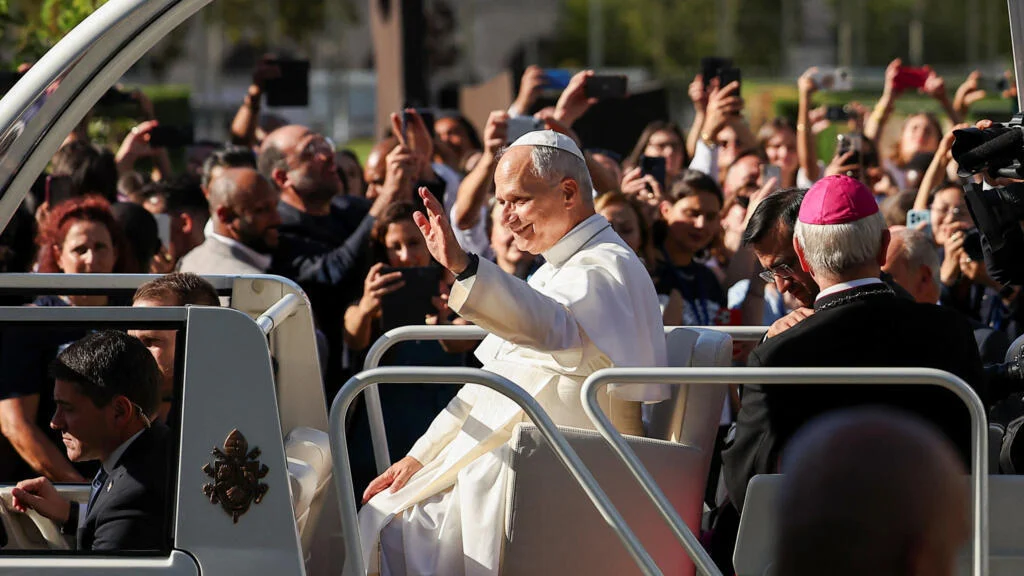
The highlight of the visit was the procession of the "Papamobile" (Popemobile) through the historic streets of Paris, winding its way toward the Ile de la Cité. The route was lined with thousands of pilgrims, tourists, and curious Parisians, all eager to witness the pontiff as he made his way toward Notre-Dame de Paris.
The visit is not merely ceremonial. Sources close to the Vatican indicate that the trip is intended to address the role of faith in contemporary European society, the challenges of secularism, and the urgent need for solidarity in the face of global humanitarian crises. By choosing Notre-Dame—a site that recently rose from the ashes of a devastating fire—the Pope is framing the narrative of his visit around the themes of "resilience, renewal, and the preservation of the sacred."
Chronology of the Visit
To understand the weight of this event, one must look at the meticulously planned timeline of the Pope’s activities:
- September 25, 2026 – Morning: Pope Leo XIV touched down at Charles de Gaulle Airport, where he was greeted by high-ranking French government officials, including the President of the Republic. This marked the official commencement of the state visit.
- September 25, 2026 – Midday: A private meeting took place at the Élysée Palace to discuss diplomatic relations, focusing on the Vatican’s role in Mediterranean peacekeeping and European integration.
- September 25, 2026 – 14:53 UTC: The Papamobile began its procession from the administrative heart of the city, moving toward the center of Paris. The streets, secured by thousands of police officers, were filled with a diverse crowd.
- September 25, 2026 – 17:23 UTC: Official confirmation of the successful arrival at the Notre-Dame Cathedral perimeter, where the Pope engaged in a brief public blessing, signaling the start of the evening liturgy.
Supporting Data: The Logistics of Faith
The security and logistical requirements for a papal visit of this magnitude are unprecedented in modern French history. According to figures provided by the Paris Prefecture of Police:
- Security Deployment: Over 12,000 security personnel, including CRS riot police, Gendarmerie, and municipal forces, were deployed across the city to ensure the safety of the pontiff and the attending crowds.
- Economic Impact: Estimates suggest that the visit generated an immediate economic stimulus of approximately €45 million, driven by hotel occupancy, local catering, and the influx of international media outlets.
- Crowd Estimates: Despite the intermittent weather conditions, municipal authorities reported that upwards of 250,000 individuals gathered along the procession route, with an additional 1.2 million watching via digital broadcasts globally.
- Digital Reach: The event saw a surge in social media engagement, with #PopeInParis trending globally for over eight hours, demonstrating the continued reach of the Catholic Church in the digital age.
Official Responses: Church and State in Dialogue
The visit has drawn a wide range of responses from across the political and religious spectrum.
The View from the Élysée
The French government has framed the visit as an opportunity to reinforce the secular-religious dialogue. A spokesperson for the President stated, "While France remains a deeply secular state, the presence of His Holiness serves as a vital bridge for dialogue. Notre-Dame is more than a cathedral; it is a monument to our shared history. Having the Pope here to witness its renewal is a gesture of unity that resonates far beyond the Catholic community."

The Vatican’s Perspective
Vatican officials have emphasized that the Pope’s primary goal is pastoral. "The Holy Father comes to listen and to pray," a Vatican spokesperson noted during the press briefing. "He recognizes that the challenges faced by the French people—secularism, social stratification, and the search for meaning in a post-industrial world—are universal. His message is one of hope and the necessity of looking back at our heritage to move forward into a more compassionate future."
Societal Skepticism
Not all reactions have been purely celebratory. Several secular advocacy groups held silent vigils in nearby districts, arguing that the heavy police presence and state-funded security for a religious leader challenge the principles of the 1905 French law on the Separation of the Churches and the State. These groups maintain that while the Pope is a foreign head of state, the state must ensure that religious influence remains strictly separate from public governance.
Implications: A Shift in European Discourse
The visit of Pope Leo XIV to Paris carries long-term implications for the future of European politics and the Church’s influence in the West.
1. The "Notre-Dame Effect"
The restoration of the cathedral, combined with the Pope’s visit, serves as a soft-power victory for traditional European culture. By positioning himself at the center of this restoration, the Pope is reinforcing the Catholic Church’s claim to being the historical custodian of Western civilization. This has sparked a broader debate in academic circles about whether "Christian Europe" is a relic of the past or a viable blueprint for future social cohesion.
2. Geopolitical Alignment
The private talks between the Pope and the French leadership are expected to influence the Vatican’s stance on upcoming EU policies regarding migration and environmental stewardship. France and the Holy See have long shared a common ground on climate change—a topic Pope Leo XIV has made a central pillar of his pontificate. By aligning with the French government, the Vatican aims to exert more pressure on European policymakers to adopt more rigorous humanitarian standards for asylum seekers crossing the Mediterranean.
3. Inter-religious Relations
This visit also acts as a litmus test for inter-religious relations in France. With the country home to one of the largest Muslim and Jewish populations in Europe, the Pope’s rhetoric regarding religious coexistence is being parsed with extreme care. The expectation is that the Pope will continue to advocate for "fraternity," a term he has frequently utilized to bridge the gap between religious dogmatism and civic inclusion.
Conclusion
As the sun set over the Seine, the silhouette of Notre-Dame, now fully restored and glowing under the night sky, provided a poignant backdrop to the end of the day’s events. Pope Leo XIV’s visit is not merely a scheduled stop in a papal itinerary; it is a significant cultural event that forces a confrontation between the past and the future of French identity.
Whether the visit will lead to a genuine "spiritual awakening" as some hope, or merely remain a historical footnote in a secularized nation, remains to be seen. However, as the bells of Notre-Dame rang out to signal the end of the evening’s proceedings, the message sent was clear: the dialogue between the sacred and the secular, the ancient and the modern, is far from over. It is, in fact, being written in the streets of Paris today.