The Spanish audiovisual industry, once defined by localized hits and sporadic international breakthroughs, has undergone a metamorphosis that has captured the attention of global markets. At the heart of this evolution lies a robust, government-backed financial strategy that has turned the Iberian nation into Europe’s leading production powerhouse.
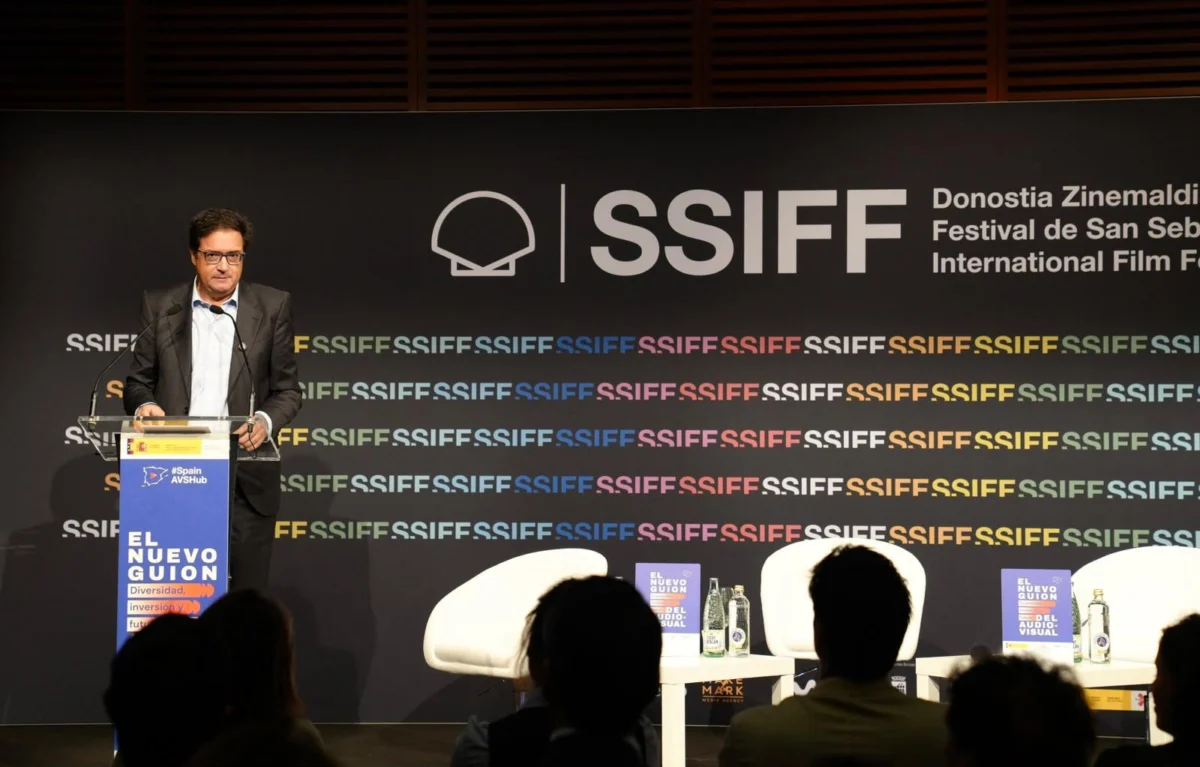
Speaking at the "New Script of the Audiovisual Industry" conference during the prestigious San Sebastian Festival, Óscar López, Spain’s Minister for Digital Transformation and Public Administration, reaffirmed the government’s unwavering commitment to the sector. For the Spanish state, the mission is clear: solidify Spain as a global audiovisual hub through the "Spain Crece Fund" and the strategic deployment of sovereign venture capital via the Spanish Society for Technological Transformation (SETT).
A New Era of State-Led Growth
Minister López’s address underscored a philosophy of long-term continuity in public policy. "When a public policy works, it should be maintained without a deadline," López stated, framing the current moment as the "golden age" for Spanish content.
The strategy has been fueled by a €1.6 billion institutional investment—a figure that, according to the Ministry, has served as the catalyst for an unprecedented economic transformation. By providing the capital that was historically absent, the government has enabled Spanish creators to bridge the gap between world-class talent and the infrastructure required to produce high-end content at scale.
Chronology of an Industry Pivot
The current success did not happen in a vacuum. It is the result of a deliberate, multi-year plan known as the "Spain Audiovisual Hub Plan."
- 2020–2021: The foundational period where the government recognized that while Spain possessed the talent and the iconic locations, it lacked the systematic capital injection necessary to compete globally.
- 2022–2024: The implementation phase, marked by the rollout of the Spain Audiovisual Hub, which saw major tax incentives and the professionalization of local production houses.
- 2025: A breakout year where production in the country grew by 31%, and employment figures within the sector effectively doubled compared to pre-2020 levels.
- 2026: The current "victory lap," highlighted by the triumph of Javier Calvo and Javier Ambrossi’s La Bola Negra at the Toronto International Film Festival (TIFF). Winning the People’s Choice Award, the film is already being tipped as a frontrunner for the Oscars, signaling that Spanish storytelling is now fundamentally "Oscar-ready."
Data-Driven Dominance: The Numbers Behind the Success
The scale of Spain’s rise is best reflected in the hard data provided by the Ministry and corroborated by the upcoming Olsberg-SPI report. The numbers paint a picture of an industry that has become a vital engine for the broader Spanish economy.
The Economic Footprint
According to preliminary data from the Olsberg-SPI study, the sector has generated an estimated €20 billion in direct production expenditure between 2020 and 2025. This activity has contributed nearly €18 billion in Gross Value Added (GVA) to the Spanish economy. Furthermore, the industry is no longer just about actors and directors; it is an ecosystem. Over 50% of the 64,000 jobs created are generated through auxiliary supply chains, including construction, hospitality, transport, and logistics.
Global Market Performance
Spain has officially overtaken its European neighbors to become the continent’s largest production market. The influence of Spanish content is perhaps best measured by its performance on streaming platforms. As of 2026, Spanish productions occupy more spots in Netflix’s all-time Top 10 non-English hits than those of any other nation. On a regional level, Spanish productions account for nine of the 11 most-watched series across Europe, cementing the country’s role as the continent’s primary narrative architect.
Official Responses and Strategic Investment
The government’s strategy is not merely to write checks, but to invest in institutional stability through SETT. Minister López confirmed that €450 million is currently being mobilized to support key industry players such as Good Films, Lazona, and Aurora Media.
This capital is creating tangible shifts in how independent producers operate. Miriam Segal, founder of Good Film Studios, noted that for the first time in her career as an independent producer, the stability provided by Spanish government support has allowed her to issue "pay-or-play" deals to top-tier acting talent—a practice typically reserved for major Hollywood studios. Similarly, José Carlos García of Ánima Kitchen credited SETT with enabling the recruitment of specialized talent and the greenlighting of a slate of three high-end animated features over the next five years.
Implications: A Model for Europe?
The "New Script of the Audiovisual Industry" conference also served as a forum for debating the future of European cinema. Representatives from Greece, Denmark, and Spain engaged in a dialogue regarding how to maintain cultural diversity while simultaneously competing with the monolithic scale of American production.
Carla Redondo, representing the Ministry of Digital Transformation, argued that Europe’s strength lies in its heterogeneity. However, there was a consensus that administrative harmonization is required to allow European content to travel more freely. Leonidas Christopoulos of Greece’s Ekkomed emphasized that regardless of the funding model, the core mandate remains unchanged: "It’s all about the stories."
The Ecosystem of the Future: Linear vs. Digital
A critical segment of the conference addressed the misconception that linear television is an obsolete format. Industry leaders, including representatives from Mediaset, RTVE, Atresmedia, and Movistar Plus, pushed back against the "death of TV" narrative.
Fernando Hernaiz of Mediaset described the modern landscape as an "ecosystem" rather than a zero-sum game. Television today is a hybrid of technology, creative writing, and business intelligence. While audience fragmentation remains a challenge, the industry is calling for a regulatory framework that keeps pace with the agility of streaming platforms and social media. The consensus is that the future of the sector depends on the ability to leverage linear channels for reach while utilizing streaming for global depth.
Conclusion: The Path Ahead
As Spain looks toward the future, the focus is shifting from simply "increasing production" to "sustaining excellence." With a forecasted rise in direct investment and a growing footprint in the global awards circuit, the country has moved past the stage of being a "production destination" and has arrived as a "creative leader."
The data provided by the upcoming Olsberg-SPI report—due in full on September 22—is expected to further legitimize the government’s aggressive fiscal policy. By viewing the audiovisual industry as an indispensable part of the national infrastructure—as vital as energy or transport—Spain has successfully engineered a cultural renaissance.
The message from the San Sebastian Festival is clear: the "Spain Audiovisual Hub" is not just a temporary policy, but the blueprint for a new European economic reality. As the world watches, Spain is betting that if you provide the infrastructure, the talent, and the capital, the stories will follow—and in doing so, they will change the global cultural landscape for decades to come.