For decades, the standard prescription for boosting biodiversity on farmland has been simple: plant trees. Across Europe and North America, hedgerows and shelterbelts—rows of trees designed to shield crops from harsh winds—have become the gold standard of "green" agricultural policy. These woody features are widely lauded for providing nesting sites, corridors for movement, and a welcome infusion of structural complexity into otherwise monotonous monocultures.
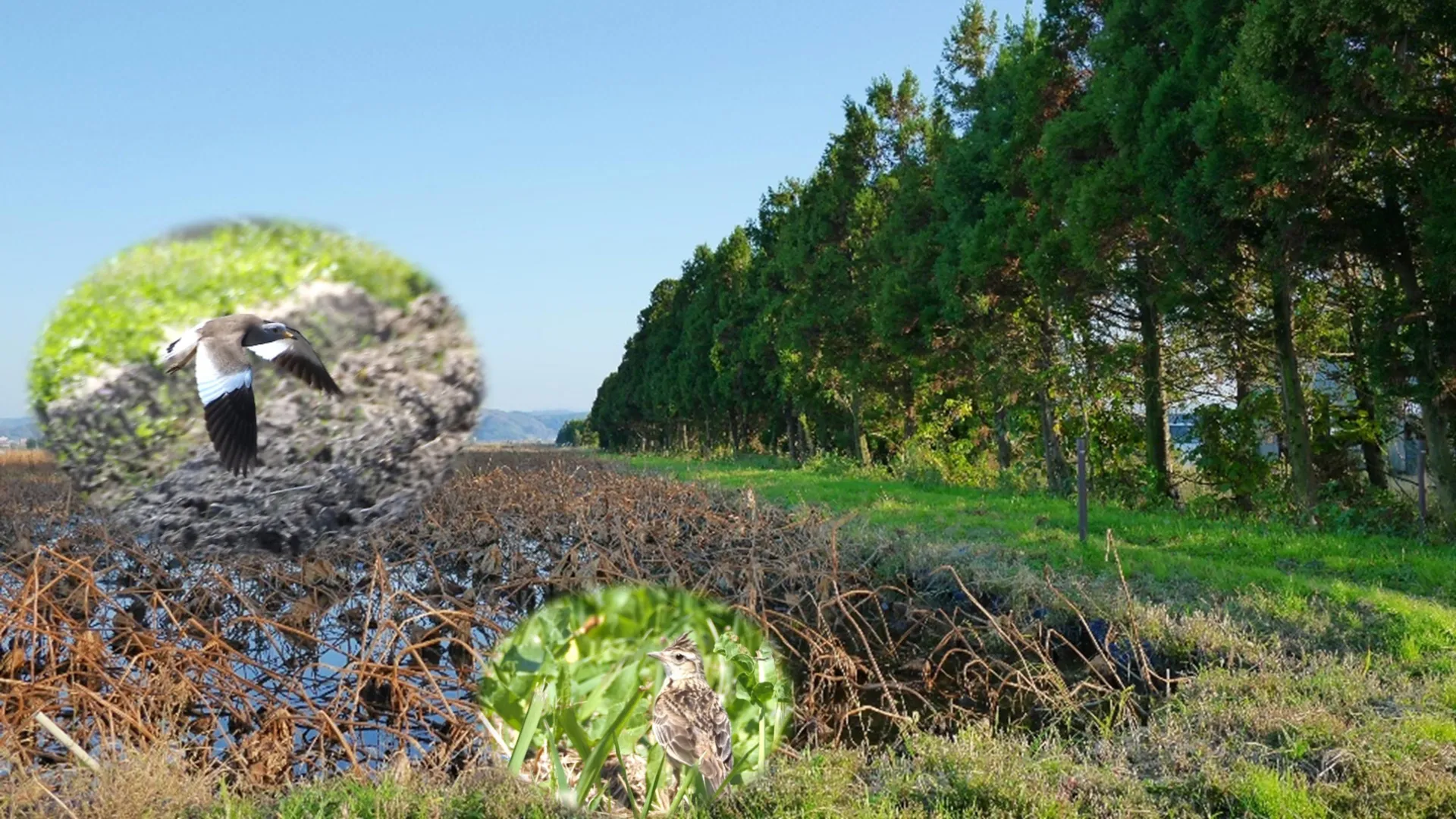
However, a groundbreaking study published in the Journal of Environmental Management suggests that this "more trees is always better" approach may be fundamentally flawed when applied to agricultural wetlands. Researchers examining the rice paddies and wetland mosaics of central Japan have discovered that shelterbelts are not a universal panacea. Instead, they act as "ecological walls," creating a sharp divide between winners and losers in the avian world. While these trees invite forest-dwelling species in, they simultaneously drive away the very birds that rely on the vast, unobstructed vistas of the wetland landscape.
The Geography of the Study: Lake Kahokugata
To understand the impact of these woody barriers, a multi-institutional team of researchers focused their lens on the farmland surrounding Lake Kahokugata in Japan’s Ishikawa Prefecture. This region is a quintessential example of an agricultural wetland: a sprawling, man-made ecosystem defined by rice paddies, lotus fields, and pastures that provide a lifeline for wildlife in an increasingly developed world.
The site is ecologically significant, serving as a critical stopover along the East Asian-Australasian Flyway. Every year, this region hosts a staggering variety of migratory birds, from wintering waterbirds to summer breeding populations. With nearly 300 bird species recorded in the area, the pressure to balance agricultural productivity with habitat preservation is immense.
Because the region is prone to severe winter storms and relentless winds, farmers here have historically relied on shelterbelts to protect their crops. This provided the researchers with a natural laboratory to test the efficacy of these trees. By conducting rigorous bird surveys in February and March of 2021, and again in June of 2023, the team was able to measure the precise impact of tree lines on bird abundance and diversity across different seasons.
Chronology of the Research
The study was born out of a growing concern among ecologists that conservation programs were importing Western-centric strategies into Asian landscapes without sufficient evidence.
- Initial Conceptualization (2020): Researchers identified a gap in existing literature regarding "wet" farming landscapes. While much is known about shelterbelts in dry croplands, their role in paddy-dominated wetlands remained largely speculative.
- Data Collection Phase I (Winter 2021): The team initiated point count surveys during the winter months, when the migratory influx is at its peak. This phase aimed to quantify the density of birds in fields adjacent to shelterbelts versus those in open, unobstructed paddies.
- Data Collection Phase II (Summer 2023): The researchers returned during the breeding season to determine if the presence of trees altered the nesting and foraging behaviors of local summer residents.
- Analysis and Peer Review (2023–2024): The team synthesized the data, revealing that while tree-dependent species thrived, the specialists of open, flat habitats—such as certain species of shorebirds and grassland-nesting birds—suffered significant declines.
- Publication (2024): The findings were formally presented in the Journal of Environmental Management, providing a quantitative basis for reconsidering how we manage agricultural wetlands.
Supporting Data: The Ecological Trade-off
The most striking finding of the study is the stark contrast in population density. The research revealed that the abundance of grassland-dependent birds was more than 70 percent lower at sites situated next to shelterbelts compared to open sites located just one kilometer away.
This data point serves as a warning for policymakers. When a conservation program incentivizes the planting of trees, it is not merely adding habitat; it is effectively shrinking the territory available to open-landscape specialists. The researchers observed that these birds, which have evolved to thrive in vast, uninterrupted environments, perceive the rows of trees as barriers.
Furthermore, the data suggests that shelterbelts alter the "perceived risk" for these birds. In an open field, a bird can see a predator from a great distance. A shelterbelt, by contrast, provides cover for predatory species—such as raptors or small mammals—to hide, effectively turning a foraging ground into a death trap for ground-nesting or open-feeding species. This creates an "ecological wall" that fragments the landscape, making the environment less usable for the birds that depend on the open character of the wetlands.
Official Responses and Researcher Insights
Dr. Masumi Hisano, assistant professor at Hiroshima University’s Graduate School of Advanced Science and Engineering and the corresponding author of the study, emphasized that the goal is not to demonize tree planting, but to encourage a more nuanced approach to landscape architecture.
"The central question of our study was whether shelterbelts benefit all birds equally, or if they create trade-offs," Dr. Hisano stated. "Our findings provide clear, quantitative evidence that small-scale landscape features can have large ecological consequences. We found that the structural complexity introduced by trees, while beneficial for some, is actively detrimental to others."
Dr. Hisano noted that the "one-size-fits-all" approach to biodiversity is a recurring issue in conservation. "Biodiversity-friendly farmland management must balance structural complexity with the ecological needs of open-habitat species," she explained. "This is particularly critical in landscapes where wetlands have already been heavily modified by humans. We must move away from the assumption that a tree is always a net positive."
The research team, which included experts from the University of Tokyo, Kyoto University, the University of British Columbia, and the Fukui City Museum of Natural History, cautioned that current agri-environmental policies often overlook the unintended consequences of landscape homogenization.
Implications for Global Conservation
The implications of this research extend far beyond the rice paddies of Japan. As climate change continues to threaten global biodiversity, the protection of agricultural wetlands has become a top priority for conservationists worldwide.
1. Reevaluating Agri-Environmental Policies
Governments and NGOs often incentivize farmers to "green" their land by planting rows of trees. This study suggests that such policies need to be site-specific. In regions where open-habitat birds are a conservation priority, planting trees might actually counteract the goals of biodiversity preservation.
2. The Need for Mosaic Landscapes
The study advocates for a "landscape-level" approach. Instead of blanket tree-planting, planners should look at creating a mosaic of habitats. Some areas should be kept strictly open to satisfy the needs of grassland and wetland specialists, while other areas could feature woody corridors to support forest-edge species.
3. Future Research Directions
The team acknowledges that their study is a starting point. Future research is needed to determine the ideal configuration of these landscapes. This includes:
- Configuration and Spacing: Does the width or height of a shelterbelt change the extent of the "ecological wall" effect?
- Species-Specific Responses: How do different migratory species navigate these barriers during the flight-intensive stages of their journeys?
- Predator Dynamics: Investigating exactly how much shelterbelts increase the rate of nest predation in neighboring open fields.
4. A New Philosophy of Land Management
Ultimately, the research calls for a shift in perspective. Agricultural wetlands are not just food production hubs; they are functional, man-made wetlands that play a vital role in global bird migration. By treating these areas with the same level of ecological rigor as natural reserves, policymakers can design strategies that allow for both human productivity and wildlife survival.
"Our goal is to help design evidence-based policies that work in wet-farmed landscapes worldwide," said Dr. Hisano. "Rather than promoting a single solution, we aim to support planning that combines open habitats and woody features in ways that sustain diverse bird communities."
As the world continues to grapple with the loss of natural habitat, the case of the Japanese shelterbelts serves as a vital lesson: in the delicate balance of nature, the best intentions can sometimes have unexpected consequences. To truly foster biodiversity, we must look at the landscape not just as a collection of features, but as a complex, interconnected system that requires careful, evidence-based curation.