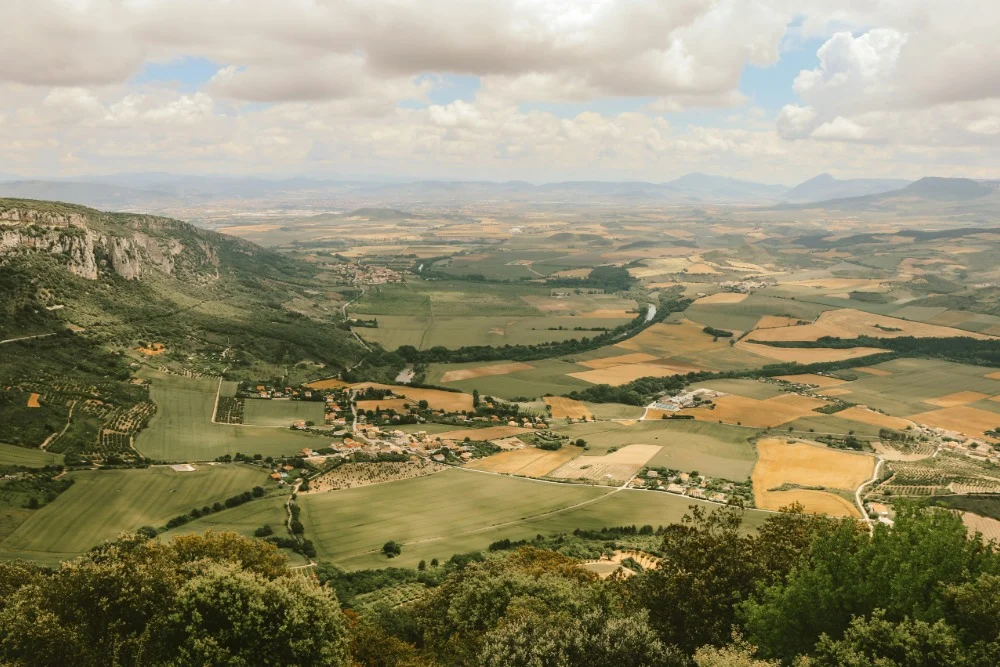
The Basque Country is currently undergoing a cinematic renaissance that is as economically lucrative as it is identity-defining. With rolling landscapes that serve as a versatile canvas and a robust network of production support, the region has transformed into a premier European hub for audiovisual creation. However, this sudden surge in activity—marked by record-breaking employment figures and significant inward investment—has ignited a profound debate among industry professionals: What, in the modern era of globalized streaming and nomadic production, truly defines a "Basque production"?
The Economic Engine: A Decade of Unprecedented Growth
The numbers tell a story of rapid transformation. In the province of Bizkaia alone, the audiovisual sector has seen a seismic shift. Between 2014 and 2024, direct employment within the industry soared by 50.5%. The corporate landscape has expanded in tandem, with the number of registered companies linked to the sector jumping from 284 to 448 in just one decade.
The year 2025 served as a benchmark for this trajectory. The Bilbao Bizkaia Film Commission facilitated 219 separate shoots, resulting in an estimated economic impact of €138.1 million ($158.45 million). This influx of capital has bolstered local infrastructure, improved technical capabilities, and brought international prestige to the region. Yet, behind the celebratory press releases regarding these figures, a more nuanced conversation is taking place regarding the sustainability of this model and the cultural cost of prioritizing volume over domestic ownership.
Defining the "Basque" Label: A Philosophical Divide
As the industry grows, the definition of a "Basque film" has become a fluid, often contentious concept. Does the label belong to any film shot on Basque soil? Must it be backed by a Basque-registered entity? Or does it require the inclusion of Euskara (the Basque language), Basque creative leadership, and the retention of intellectual property (IP) within the region?
The Legalist Perspective
For Xabi Berzosa, a prominent producer at the San Sebastian-based powerhouse Irusoin, the legal definition is straightforward. "From a legal standpoint, if a film is produced by a Basque production company, it’s Basque. That’s simply how it is defined," he asserts.
However, Berzosa is the first to admit that this legal shorthand fails to capture the complexity of contemporary co-productions. His company recently co-produced Nanni Moretti’s It Will Happen Tonight. While the project involved Basque resources and capital, it was a multi-national effort filmed in Italy and the Basque Country, primarily in Italian. "The film is Basque, as well as Italian and French," Berzosa notes. "It’s shot in Italy and in the Basque Country… we don’t really feel that’s a portrait of Basque filmmaking nowadays, of course, but legally it’s Basque."
The Cultural and "Soulful" Criterion
Filmmaker Koldo Almandoz, whose work The Last Goodbye premiered in the Official Selection at the San Sebastian Film Festival, pushes back against the purely legalistic view. For Almandoz, cinema is an expression of identity that requires a deeper connection to the territory.
"The answer lies somewhere beyond legal definitions," he argues. "It has to do with the soul, with the culture, the language, the crews, and the intention of the films." Almandoz is notably skeptical of the "commission agent" model, where external productions land in the Basque Country solely to exploit tax incentives. "You can call it co-production, but we all know that it’s like they are working as commission agents. I don’t consider those Basque productions."
Industrial Strategy vs. Transient Capital
Iker Ganuza, president of the producers’ association EPE-IBAIA and a key figure at Lamia Producciones, views the issue through the lens of industrial sovereignty. For Ganuza, the central question is one of control: Where are the decisions made? Where does the IP reside? And how much of the long-term value remains in the region?
"A Basque production is not simply a production filmed in the Basque Country," Ganuza emphasizes. He advocates for a model centered on "deep-rooted business and creative presence." The tension here is palpable: the industry is inherently mobile, and as Berzosa bluntly puts it, "Productions that come for financial reasons will leave for financial reasons."
The "Servicing" Trap
The industry currently relies on a hybrid model of local production and international service work. While neither Ganuza nor Berzosa believes that attracting international projects is a mistake—acknowledging that they create jobs and boost global visibility—they distinguish sharply between "servicing" and "co-producing."
"The obvious solution is to service that shooting," Berzosa explains. "You are hired, they come, and they go. It helps people to work and to have continuity, but it doesn’t develop a local established industry for the long term." Conversely, when a local firm acts as a co-producer—as Irusoin did with Moretti—they gain equity and a seat at the table for future creative decisions.
Future Implications: Risks and Resilience
The reliance on fiscal incentives and international servicing presents a potential vulnerability for the region. Koldo Almandoz expresses concern about the volatility of the current boom. "If sometimes these fiscal advantages disappear, all these little home companies we had, that were working for us, now absorbed by bigger companies, are they gonna stay, or are they gonna go to Madrid or Barcelona or Paris?"
This fear of a "hollowing out" of local expertise is a common theme in growing regional industries. While acknowledging that there is a genuine, growing industry, Almandoz cautions against the speed of expansion. "We want to pass from zero to 100 in three years, and I don’t think it’s the way."
The Language Question
The role of Euskara serves as a litmus test for cultural integrity. While both Berzosa and Ganuza agree that films in Euskara possess a unique cultural weight, they also argue against making language the sole gatekeeper of identity. The consensus among producers is that the Basque Country can—and should—produce both niche, language-specific cultural works and universal stories that appeal to the global market, provided the economic and intellectual benefit stays rooted in the Basque Country.
Toward 2030: A Vision for Sustainability
As the Basque audiovisual sector looks toward the end of the decade, the conversation has shifted from "how many?" to "what kind?" The objective is no longer just to attract more film shoots, but to ensure that international investment serves as a foundation for local companies rather than a mechanism for displacement.
Iker Ganuza’s call to action is clear: "We have to start talking about where we want the Basque film industry to be in 2030, not just how many film shoots we’ll have next year."
The challenge is to ensure that the current boom creates a permanent legacy. By fostering local decision-making, protecting intellectual property, and ensuring that the growth of the sector remains tied to the local creative ecosystem, the Basque Country hopes to prove that it can be a global player without sacrificing its soul. The lesson for other regions is equally vital: economic development is a tool, but it is the retention of creative autonomy that defines a true cinematic center.
As the credits roll on 2025, the Basque film industry stands at a crossroads. It has successfully signaled to the world that it is open for business; the next, more difficult phase will be proving that it has built a home that is meant to last, rather than just a temporary set.