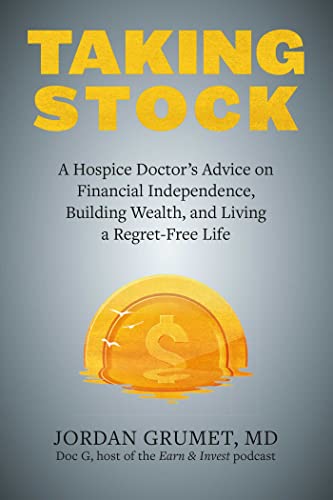
In the high-stakes world of personal finance, we are often conditioned to obsess over index funds, asset allocation, and the relentless pursuit of compounding interest. We track our net worth with digital precision, hoping that a specific number on a balance sheet will eventually grant us the freedom we crave. However, Jordan Grumet, a hospice physician and author of Taking Stock, suggests that we are looking at the ledger through the wrong end of the telescope.
Having spent his career in the presence of mortality, Grumet has observed the terminal journeys of hundreds of patients. He notes that while the wealthy and the working-class face death differently, their final reflections often converge on a singular, uncomfortable truth: the most critical investments aren’t the ones managed by a broker, but those made in the currency of time, relationships, and self-forgiveness.
The Philosophy of the Final Ledger
Grumet’s unique perspective was shaped by a patient who worked as an undertaker. Through their conversations, Grumet realized that those who handle the dead possess a rare clarity about the living. "When the undertaker speaks, you should really listen," Grumet writes.
For the average investor, the "bottom line" is financial independence. For the hospice patient, the bottom line is legacy and contentment. Grumet argues that most of what he has learned about "investing" has little to do with money. Instead, he outlines a holistic framework for wealth—a portfolio of human experience—that ensures when the end of the journey arrives, the regret is minimal and the sense of fulfillment is absolute.
Investing in the Self: The Foundation of Prosperity
The first pillar of Grumet’s investment strategy is self-investment, starting with the most difficult asset to manage: self-forgiveness.
The Cost of Remorse
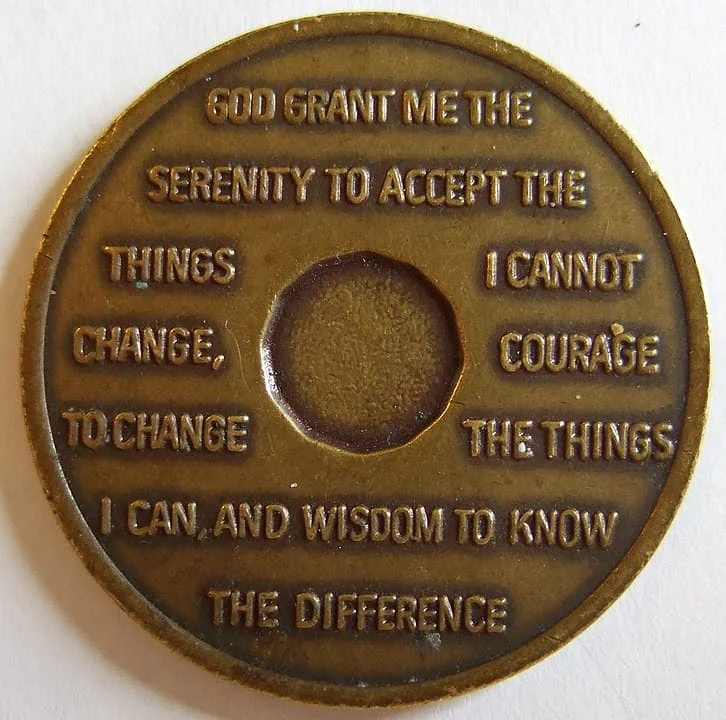
Remorse is a silent destroyer of net worth. Whether it is a career path not taken, a broken relationship, or a financial error, the human capacity for self-blame is limitless. Grumet recounts the story of "Gerald," a patient whose life spiraled into alcoholism following a corporate layoff. While Gerald eventually achieved sobriety, the physical and relational damage was irreversible. Grumet posits that had Gerald invested in self-forgiveness earlier, he might have broken the cycle of addiction long before his health reached a point of no return.
Self-forgiveness is not about ignoring mistakes; it is about liberating the mental bandwidth required to move forward. To invest in oneself is to acknowledge that we are works in progress, where "perfect" is frequently the enemy of "good enough."
The Power of Slow, Incremental Gains
In the spirit of the tortoise and the hare, Grumet advocates for the one-percent rule. By making incremental improvements—whether in skills, health, or personal habits—we create a compounding effect that mimics the exponential growth of a long-term investment portfolio. Limiting beliefs, he warns, are the greatest "market crash" one can experience; they must be managed with as much rigor as a volatile stock market.
Education: The Emergency Fund of the Mind
Grumet views education not merely as a degree-seeking venture, but as the ultimate "emergency fund." In an uncertain world, knowledge is the only asset that cannot be liquidated by market forces.
- Continuous Learning: Whether through online courses, reading, or engaging in uncomfortable debates, the pursuit of knowledge acts as a buffer against professional obsolescence.
- The Power of ‘Yes’: Grumet encourages individuals to say yes to opportunities that feel foreign. By stepping into discomfort, one builds a reserve of experience that translates into resilience.
- Financial Literacy: He expresses bafflement at the resistance many feel toward learning basic finance. A few hours of reading each month can bridge the gap between financial anxiety and security. Ignorance, he notes, is a tax that the uninformed pay daily.
The Social Dividend: Investing in People
If the measure of a person is the community they leave behind, then social investment is the most important asset class of all. Grumet notes that when he walks into a patient’s room, he can immediately discern who has invested in people.
"They are surrounded by pictures, letters, cards, and friends," he observes. These patients do not just leave behind money; they leave behind an essence that survives in the memories of others. This is the ultimate compound interest—a lifetime of love and connection that continues to pay dividends long after the principal has departed.
Generational Wealth: Investing in Children
True legacy is found in the next generation. Grumet suggests that investing in children involves more than just a college savings account; it requires the transfer of values, humility, and a virtuous example.
By teaching children the reality of what money can and cannot do, parents provide them with a map for their own lives. Grumet draws a parallel to his own father, whose legacy shaped his career decades after his death. This, he argues, is the true meaning of "living on"—not through statues or buildings, but through the virtues instilled in those who follow.
The Intersection of Mind, Body, and Wallet
Financial security is impossible to enjoy without the physical and mental health required to sustain it. Grumet categorizes health as the framework upon which all other wealth is built.
Mental Health and Mindfulness
Psychological counseling and mindfulness practices like meditation are not "luxuries"; they are essential maintenance for the machine that produces your income. Quieting the internal noise allows for the deliberate decision-making required to navigate life’s financial and personal complexities.
Physical Vitality
Grumet acknowledges that one does not need to be an elite athlete to be healthy. The focus should be on consistent, manageable activity—at least 30 minutes of movement daily. The goal is to avoid the "artificial highs" of substance use, which cloud the clarity needed to pursue long-term goals.
The Role of the Market: A Necessary Tool
While Grumet emphasizes that money is not the end-all-be-all, he does not dismiss the importance of market participation. He maintains that financial literacy and investment in the stock market are essential. His objective is to "get the money right" so that it no longer requires the bulk of one’s mental energy, allowing that energy to be redirected toward higher-order investments in family, health, and purpose.
Implications for the Modern Investor
The core implication of Grumet’s work is a shift in perspective. Most financial advice focuses on the "accumulation phase," but few books address the "distribution phase" or the ultimate end-of-life accounting.
By balancing a traditional financial portfolio with a "Non-Monetary Investment Inventory," individuals can achieve a more robust form of independence. Grumet encourages readers to conduct a periodic audit:
- List your top 10 relationships/connections.
- List your top 10 experiences/memories.
- List your top 10 personal skills/contributions.
When this inventory is added to a traditional net worth calculation, it provides a complete picture of one’s true wealth.
Final Thoughts: The Time to Act is Now
The tragedy of the hospice ward is often the realization that we spent too much time preparing for a future that was never guaranteed, at the expense of a present that was always available. Grumet’s message is urgent: build your foundation now.
Investing in your life—your health, your mind, your children, and your community—is a taxing endeavor. It requires time, effort, and occasional discomfort. However, as the end of life approaches, the clarity of hindsight confirms that these are the only investments that truly matter. Be as prepared for the journey of living as you are for the inevitability of dying. Invest wisely, and above all, invest in what lasts.