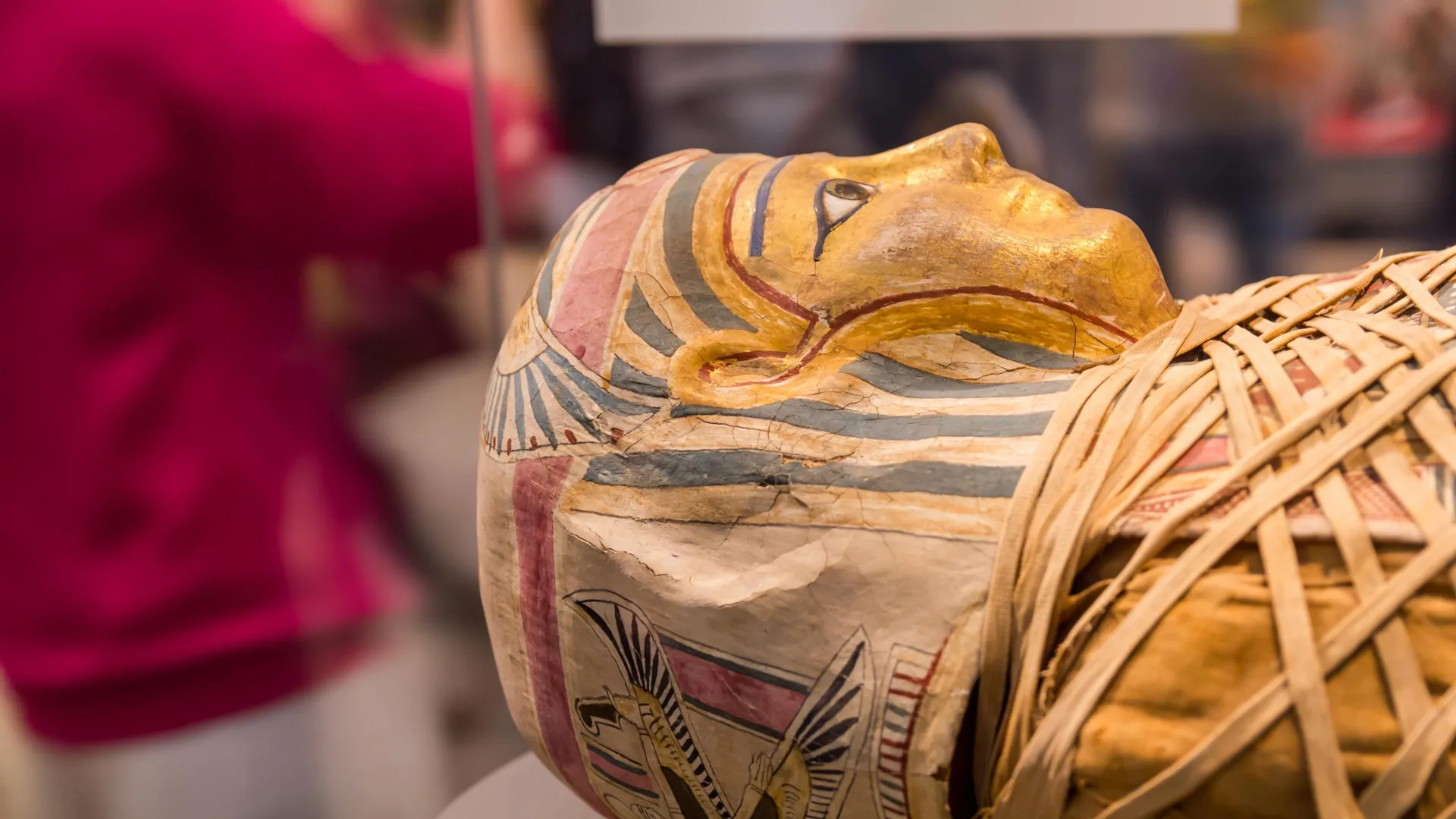
In an archaeological revelation that bridges the gap between the grandeur of Greek epic poetry and the solemnity of Egyptian funerary rites, researchers have uncovered a 1,600-year-old papyrus fragment of Homer’s Iliad tucked within the wrappings of a Roman-era mummy. The discovery, made at the storied site of Oxyrhynchus—modern-day Al Bahnasa—marks a definitive departure from centuries of established archaeological understanding, representing the first time a secular literary text has been intentionally incorporated into the mummification process.
The find, spearheaded by the Oxyrhynchus Archaeological Mission of the University of Barcelona, offers a tantalizing glimpse into the syncretic culture of Roman Egypt, where the intellectual legacies of the Hellenistic world intersected with the deeply rooted mortuary traditions of the Nile Valley.
The Discovery: A Textual Relic in the Silence of the Tomb
During the winter excavation season of 2025–2026, a team led by Núria Castellano unearthed a series of burial chambers designated as Tomb 65 of Sector 22 within the Al Bahnasa necropolis. Amidst the limestone chambers, which had been subjected to the ravages of ancient looters, one mummy remained a point of singular focus. Resting directly upon the abdomen of the deceased was a papyrus scroll, positioned not as an afterthought, but as an integral component of the embalming ritual.
For the researchers at the Institute of Ancient Near East Studies (IPOA), the positioning of the scroll immediately signaled a deliberate, ritualized placement. Historically, the Oxyrhynchus site has yielded a staggering volume of papyri—tens of thousands of documents that have rewritten the history of the ancient world. However, previous instances of papyri found within mummification bundles were almost exclusively ritualistic or magical in nature, often functioning as protective amulets or spells intended to assist the soul’s transit into the afterlife. The presence of Homeric verse, therefore, represents a paradigm shift in how we interpret the spiritual or social status of the deceased.
Chronology of the Investigation
The journey from the desert sands of Al Bahnasa to the laboratories of the University of Barcelona followed a rigorous, multi-phased scientific trajectory:
- November – December 2025: The initial discovery phase. The Oxyrhynchus Archaeological Mission, under the co-direction of Maite Mascort and Esther Pons, uncovered the funerary complex. The specific papyrus was identified in situ on the mummy’s abdomen, preserved through the dry, arid conditions of the necropolis.
- January – February 2026: The secondary research campaign. The fragment was subjected to high-resolution imaging and physical stabilization by conservator Margalida Munar.
- Late February 2026: Expert philological analysis. Papyrologist Leah Mascia and Professor Ignasi-Xavier Adiego performed the primary transcription and identification of the Greek script.
- March 2026: Official presentation of findings. The mission held a series of lectures at the University of Barcelona’s Faculty of Philology and Communication, where the team synthesized the archaeological, anthropological, and literary data for the academic community.
Decoding the Homeric Fragment
The identification of the text was a collaborative triumph. Through the careful reading of the papyrus’s faded Greek characters, Leah Mascia and Professor Ignasi-Xavier Adiego confirmed that the fragment contains lines from the "Catalogue of Ships," found in Book II of the Iliad.
This specific passage—the Neōn Katalogos—is a sprawling, meticulous list of the Greek contingents, their commanders, and their origins as they gathered for the assault on Troy. As one of the most famous and culturally significant sections of Western literature, its presence in a burial context invites profound questioning. Why would a reader of Homer, or perhaps a collector of fine scrolls, choose to be buried with a list of Bronze Age warriors?
Professor Adiego suggests that the choice might reflect the owner’s status as a member of the Greco-Egyptian elite, a person for whom the Iliad served as a foundational cultural pillar. "While we have found many Greek papyri bundled and sealed in mummification contexts before," Adiego noted during the presentation, "they were always magical in nature. Finding a literary masterpiece in a funerary context implies that the text itself may have possessed a ‘talismanic’ quality for the deceased, or perhaps it served as a reflection of their intellectual identity in the afterlife."
Archaeological Context: The Significance of Oxyrhynchus
Oxyrhynchus, located approximately 190 kilometers south of Cairo, remains one of the most vital windows into the Greco-Roman world. Its importance stems from the "garbage dumps" of the ancient city, where arid conditions preserved vast quantities of administrative, literary, and private documents that would have disintegrated in the humid climate of the Mediterranean.
The current mission, which began in 1992 under the late Professor Josep Padró, has transformed our understanding of how these ancient societies functioned. The recent discovery of the three limestone burial chambers confirms that Al Bahnasa was a site of high-status Roman-era burials. Despite the presence of damage from ancient tomb raiding, the recovery of this papyrus remains a pristine exception, largely shielded by the specific arrangement of the mummy’s wrappings.
The funerary complex itself, with its decorated wooden sarcophagi and ritual offerings, provides a dense layer of data regarding the transition from traditional Egyptian funerary customs to the influence of Mediterranean aesthetics during the Roman period.
Official Responses and Collaborative Framework
The project is a testament to international cooperation, receiving backing from the Spanish Ministry of Culture, the Palarq Foundation, the Catalan Egyptology Society, and AIXA Serveis Arqueològics. Furthermore, the collaboration with Egypt’s Supreme Council of Antiquities and Cairo University ensures that these findings are integrated into the broader narrative of Egyptian national heritage.
During the public lecture series held at the Gabriel Oliver room in Barcelona, team members emphasized that the discovery is not merely a "literary" find, but a "biocultural" one. By analyzing the papyrus in tandem with the physical remains of the mummy, the team hopes to better understand the social status of the deceased. Anthropological studies currently underway aim to determine the age, health, and possible occupation of the individual, which may provide clues as to why they were buried with such a specific literary text.
Implications for Future Research
The discovery of the Iliad fragment forces a re-evaluation of the boundary between the "sacred" and the "profane" in ancient funerary rituals. For decades, archaeologists have operated under the assumption that items placed within mummy wrappings were primarily intended for the protection of the soul or as offerings to the gods. If literary texts were also used, it suggests a more complex relationship with the written word. Was the text a source of comfort? A demonstration of literacy and social standing? Or was the Iliad viewed as a sacred text of equal weight to the Egyptian Book of the Dead?
As the team prepares for future excavation seasons, the focus will likely expand to include a wider survey of the necropolis in hopes of finding similar literary deposits. The potential for uncovering other segments of the Iliad, or perhaps works of tragedy and philosophy, remains a possibility that has electrified the global community of classicists and Egyptologists alike.
Ultimately, this 1,600-year-old scroll serves as a reminder that the ancients were not as different from us as we might assume. They, too, were people who found meaning in the stories they read, carrying the weight of their favorite verses with them into the very threshold of eternity. The "Catalogue of Ships," designed to list the forces that destroyed a city, now serves as a testament to the enduring power of human narrative in the face of death.