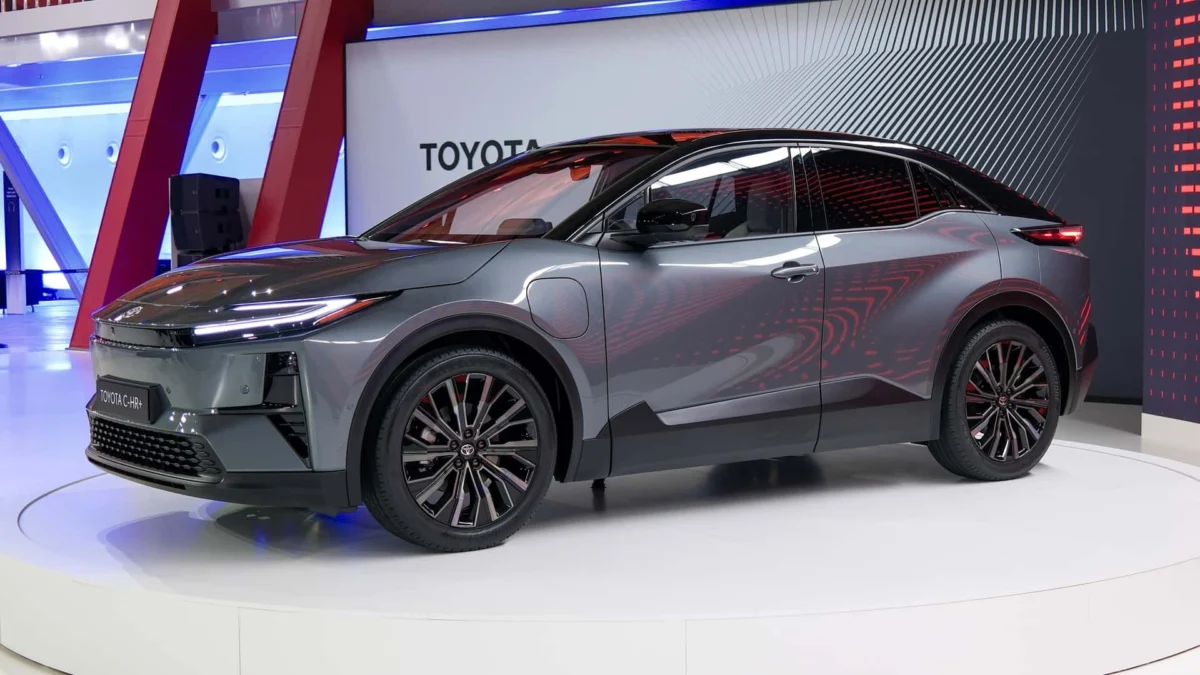
Toyota has initiated a critical global recall affecting approximately 10,000 units of its 2026 C-HR electric vehicle (EV) lineup. The recall, triggered by a sophisticated software anomaly within the vehicle’s regenerative braking system, has raised concerns regarding potential power loss while the vehicle is in motion. While the automaker has clarified that the issue does not stem from physical defects in the battery cells or the electric motors themselves, the nature of the malfunction necessitates immediate technical intervention to ensure driver safety.
The Core Technical Failure: Understanding the Regenerative Braking Anomaly
At the heart of the recall is a software-defined vulnerability within the Battery Electric Vehicle Electronic Control Unit (BEV ECU). Modern electric vehicles, including the 2026 C-HR, utilize regenerative braking to maximize efficiency. When a driver lifts their foot off the accelerator or engages the brake pedal, the electric motor reverses its function, acting as a generator to convert kinetic energy back into electrical energy, which is then stored in the high-voltage traction battery.
According to Toyota’s internal investigation, the software responsible for managing this energy flow contains a specific bug. Under precise conditions—namely, when the traction battery is at a high state of charge and the driver engages in aggressive or sustained regenerative braking—the system fails to accurately regulate the intake of electricity. Consequently, the battery is permitted to accept a charge that exceeds its safe operational limits.
To prevent thermal runaway or permanent damage to the battery chemistry, the vehicle’s safety protocols trigger an immediate protective shutdown of the electric drive system. While this prevents a catastrophic battery failure, it results in a sudden, intermittent loss of motive power. Toyota and safety regulators have categorized this as a significant crash risk, particularly in scenarios requiring consistent power delivery, such as merging onto high-speed freeways, navigating intersections, or executing passing maneuvers.
Chronology of the Discovery and Response
The identification of this software defect follows a pattern of heightened scrutiny surrounding the e-TNGA (Toyota New Global Architecture) platform, which serves as the foundation for the C-HR EV, the Toyota bZ series, the Lexus RZ, and the Subaru Solterra.
Toyota’s engineering teams detected the anomaly during routine performance testing and field data analysis. Once the severity of the potential power-loss scenario was confirmed, the company moved to coordinate with international regulatory bodies.
- Early Detection: Internal diagnostic reports indicated inconsistencies in power delivery at high battery states of charge.
- Validation: Engineers replicated the software bug in controlled environments, confirming that the BEV ECU could not effectively throttle regenerative energy under specific, high-capacity scenarios.
- Recall Authorization: Toyota issued the formal recall notice, targeting approximately 10,000 units globally.
- Canadian Outreach: Toyota Canada confirmed that approximately 1,310 vehicles are affected within the domestic market. Affected owners in Canada and elsewhere are slated to receive official notification letters by early November.
- Immediate Availability: Despite the formal notification timeline, Toyota has empowered its dealership network to perform the necessary software patch immediately for any owner who proactively schedules a service appointment.
The Remedy: A Digital Solution for a Digital Problem
In a landscape where mechanical failures are increasingly being supplanted by software-driven malfunctions, Toyota’s remedy for the C-HR EV is entirely digital. The fix involves a comprehensive update to the BEV ECU, which recalibrates the software parameters governing the regenerative braking system. By refining the "handshake" between the energy-harvesting system and the traction battery, the update ensures that the battery never exceeds its maximum safe voltage, even during heavy braking cycles.
This repair is performed free of charge at authorized Toyota service centers. Currently, Toyota has not confirmed whether this specific fix will be distributed via Over-the-Air (OTA) channels. Consequently, owners are strongly advised to contact their local dealership to verify if their specific vehicle requires a manual technician-led update.

Contextualizing the E-TNGA Platform Challenges
The recall of the 2026 C-HR EV does not exist in a vacuum; it is part of a broader narrative regarding the maturation of the e-TNGA platform. As Toyota, Lexus, and Subaru aggressively expand their battery-electric portfolios, they have faced a series of challenges common to manufacturers transitioning to high-voltage electric architectures.
Shared Vulnerabilities
The C-HR EV, the bZ4X, and the Lexus RZ share significant electronic architecture. Earlier in 2026, a separate recall was issued for these models regarding a different power-loss issue related to high-voltage battery control software. This recurring theme suggests that while the e-TNGA platform is robust, the complexity of the control logic governing the high-voltage ecosystem remains a significant hurdle for the company’s software engineering teams.
The 12-Volt Battery Drain Controversy
Beyond the high-voltage powertrain issues, owners of e-TNGA vehicles have reported persistent problems with 12-volt battery drainage. When these vehicles remain parked for extended periods, the onboard computers—which remain in a "ready" or "standby" state—can consume enough power to deplete the 12-volt auxiliary battery. This, in turn, leaves the vehicle unable to "wake up" the high-voltage system, effectively bricking the car until a jump-start or battery replacement is performed. The frequency of these reports has prompted discussions regarding the efficiency of Toyota’s power-management software when the vehicle is at rest.
Implications for the EV Industry
The 2026 C-HR recall serves as a microcosm of the changing nature of automotive safety. In the past, recalls were predominantly defined by mechanical issues—failing tie-rod ends, leaking brake lines, or engine block defects. Today, the "automotive" industry is effectively a "software" industry.
The Rise of Software-Defined Vehicles (SDV)
The transition to Software-Defined Vehicles means that safety is increasingly a product of lines of code. This shift presents both a boon and a burden:
- Efficiency: Manufacturers can theoretically fix problems without physical parts, reducing environmental waste and logistical costs.
- Accountability: As vehicles become more reliant on firmware, the pressure on manufacturers to rigorously test code in every conceivable edge case increases exponentially.
The Regulatory Landscape
Regulators like the National Highway Traffic Safety Administration (NHTSA) are currently struggling to keep pace with the velocity of software updates. The question of whether a software patch is as permanent or as reliable as a physical recall remains a subject of intense debate among safety advocates. For the consumer, this necessitates a higher degree of vigilance regarding vehicle software versions and service bulletins.
Advice for Owners
If you are the owner of a 2026 Toyota C-HR EV, it is imperative that you do not delay action. While the likelihood of experiencing the specific regenerative braking failure is tied to specific driving behaviors and battery states, the risk to safety is non-trivial.
- Check Your VIN: Regularly monitor the NHTSA recall database or the equivalent national registry in your country using your Vehicle Identification Number (VIN).
- Contact Support: If you have concerns, call Toyota’s customer support line (1-800-331-4331 in the US) to confirm if your vehicle is included in the campaign.
- Proactive Scheduling: Do not wait for the physical letter to arrive in the mail. Call your local dealer today to inquire about the availability of the BEV ECU update.
- Monitor Performance: If you notice any hesitation, warning lights on your dashboard, or sudden drops in power while driving, pull over safely and contact roadside assistance.
As the automotive sector continues its rapid electrification, the "Motor1 Take" on such campaigns remains clear: Software is the new frontier of vehicle safety. The manufacturers that will ultimately succeed in this space are those that prioritize the stability and validation of their digital ecosystems as highly as they have historically valued their mechanical engineering. For now, the 2026 C-HR recall is a stark reminder to both the industry and the consumer that the promise of a digital vehicle comes with the requirement of a digital maintenance mindset.