In an era where the dream of homeownership feels increasingly elusive and the rise of remote work has fundamentally altered the geography of the American workforce, a fascinating trend has emerged. Local and state governments, once passive observers of migration patterns, are now actively competing for your residency. With the cost of living hovering at near-record highs, cities across the United States are rolling out "come-home" incentives, offering thousands of dollars, tax breaks, and lifestyle perks to attract new talent.
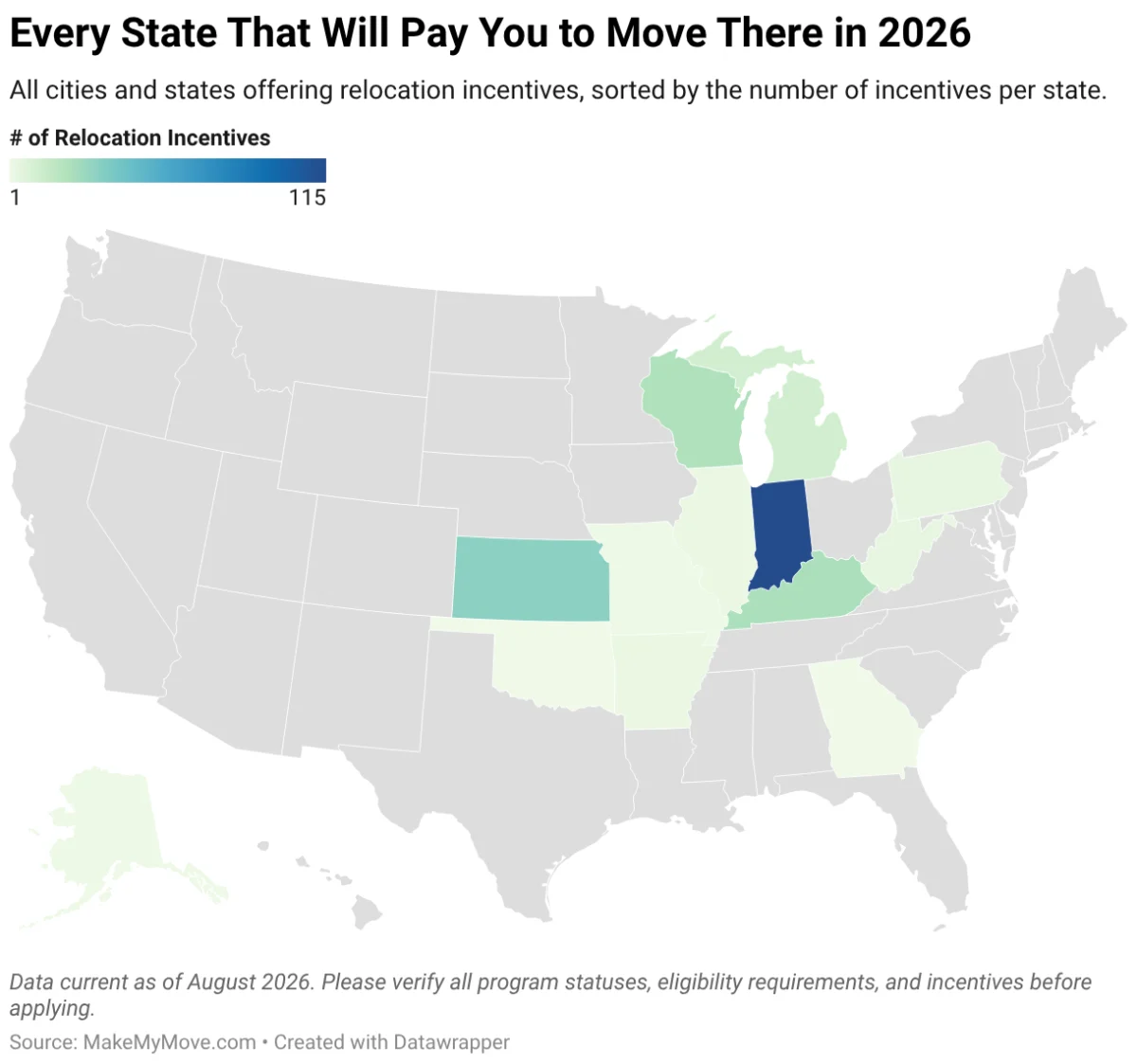
Approximately 22% of the American workforce now operates remotely, a shift that has decoupled the location of one’s paycheck from the location of one’s home. Forward-thinking municipalities are seizing this transition as an opportunity to combat brain drain, boost local tax bases, and revitalize aging infrastructure. From the rugged wilderness of Alaska to the rolling plains of Kansas, here is a comprehensive guide to 13 states currently offering financial incentives to relocate.
The Economics of Relocation: Main Facts
The logic behind these programs is straightforward: municipalities are looking to grow their economies. By attracting high-earning remote workers or skilled professionals, cities inject new life into their local commerce—from coffee shops and grocery stores to real estate markets.
Most of these incentive programs are structured around three pillars:
- Direct Cash Stipends: Lump sums or staggered payments to cover moving expenses.
- Housing Assistance: Down payment grants or mortgage subsidies for those putting down permanent roots.
- Quality of Life Perks: Coworking memberships, free internet, recreation equipment, and even "welcome dinners" with local leadership to foster community integration.
A Chronology of the "Incentive Boom"
While Alaska’s Permanent Fund Dividend (PFD) has been a staple of state policy since 1982, the modern iteration of "move-to" programs gained massive traction around 2018 with the launch of initiatives like Tulsa Remote. The COVID-19 pandemic served as a major accelerant, forcing cities to pivot from traditional business-attraction models to individual-centric talent recruitment. By 2024, the proliferation of platforms like MakeMyMove solidified these disparate local programs into a nationwide market for labor. As of 2026, programs are no longer just focused on "saving" dying towns; they are being utilized as strategic economic development tools for cities looking to cement their status as modern tech or remote-work hubs.
State-by-State Breakdown
1. Alaska: The Gold Standard
Alaska remains the only state with a permanent, statewide dividend. The Permanent Fund Dividend (PFD) has provided billions to residents over the decades.
- The Incentive: Residents receive an annual dividend (forecast at $1,000 in 2026, plus energy rebates).
- Strategic Edge: No state income tax. Furthermore, cities like Ketchikan are offering three months of free fiber-optic internet to sweeten the transition.
2. Arkansas: Wilderness and Wealth
Texarkana and West Memphis have emerged as leaders in the South.
- The Incentive: Packages exceeding $10,000, often split between cash and outdoor gear.
- Unique Feature: Texarkana’s program is particularly notable for its flexibility, allowing residents to leverage proximity to the Texas border while enjoying Arkansas’s cost of living.
3. Georgia: The "Move to Meaningful" Initiative
Columbus, GA, has doubled down on its commitment to growth following the successful 2024 launch of its remote worker program.
- The Incentive: $5,000 in cash plus six months of coworking space.
- The Draw: With housing costs 30% below the national average, the $8,700 total package value goes significantly further here than in coastal metros.
4. Indiana: A Diversity of Opportunity
With over 100 incentive programs, Indiana is arguably the most aggressive state in the Midwest.
- The Incentive: Ranging from $5,000 to a staggering $20,000 in places like Angola.
- The Strategy: By focusing on suburban regions outside of Indianapolis and Louisville, the state offers the perfect balance between urban amenities and small-town tranquility.
5. Illinois: The Jacksonville Region
Illinois is working to change its reputation as a high-cost state by highlighting its affordable, historic regions.
- The Incentive: Up to $9,000 in total value for those relocating to Pittsfield or Jacksonville.
6. Kansas: Reversing the Trend
Kansas has spent a decade fighting population decline in its rural counties through strategic partnerships with local employers.
- The Incentive: Topeka’s "Choose Topeka" program is the blueprint, offering cash and student loan assistance.
7. Kentucky: Bourbon and Bluegrass
Eight incentive programs are currently active across the Commonwealth.
- The Incentive: Mayfield leads with an $8,800 package. These programs emphasize the "community" aspect, including music lessons and civic engagement opportunities.
8. Michigan: The Rust Belt Rebound
Michigan is leveraging its natural beauty and manufacturing heritage to attract IT and healthcare professionals.
- The Incentive: Up to $7,000, with specific focus on housing assistance for recent graduates.
9. Missouri: The Mercer County Model
Mercer County offers a "quiet life" package.
- The Incentive: $6,500 including a cash stipend, recreation center access, and one year of high-speed internet.
10. Oklahoma: The Tulsa Remote Success
Tulsa Remote is the most famous program in the nation, having brought over 4,000 people to the city since 2018.
- The Incentive: $10,000, distributed as monthly payments or a lump sum for home buyers.
11. Pennsylvania: Western PA’s Renaissance
Sharon, Farrell, and Hermitage are offering competitive packages to tap into the labor markets of nearby Pittsburgh and Cleveland.
- The Incentive: Up to $8,400 in benefits, including gym memberships and local business vouchers.
12. West Virginia: The $20,000 Payday
Ascend West Virginia remains the most lucrative program on this list.
- The Incentive: A $20,000 total package, including $12,000 in cash and premium outdoor gear.
- The Goal: To leverage the state’s world-class outdoor recreation to attract professionals who crave an active lifestyle.
13. Wisconsin: The Great Lakes Advantage
Wisconsin is targeting remote workers with a mix of cash and "VIP" local experiences.
- The Incentive: Up to $11,500, including stipends and childcare support, reflecting the state’s focus on long-term family residency.
Supporting Data and Trends
The data suggests these programs are working. A 2026 report on migration patterns indicates that counties participating in MakeMyMove initiatives saw a 4% higher retention rate of "in-migrants" compared to neighboring counties without such programs. However, the economic impact is nuanced. While the influx of high-earning remote workers can increase the tax base, it can also create localized inflationary pressure on housing costs, a phenomenon that has sparked public debate in cities like Tulsa.
Official Responses and Civic Implications
Local mayors and economic development boards argue that these programs are not merely "bribes" but investments. "We aren’t just buying a resident; we are buying a neighbor, a volunteer for our school board, and a customer for our small businesses," noted one regional development official in West Virginia.
Conversely, some urban policy experts express caution. There is a risk that these incentives could lead to "transient residency," where individuals stay only long enough to collect the benefit before moving on to the next subsidized location. To counter this, most programs now include "clawback" clauses, requiring recipients to stay for a minimum of 12 to 24 months or face repayment.
Final Considerations: Proceed with Diligence
While the prospect of a $20,000 check is enticing, prospective movers must perform thorough due diligence.
- Verify Requirements: Most programs require proof of full-time remote employment or a commitment to a local job within a specific timeframe.
- Total Cost of Living: Do not let the incentive blind you to the underlying economic realities of the area. Research property taxes, school quality, and local healthcare access.
- The "Clawback" Risk: Carefully read the fine print. If your remote role is at risk of layoffs, ensure you understand the repayment obligations of the relocation package.
Ultimately, these programs represent a fundamental shift in how Americans view "home." The ability to work from anywhere has turned residency into a competitive marketplace. Whether you are seeking the rugged mountains of Alaska or the vibrant downtowns of the Midwest, there has never been a better time to explore the map and get paid to discover your next chapter.
Program details and housing market data were accurate as of August 2026. This article is for informational purposes only. Potential applicants should verify all terms directly with the governing municipal bodies.