BRASILIA – The halls of Brazil’s highest judicial chamber, the Supreme Federal Court (STF), have transformed from a bastion of constitutional order into a theater of open political warfare. As the nation barrels toward a high-stakes presidential election next month, a burgeoning scandal involving alleged back-channel communications between a powerful Supreme Court Justice and a disgraced banker has triggered an unprecedented institutional crisis, forcing the Court’s president to intervene in a desperate bid to restore order.
The internal schism, which pits Justice Alexandre de Moraes—a central figure in the legal prosecution of former far-right president Jair Bolsonaro—against Justice Andre Mendonca, a Bolsonaro appointee, has effectively paralyzed the judiciary. With the suspension of federal police leadership and conflicting rulings flying between chambers, the stability of Brazil’s democratic institutions is under intense scrutiny.
The Epicenter of the Scandal: The Banco Master Affair
The volatility stems from the collapse of Banco Master, a financial institution that imploded last year under the weight of a multi-billion-dollar debt scandal. Daniel Vorcaro, the disgraced banker at the helm of the firm, is at the heart of the controversy. Prosecutors allege that Vorcaro operated a sophisticated influence-peddling network, claiming he maintained "friends in all branches of government" to secure favorable treatment during his legal travails.
The scandal ignited when it was revealed that, in the days preceding his November arrest—which occurred as he attempted to flee the country via private jet—Vorcaro exchanged approximately 30 text messages with a phone number linked by police intelligence to Justice Alexandre de Moraes. One chilling message, sent as the net tightened around the banker, read: "Do you think I need to be out of the country as early as Monday?"
The disclosure of these communications, championed by Justice Andre Mendonca, has provided fresh ammunition to the Bolsonaro camp. For the Brazilian right, Moraes has long been a polarizing figure, viewed as a primary antagonist for his aggressive pursuit of the coup investigation that ultimately saw Jair Bolsonaro sentenced to 27 years in prison for his attempts to undermine the 2022 election results.

Chronology of an Institutional Meltdown
The escalation of the current crisis followed a rapid, chaotic timeline that left legal experts and the public reeling:
- Last Week: Justice Andre Mendonca ordered the public release of the text messages between Vorcaro and Moraes, framing the move as a necessary step toward transparency.
- Monday: Justice Alexandre de Moraes issued a sharp rebuttal, accusing Mendonca of "abuse of power" and citing confidential police intelligence reports to suggest that the release of the documents was politically motivated and violated judicial protocol.
- Tuesday: The internal conflict spilled over into the federal executive branch. Mendonca issued a ruling suspending the head of the Federal Police, Andrei Rodrigues, accusing the agency of conducting unauthorized surveillance on him.
- Wednesday: Justice Flavio Dino, a former minister in the administration of incumbent President Luiz Inacio Lula da Silva, intervened to reinstate Rodrigues, asserting that the police chief’s removal was legally unfounded.
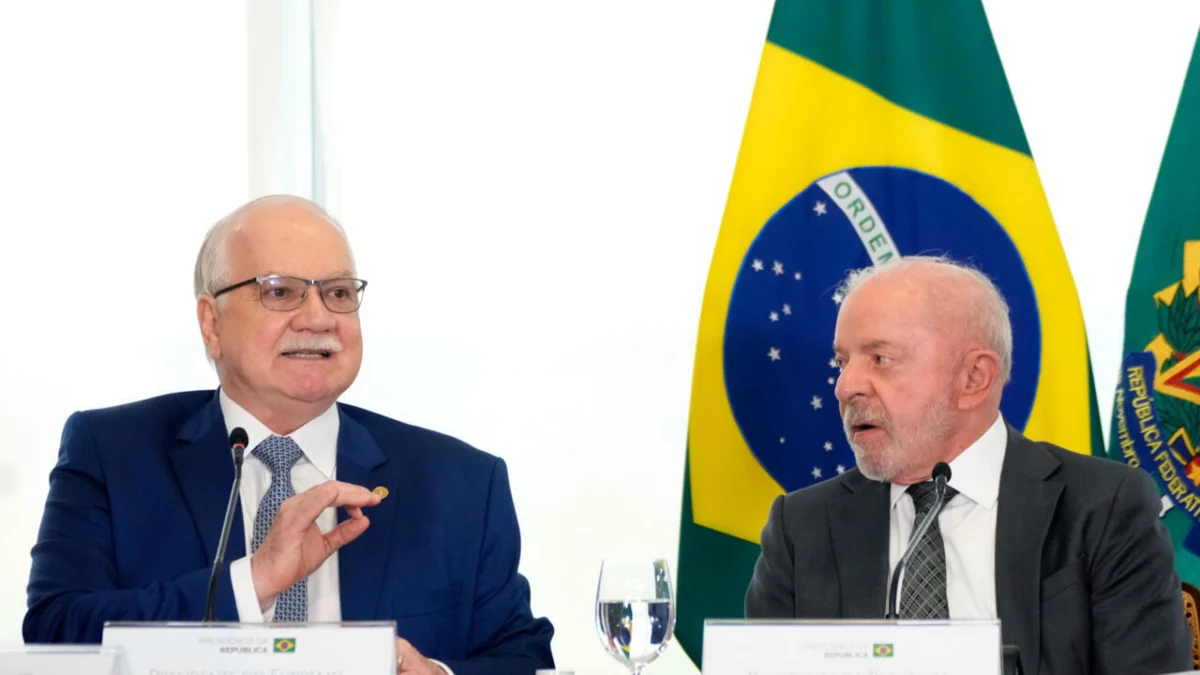
- Wednesday Afternoon: Recognizing that the court was on the brink of total paralysis, Supreme Court President Edson Fachin issued an emergency decree suspending the conflicting rulings of both Mendonca and Dino. Fachin has demanded that Rodrigues provide a comprehensive report within 48 hours to determine the validity of the allegations.
The Political Calculus: Lula and the Bolsonaros
The timing of this crisis could not be more precarious. With the presidential election less than a month away, the scandal has become the primary talking point in a campaign defined by extreme polarization.
President Lula da Silva addressed the crisis on Wednesday, calling for an end to "selective leaks" that he argued were designed to manipulate the electoral process. "It is urgent to fully lift the secrecy of the investigations into all those involved in the Master case, whoever they may be, no matter who it hurts. Brazil needs to know the truth," Lula wrote on X, attempting to project an image of a leader concerned with institutional integrity rather than partisan gain.
Conversely, the Bolsonaro faction has sought to frame the scandal as proof of a "deep state" conspiracy. Senator Flavio Bolsonaro, the former president’s son and a candidate seeking to unseat the incumbent, has used the revelations to paint the judicial system as fundamentally corrupt. However, Flavio himself is not immune to the fallout. Investigative reports have emerged suggesting that the disgraced banker, Vorcaro, transferred millions of dollars to an intermediary at the senator’s request. The younger Bolsonaro has claimed the funds were intended for a documentary film about his father, a defense that investigators are now scrutinizing with renewed vigor.
Supporting Data: A System in Distress
The "toxic" nature of the Banco Master investigation, as described by internal court sources, suggests that the rot may run deeper than a single case. Police reports indicate that Vorcaro’s strategy was to "put money into various places in order to later collect favors." This transactional approach to governance has shaken public confidence in the judiciary, which until recently was seen as the final arbiter of Brazilian democracy.

The economic implications are equally grave. On Wednesday, a coalition of approximately 3,000 business organizations issued a scathing manifesto warning of an "extremely serious institutional crisis." The document stated: "If the legitimacy of the judges is questioned, everything else becomes uncertain: legal certainty, trust in institutions, and even social peace." For a nation that relies heavily on foreign investment, the perception that the Supreme Court is prioritizing political vendettas over legal consistency poses a significant risk to Brazil’s long-term economic outlook.
Official Responses and Judicial Stance
The response from the Supreme Court’s leadership has been one of damage control. By suspending the conflicting orders of his colleagues, President Edson Fachin is attempting to force a "cooling-off" period. However, legal analysts suggest that this is merely a temporary patch on a gaping wound.
"The court is essentially split along political fault lines that mirror the electorate," says Dr. Helena Santos, a political analyst at the University of Brasilia. "When you have a Supreme Court that is fighting its own internal battles in the public eye, you lose the essential buffer that prevents political disputes from turning into violent unrest. The judges are no longer acting as referees; they are becoming players in the game."
The Federal Police, currently caught in the crossfire, find themselves in an impossible position. They are tasked with investigating a case that involves the very people who supervise their legal authority. The pressure on Andrei Rodrigues to provide a transparent account of his actions is immense, as his findings will likely dictate the next phase of the investigation into both the banker and the Justices themselves.
Implications for the Future of Brazil
The crisis at the Supreme Court is not merely a bureaucratic dispute; it is a test of Brazil’s democratic resilience. As the electoral calendar tightens, the following questions loom large:

- Judicial Impartiality: Can the STF recover its reputation as a neutral arbiter before the election concludes, or will the court’s rulings be viewed as inherently biased by nearly half the country?
- Executive-Judicial Relations: If the conflict between the police and the judiciary continues, will the executive branch be forced to intervene more aggressively, potentially creating a constitutional crisis regarding the separation of powers?
- Voter Sentiment: Will the electorate view the scandal as a reason to punish the current establishment, or will it lead to voter apathy and a decline in turnout?
As it stands, Brazil is in uncharted territory. The "warfare" within the Supreme Court has cast a long shadow over the upcoming ballot, and as the 48-hour deadline for Police Chief Rodrigues approaches, the nation holds its breath. The outcome of this institutional showdown will determine not only the result of the presidential race but also the integrity of Brazil’s democratic trajectory for years to come.
For now, the message from the business community and legal scholars remains the same: the preservation of legal certainty is the only path forward. Whether the Supreme Court can reclaim its role as a beacon of justice or continue its descent into partisan infighting remains the most critical question in Brazilian politics today.