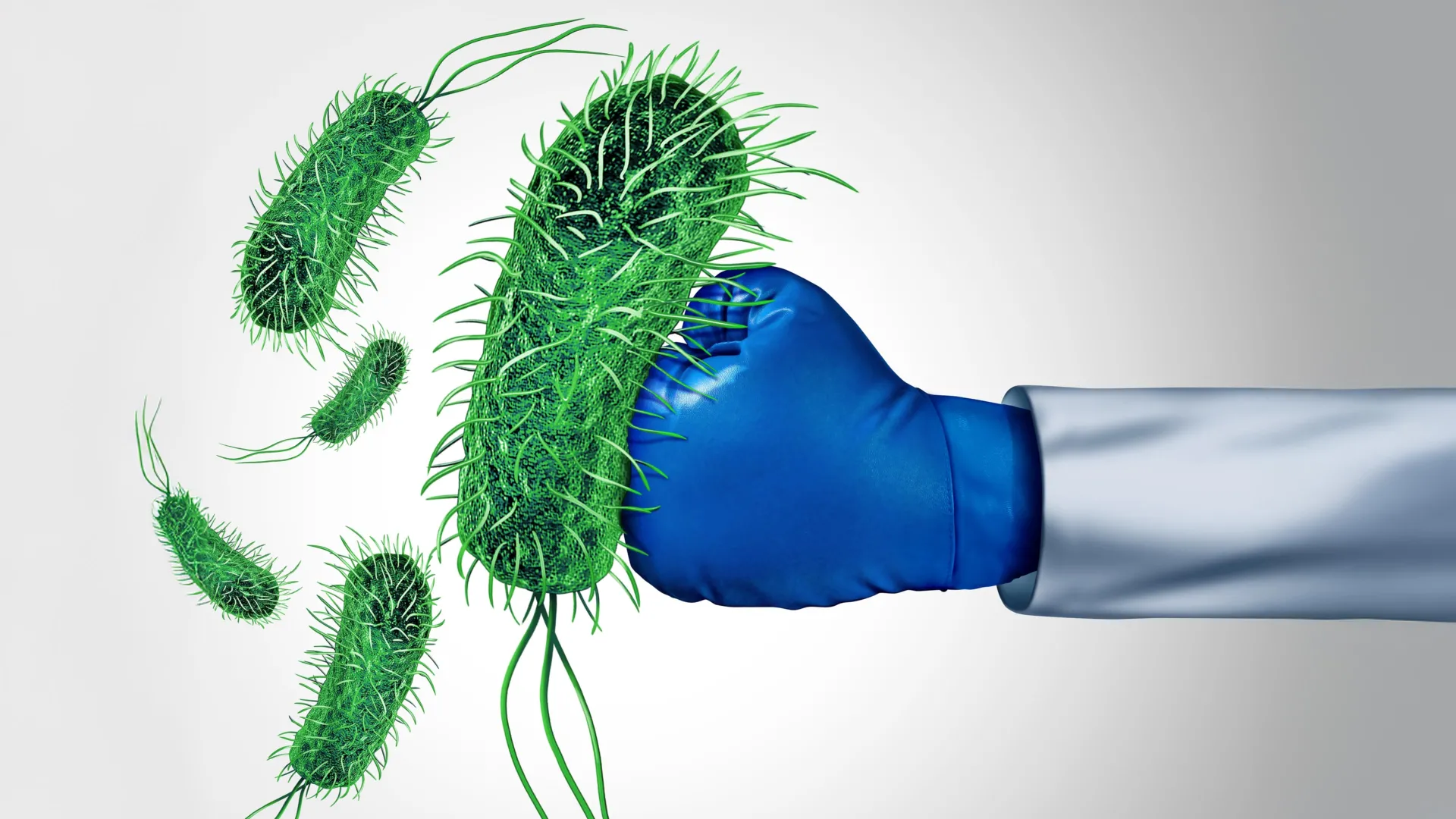
Antibiotic resistance has emerged as one of the most formidable threats to global public health in the 21st century. As bacteria evolve with alarming speed, the medical community finds itself in a precarious position: the pharmaceutical arsenal that once guaranteed success against common infections and enabled the modern era of surgery, chemotherapy, and organ transplantation is losing its potency. As these "superbugs" evolve to evade frontline treatments, the stakes for routine medical procedures continue to climb.
However, a breakthrough from the Cold Spring Harbor Laboratory (CSHL) and Scripps Research offers a new paradigm in the fight against antimicrobial resistance. Rather than attempting to discover entirely new antibiotics—a costly and often unsuccessful endeavor—researchers are successfully employing "antibiotic adjuvants." These companion molecules do not kill bacteria directly; instead, they function as molecular keys, unlocking the dormant potential of existing drugs and restoring their ability to eradicate resistant pathogens.
The Growing Shadow of Antimicrobial Resistance
To understand the gravity of the current situation, one must look at the biological reality of bacterial evolution. When antibiotics are overused or misused, bacteria are subjected to selective pressure, favoring those that possess mutations capable of surviving the drug. Over time, these resistant strains become dominant.
The implications for clinical medicine are profound. Procedures that were once considered routine—such as hip replacements, cesarean sections, or intensive cancer treatments—rely heavily on the assumption that post-operative infections can be managed with antibiotics. When these drugs fail, the patient is left vulnerable to sepsis and long-term complications. The rise of pathogens like Methicillin-resistant Staphylococcus aureus (MRSA) and Clostridioides difficile (C. diff) has transformed hospital environments into battlegrounds where the advantage is shifting toward the microbe.
A New Strategy: Diversity Oriented Clicking (DOC)
At the heart of the recent breakthrough is the work of Professor John Moses and his team at CSHL. For years, the Moses laboratory has focused on developing chemical reactions that streamline the drug discovery process. Their core innovation is a technique known as "Diversity Oriented Clicking" (DOC).
DOC is a sophisticated chemical methodology that allows for the rapid, efficient assembly of molecular libraries. By utilizing highly reliable, "click-like" chemical reactions, the researchers have curated a library of over 150 unique compounds. These are not random chemical collections; they are intelligently designed to interact with biological targets in ways that traditional drug screening might overlook.
The library has already proven its worth in the spheres of oncology and antibiotic research. By making these molecules available to a broader scientific network, Moses and his team have created a foundational platform that allows for rapid testing against a variety of biological threats.
Chronology of a Breakthrough
The collaboration between the Moses lab at CSHL and Professor Howard Hang’s team at Scripps Research represents a cross-disciplinary success story that spanned several years:
- 2020: The Moses laboratory identifies a small molecule designated as "pghi-4" during fundamental research into chemical reactions. At the time, its specific biological utility was not yet fully understood.
- 2021-2022: The CSHL team expands the DOC library, refining the synthesis of pghi-4 and other compounds, while exploring potential enzyme inhibitors that could combat bacterial resistance.
- 2023: A strategic partnership is formed with Scripps Research. The teams decide to target the bacterial enzyme "secreted antigen A" (SagA), which plays a critical role in the resilience of certain gram-positive bacteria.
- 2024: The researchers successfully demonstrate that pghi-4 effectively blocks SagA in E. faecium. When combined with vancomycin—a "last-resort" antibiotic—the treatment regains its efficacy, effectively neutralizing the resistant bacteria.
Restoring the Power of Vancomycin
Vancomycin has long been a bedrock of infectious disease medicine. However, its effectiveness has been significantly eroded by the rise of resistant superbugs. The collaboration focused specifically on E. faecium, a bacterium that has developed sophisticated ways to evade vancomycin.
The key to the discovery was the SagA enzyme. By identifying that pghi-4 could selectively inhibit SagA, the researchers effectively stripped the bacteria of their defensive mechanisms. In laboratory settings, the introduction of pghi-4 rendered the bacteria vulnerable to vancomycin once more, effectively "re-sensitizing" the pathogen to the drug.
This is not merely a new drug; it is a synergistic strategy. By coupling the adjuvant with an existing, well-understood antibiotic, the researchers minimize the regulatory hurdles associated with bringing a brand-new chemical entity to market, while simultaneously extending the clinical lifespan of current medicine.
Official Perspectives: The Philosophy of Chemistry
Professor John Moses emphasizes that this discovery was not the result of a linear, "search-and-destroy" mission for a new antibiotic. Instead, it was an outcome of fundamental, curiosity-driven chemistry.
"This discovery came from fundamental chemical research," Moses explained in a statement. "Reaction development led to the discovery of the first inhibitor of an important enzyme involved in antibiotic resistance. This is a process we’re constantly refining to both keep our library of molecules up to date and add more for collaborators to take advantage of in their research."
Moses’s philosophy is rooted in the belief that the speed of drug discovery is intrinsically linked to the elegance of the chemistry employed. "This work reflects a philosophy of chemistry that’s designed to accelerate drug discovery in its purest form," he added. "By using reliable, robust, and intelligent chemical reactions, we can build new molecules more efficiently. That’s exactly the approach we used here."
Supporting Data and Future Implications
The success of the pghi-4 and vancomycin combination provides a template for future research. The potential applications extend far beyond E. faecium. The research team is currently eyeing other drug-resistant pathogens, including resistant forms of Mycobacterium tuberculosis.
The broader implications are clear: the future of medicine may not lie in the discovery of a "magic bullet" that kills everything, but in a modular approach where we deploy custom-designed adjuvants to disable the resistance mechanisms of dangerous bacteria. This strategy could reduce the need for constant, frantic development of new antibiotics, which are often quickly outpaced by bacterial evolution.
By creating an open, accessible library of compounds, the CSHL team is inviting the global scientific community to participate in this new era of medicinal chemistry. The goal is to build a collaborative ecosystem where researchers can "plug and play" with these molecular tools to solve diverse health crises.
Funding and Institutional Support
The progress reported by the CSHL and Scripps teams is a testament to the importance of sustained, high-level scientific funding. This work was made possible through the support of several prestigious institutions and foundations:
- National Institutes of Health (NIH): Providing the foundational support for health-related research.
- National Cancer Institute (NCI): Recognizing the overlap between chemical research for oncology and infectious disease.
- Australian Research Council: Supporting the international collaborative nature of the project.
- New York State Biodefense Commercialization Fund: Highlighting the security implications of managing antibiotic-resistant pathogens.
- F.M. Kirby Foundation & Starr Foundation: Providing the philanthropic backing necessary for high-risk, high-reward chemical synthesis research.
Conclusion: A New Horizon in Medicine
The findings from the Moses and Hang laboratories offer a profound lesson for the future of medicine. As the threat of antibiotic resistance looms larger, we are learning that we cannot always outrun evolution by creating new drugs alone. Sometimes, the solution lies in looking backward at the drugs we already possess and using advanced, intelligent chemistry to restore their relevance.
As this research moves toward potential clinical trials and further development, it stands as a beacon of hope. It suggests that by rethinking our approach to chemical synthesis and embracing the power of molecular adjuvants, we can preserve the lifesaving potential of modern medicine for generations to come. The era of the superbug may be daunting, but the era of precision chemical restoration has only just begun.