For 179 years, the fate of Sir John Franklin’s 1845 Arctic expedition has served as one of history’s most haunting enigmas. The disappearance of the HMS Erebus and HMS Terror, along with 129 men, birthed a century of speculation, desperate rescue missions, and enduring myths. Now, through the marriage of modern forensic science and meticulous genealogical research, the silence of the Arctic is finally being broken.
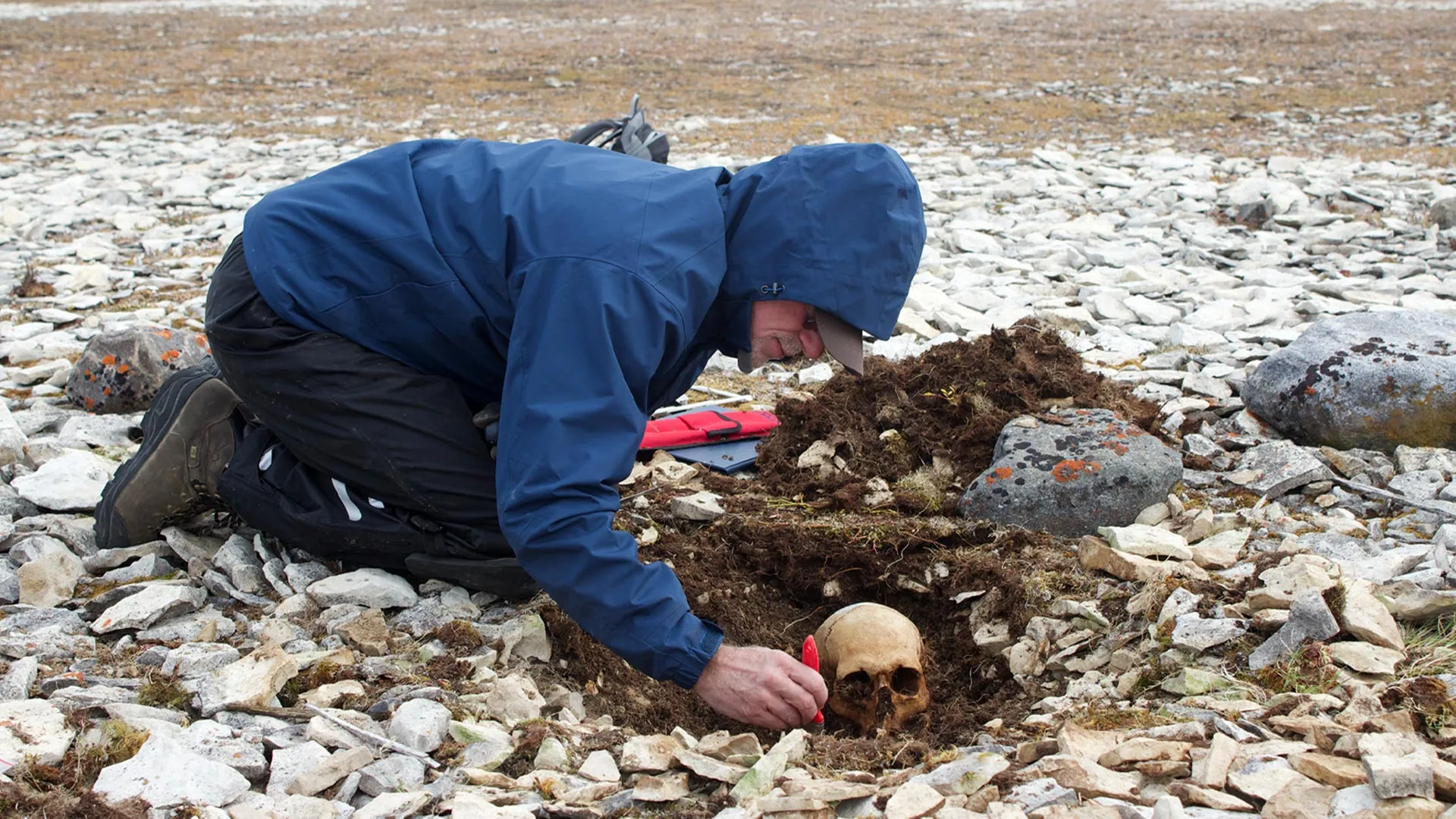
A team of anthropologists from the University of Waterloo, led by Dr. Douglas Stenton and Dr. Robert Park, has successfully identified four additional sailors from the expedition. These findings, published in two separate scientific journals, not only provide closure to the families of the long-lost crew but also resolve a 166-year-old mystery that has perplexed historians since the mid-19th century.
The Tragic Odyssey: A Timeline of Despair
To understand the magnitude of these discoveries, one must revisit the grim reality of the expedition’s final days. In 1845, Sir John Franklin set sail from England with the most advanced technology of his era, aiming to chart the elusive Northwest Passage. By 1846, however, both ships became inextricably trapped in the relentless pack ice of the Victoria Strait.
1846–1848: The Long Confinement
For nearly two years, the crew remained aboard the ice-locked vessels, enduring the crushing cold and the psychological toll of isolation. As scurvy, lead poisoning, and malnutrition took their toll, the expedition’s leadership withered. Sir John Franklin himself died in June 1847, leaving the command to Captain James Fitzjames.
April 1848: The Fatal March
By April 1848, with supplies exhausted and hope fading, the 105 surviving crew members made the harrowing decision to abandon the Erebus and Terror. They attempted to march south along the west coast of King William Island, hauling heavy lifeboats on wooden sleds in a desperate bid to reach the Back River on the Canadian mainland. None of them would survive the journey.
1859–Present: The Long Discovery
Since the mid-19th century, search parties and later archaeological teams have recovered remains across King William Island and the Adelaide Peninsula. For generations, these bleached bones were mere statistics in a ledger of tragedy. Now, through the extraction of DNA from skeletal fragments and a match with living descendants, the victims are reclaiming their names.
The Enigma of the "Peglar Papers" Resolved
Perhaps the most significant breakthrough in the recent research concerns the identity of a sailor found far from the primary cluster of remains. In 1859, searchers discovered a body on the Adelaide Peninsula accompanied by a collection of personal documents, including a seaman’s certificate bearing the name of Harry Peglar, the Captain of the Foretop on the HMS Terror.
For over a century and a half, historians were paralyzed by a contradiction: while the documents clearly pointed to Peglar, the clothing found on the remains suggested a lower rank. This led to a long-standing debate—was the body truly Peglar, or had someone else taken his possessions after his death?
"It was interesting to conclusively identify this sailor because the body was found with almost the only written documents from the expedition ever found," said Dr. Robert Park. The "Peglar Papers," as they are now known, include not only official identification but also poetry and observations of the expedition’s final days.
Through DNA analysis, the University of Waterloo team has finally settled the debate: the remains are indeed those of Harry Peglar. His presence 130 kilometers away from the main burial sites at Erebus Bay suggests that the retreat from the ships was far more fragmented and desperate than previously theorized, with men potentially traveling in smaller, isolated groups.
New Identities from the HMS Erebus
While Peglar’s identity solves a historical cold case, the team also successfully identified three other crew members, all from the HMS Erebus:
- William Orren: An Able Seaman.
- David Young: A Boy 1st Class.
- John Bridgens: A Subordinate Officers’ Steward.
These identifications are critical for the historical record. They confirm that these men, despite the brutal conditions, survived the first three years of the expedition and were actively participating in the final, doomed march toward safety. Their survival into 1848 underscores the sheer resilience of the crew, even as their physical health deteriorated under the weight of the Arctic winter.
These four new identifications bring the total number of Franklin expedition sailors identified through DNA analysis to six. This work builds upon the 2021 identification of John Gregory, an engineer on the Erebus, and the 2024 identification of Captain James Fitzjames. The contrast between these findings is stark; while Fitzjames’ remains showed clear evidence of cannibalism—a desperate act by a dying crew—the remains of the four newly identified sailors show no such evidence, suggesting a wide variance in the experiences of the crew during their final months.
A Personal Connection: The Journalist’s Discovery
The reach of this research extends beyond academia, touching the lives of modern families who had long forgotten their connection to the ill-fated voyage. A remarkable case emerged during the investigation involving BBC News journalist Rich Preston.
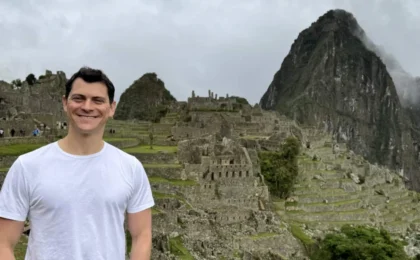
Dr. Stenton contacted Preston after genetic records indicated he might be a descendant of John Bridgens. "I was so intrigued when Dr. Stenton first contacted me," Preston recounted. "It was such a huge surprise to hear from the team that my DNA was a match with one of the sailors on the doomed Franklin expedition."
For Preston, the discovery was personal and professional, merging his background in genealogy with his own family history. "I used to work on a genealogy show for the BBC that traced people’s fascinating family stories, and so to discover that there’s such an interesting tale in my own family’s past feels very exciting," he noted. His story highlights the emotional resonance of this research; it is not merely about identifying bones, but about restoring the humanity of those who were lost to the ice.
The Methodology: Science Across Generations
The success of the University of Waterloo team relies on a rigorous, two-pronged scientific approach. Stephen Fratpietro of Lakehead University, a co-author of the study, managed the extraction of DNA from the archaeological remains. This genetic material was then cross-referenced with mitochondrial and Y-chromosome DNA samples provided by living descendants.
The standard for success was high: in each of the four new cases, the researchers found a "genetic distance of zero," providing near-certain proof of a common ancestor. This level of accuracy is essential in a field where historical context and forensic science must align perfectly.
However, the team emphasizes that this process is only possible with the participation of the public. "To qualify for this type of comparison, descendants must have genealogical records showing a direct and uninterrupted maternal or paternal line," Dr. Stenton explained. The research team is actively calling for other descendants of the 129 men to come forward, as every new DNA sample increases the likelihood of identifying the remaining unidentified remains scattered across the Arctic tundra.
Implications for Future Arctic Research
The implications of these findings are profound. By identifying specific individuals, researchers can begin to map the geography of the expedition’s collapse with greater precision. If we know where individual men died, we can better understand the routes they took and the timeframe in which they succumbed to their circumstances.
The scientific community has lauded the team’s findings, which have been published in Journal of Archaeological Science: Reports and the Polar Record. These papers provide a template for future bioarchaeological studies, demonstrating that even after nearly two centuries of environmental degradation, the human genome can still tell a story that historical documents have left incomplete.
As we move closer to the 200th anniversary of the Franklin expedition, the mystery of the Erebus and the Terror is slowly transforming from a dark legend into a documented historical event. Each name restored to a grave is a victory against time and oblivion. For the families of William Orren, David Young, John Bridgens, and Harry Peglar, the long wait is finally over. The ice has yielded its secrets, and the sailors have finally been brought home in the only way that matters: by name, by history, and by truth.