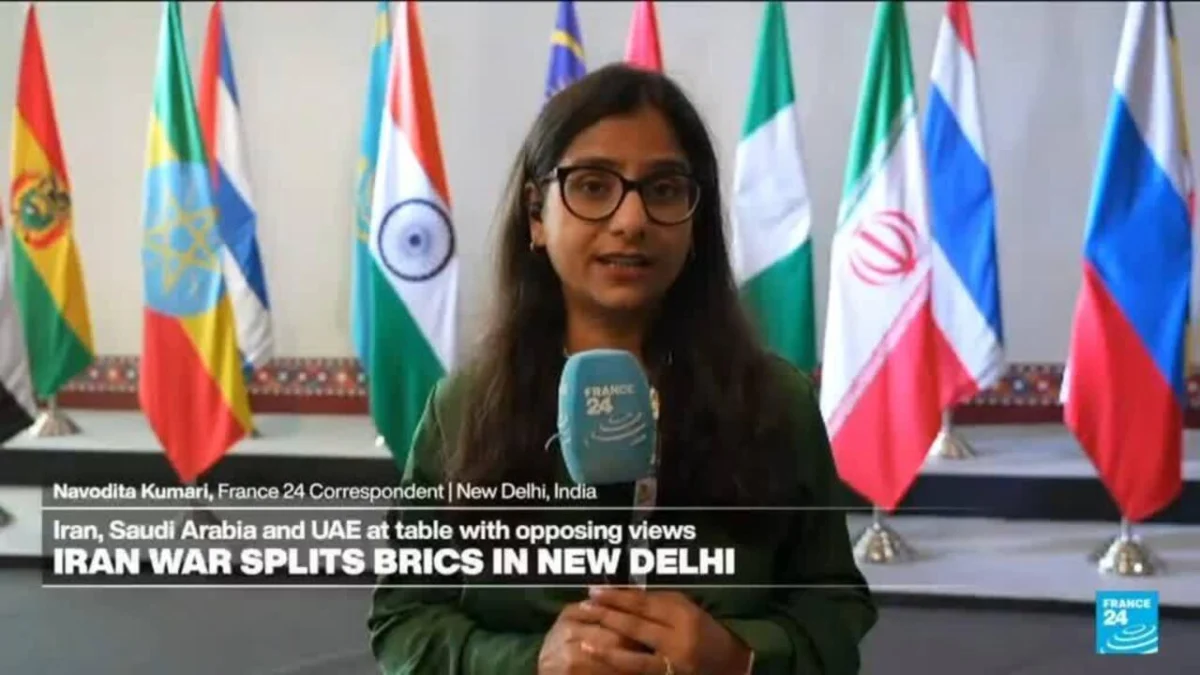
New Delhi, India — The 2026 BRICS summit, hosted in the historic and politically charged atmosphere of New Delhi, has emerged as a pivotal moment for the bloc. As the group of major emerging economies—Brazil, Russia, India, China, and South Africa, alongside its recent expansion members—gathers, the summit is underscored by a palpable sense of urgency. With global conflicts escalating and the specter of "de-dollarization" looming over Washington, the leaders of the Global South are attempting to define a new architecture for international relations.
The Main Facts: A Bloc in Transition
The 2026 summit serves as a litmus test for the bloc’s expansion efforts initiated in Johannesburg two years prior. The primary objective on the agenda is no longer merely economic cooperation, but the formalization of a geopolitical alternative to the G7.
Key themes dominating the sessions include:
- The Currency Question: Discussions have intensified regarding a common BRICS payment system, designed to bypass the SWIFT network and minimize exposure to US-led sanctions.
- Conflict Mediation: The bloc is struggling to maintain internal cohesion as members find themselves on opposing sides of various proxy conflicts, particularly in Eastern Europe and the Middle East.
- Institutional Expansion: Evaluating the efficacy of the New Development Bank (NDB) and its capacity to provide liquidity to developing nations without the "policy conditionalities" typical of the IMF.
The atmosphere in New Delhi is one of cautious optimism tempered by deep internal friction. While China and Russia push for a more adversarial stance against the "Western-led order," India—acting as the host—has consistently championed a strategy of "strategic autonomy," aiming to position itself as a bridge between the Global South and the West.
Chronology: The Evolution of BRICS
To understand the gravity of the 2026 summit, one must view it as the culmination of a decade-long trajectory:
- 2014 (The Turning Point): Following the annexation of Crimea and subsequent Western sanctions on Russia, the bloc began to accelerate its plans for the New Development Bank.
- 2023 (The Expansion): The Johannesburg summit marked a watershed moment with the invitation of several nations to join, signaling a shift from a group of "five" to a broader platform for the Global South.
- 2024–2025 (The Integration Phase): The bloc navigated internal bureaucratic hurdles, focusing on energy security and agricultural trade, even as the global economy suffered from post-pandemic inflationary pressures.
- 2026 (The Current Summit): The New Delhi summit focuses on "Strategic Sovereignty." The bloc is now grappling with the consequences of its enlarged membership and the difficulty of maintaining a unified voice in an increasingly polarized world.
Supporting Data: The Economic Reality
The economic weight of the bloc remains its primary leverage, yet the data presents a complex picture.
Current indicators suggest:
- GDP Parity: The combined GDP of the BRICS+ nations, when adjusted for Purchasing Power Parity (PPP), now accounts for over 35% of global output, significantly outpacing the G7.
- Trade Volatility: Intra-BRICS trade has grown by 18% since 2024, yet the reliance on the US Dollar for these transactions remains a point of contention. China’s push for the internationalization of the Yuan has seen mixed results, with some members wary of replacing US hegemony with Chinese dominance.
- Debt Exposure: Many of the newer, smaller members of the bloc are currently facing severe debt crises. The New Development Bank has been tasked with restructuring these portfolios, a monumental challenge that tests the financial limits of the bloc’s founding members.
Official Responses and Diplomatic Posturing
The rhetoric emerging from New Delhi highlights the divergence in national interests.
The Russian Position: Moscow has utilized the platform to reiterate its rejection of the "rules-based international order," framing its conflict in Ukraine as a defensive stance against NATO encroachment. Foreign Minister Sergey Lavrov emphasized, "The era of Western dominance is drawing to a close, not by our decree, but by the natural evolution of history."

The Chinese Position: Beijing continues to advocate for "Global Security Initiatives" and "Global Development Initiatives." Analysts note that China is leveraging the BRICS platform to solidify its Belt and Road Initiative (BRI) partnerships, ensuring that the bloc remains aligned with its own long-term geopolitical ambitions.
The Indian Perspective: Prime Minister Narendra Modi has struck a more nuanced tone. While supporting the bloc’s goals of development and multipolarity, India has been careful to avoid explicit anti-American language. New Delhi’s official stance remains focused on "Reform, not Replacement," calling for a restructuring of the United Nations Security Council rather than the creation of a rival institution.
The Western Reaction: Washington and Brussels have reacted with a mix of skepticism and concern. US State Department spokespeople have consistently downplayed the threat of BRICS, citing the "inherent contradictions" within the group. However, behind the scenes, there is growing anxiety regarding the long-term impact on the dollar’s status as the world’s reserve currency.
Implications: A World Divided
The implications of the 2026 summit extend far beyond the conference halls of New Delhi.
1. The Fragmentation of Global Trade
If BRICS successfully implements a unified payment mechanism, it could lead to a permanent bifurcation of the global financial system. Such a development would likely reduce the effectiveness of Western sanctions, complicating efforts to curb state-sponsored aggression or human rights violations globally.
2. The Future of Multilateralism
The summit highlights the obsolescence of the post-WWII institutional framework. If the UN, IMF, and World Bank fail to accommodate the rising influence of the Global South, the BRICS-led model may evolve from a loose cooperative into a rigid, rival organization. This would effectively turn the world into a multipolar arena where diplomatic leverage is determined by trade blocs rather than universal treaties.
3. The Security Dilemma
Perhaps most critically, the inclusion of nations with conflicting interests (such as the historical tensions between India and China) creates a security dilemma within the bloc itself. The 2026 summit has revealed that while the members agree on what they don’t want (Western dominance), they have yet to reach a consensus on what they do want. This lack of a unified positive vision may prove to be the bloc’s ultimate undoing.
Conclusion: A High-Stakes Balancing Act
As the summit draws to a close, the participants face a stark reality. The BRICS bloc is no longer a collection of emerging markets—it is a geopolitical force that is actively testing the limits of global order. Whether this results in a more equitable distribution of power or a dangerous deepening of global rifts remains to be seen.
For now, the world watches as these leaders attempt to navigate a path that avoids the traps of the past while struggling to build a future that remains largely undefined. The New Delhi declaration will likely be remembered not for the immediate policy changes it enacts, but for the clarity with which it marks the transition into a post-Western era of international relations. The challenge for the coming years will be to ensure that this transition occurs through negotiation rather than conflict, a task that seems more daunting today than ever before.