For decades, the "American cheetah" (Miracinonyx trumani) has been a centerpiece of North American paleontology—a sleek, long-legged phantom that haunted the Pleistocene, often cited as the primary evolutionary catalyst for the blistering speed of the modern pronghorn. However, a landmark study published September 4 in the journal Current Biology has shattered this long-held paradigm.
Led by researchers at the University of California, Santa Cruz, the study utilizes cutting-edge nuclear paleogenomics and stable isotope analysis to prove that M. trumani was not a cheetah at all. Instead, it was a highly adaptable, versatile cousin of the puma, capable of thriving in environments as diverse as temperate grasslands and the frigid Arctic. This revelation forces a fundamental reassessment of how we interpret the evolutionary history of North American megafauna and the phenomenon of convergent evolution.
Main Facts: A Case of Evolutionary Identity Theft
The primary takeaway from the new research is that M. trumani is a vivid example of evolutionary convergence. Despite possessing a slim, 150-pound frame, long limbs, and an eight-foot body length—proportions that mimic the modern African cheetah (Acinonyx jubatus)—genomic sequencing reveals that the cat is a sister species to the modern puma (Puma concolor).
The lineage split from the puma approximately 2.6 million years ago. Its "cheetah-like" morphology, once thought to be a sign of close kinship, is now recognized as an independent development. Much like the puma, M. trumani was a generalist, but with a surprising twist: it was a "chameleon" of the predator world. While populations in the Lower 48 states, such as those found in Wyoming and Florida, hunted in grasslands, populations in the Yukon were tertiary consumers, relying heavily on anadromous fish like salmon to survive the extreme Arctic winters.
Chronology: From the Early Pleistocene to Extinction
The existence of M. trumani spans a significant portion of the Pleistocene, yet the new genetic evidence paints a picture of a species in a state of long-term, quiet decline rather than a sudden cataclysm.
- 2.6 Million Years Ago: The divergence point. M. trumani splits from the evolutionary lineage of the puma, beginning its distinct journey across the North American continent.
- 31,000 to 23,000 Years Ago: The window for the fossil specimens analyzed in the current study. By this time, the species had successfully colonized the far north, extending its range 20 degrees of latitude further than previously documented.
- Late Pleistocene: The period characterized by the slow, steady erosion of the species’ genetic diversity. Unlike other animals that suffered sudden, catastrophic population bottlenecks, M. trumani experienced a long, drawn-out reduction in numbers that likely made them increasingly fragile to environmental shifts.
- End of the Pleistocene: The eventual disappearance of the species. The research suggests that the combination of low genetic diversity and a changing climate—rather than a single, sudden event—sealed their fate.
Supporting Data: Genetic Clues and Sensory Evolution
To unlock the secrets of this predator, the team sequenced high-coverage genomes from fossils recovered from the Yukon Territory. This analysis, conducted with respect for the traditional territories of the Tr’ondëk Hwëch’in and Vuntut Gwitchin peoples, provided several breakthroughs.
Genetic Adaptation to the Arctic
The genomic data revealed "loss-of-function" mutations in genes regulating circadian rhythms. These mutations suggest that M. trumani had physiologically adapted to the extreme light cycles of the Arctic, where the sun barely sets in summer and rarely rises in winter. This level of physiological flexibility underscores that the cat was far from a specialized grassland sprinter; it was an animal capable of rewiring its internal clock to match its environment.
The Mystery of the Missing Taste Receptor
Perhaps most intriguing is the discovery that M. trumani lacked the functional gene responsible for detecting sour tastes. While domestic cats are known to lack a "sweet tooth," this is the first documented case in felids of the loss of sour-taste perception. Researchers posit that such sensory loss is often associated with highly specialized diets, further reinforcing the idea that this predator was an "uber-specialist" depending on the specific ecosystem it inhabited.
Stable Isotope Analysis
Stable isotope signatures from the bones provided the "smoking gun" regarding diet. By analyzing the carbon and nitrogen isotopes, the team confirmed that the Yukon populations were consuming significant amounts of aquatic protein. This evidence effectively refutes the traditional view that M. trumani was strictly a terrestrial pursuit predator.
Official Responses: The Scientific Shift
The lead author of the study, Molly Cassatt-Johnstone, a Ph.D. candidate in the Paleogenomics Lab at UC Santa Cruz, emphasizes the flexibility of the species. "These cats were remarkably flexible, much like pumas are across their range today," she notes. The research team highlights that the "cheetah" label is doubly misleading: it implies a false evolutionary history and a false hunting strategy.
Senior author Beth Shapiro, a professor of ecology and evolutionary biology at UC Santa Cruz and co-director of the Paleogenomics Lab, adds nuance to the extinction narrative. "Low genetic diversity alone was not enough to wipe out the species," Shapiro explained. "We didn’t see the signs of inbreeding that you would expect before a total collapse. The decline was slow, not sudden, and that long-term struggle may be what left them unable to pivot when the climate shifted dramatically at the end of the Pleistocene."
Matthew Wooller, a co-author and professor at the University of Alaska Fairbanks, highlights the sheer breadth of the cat’s success. "They are demonstrating uber-specialization at two ends of their range, while also feeding on two completely different food sources. It’s a remarkable testament to their biological versatility."
Implications: Rethinking "Ghosts of Predators Past"
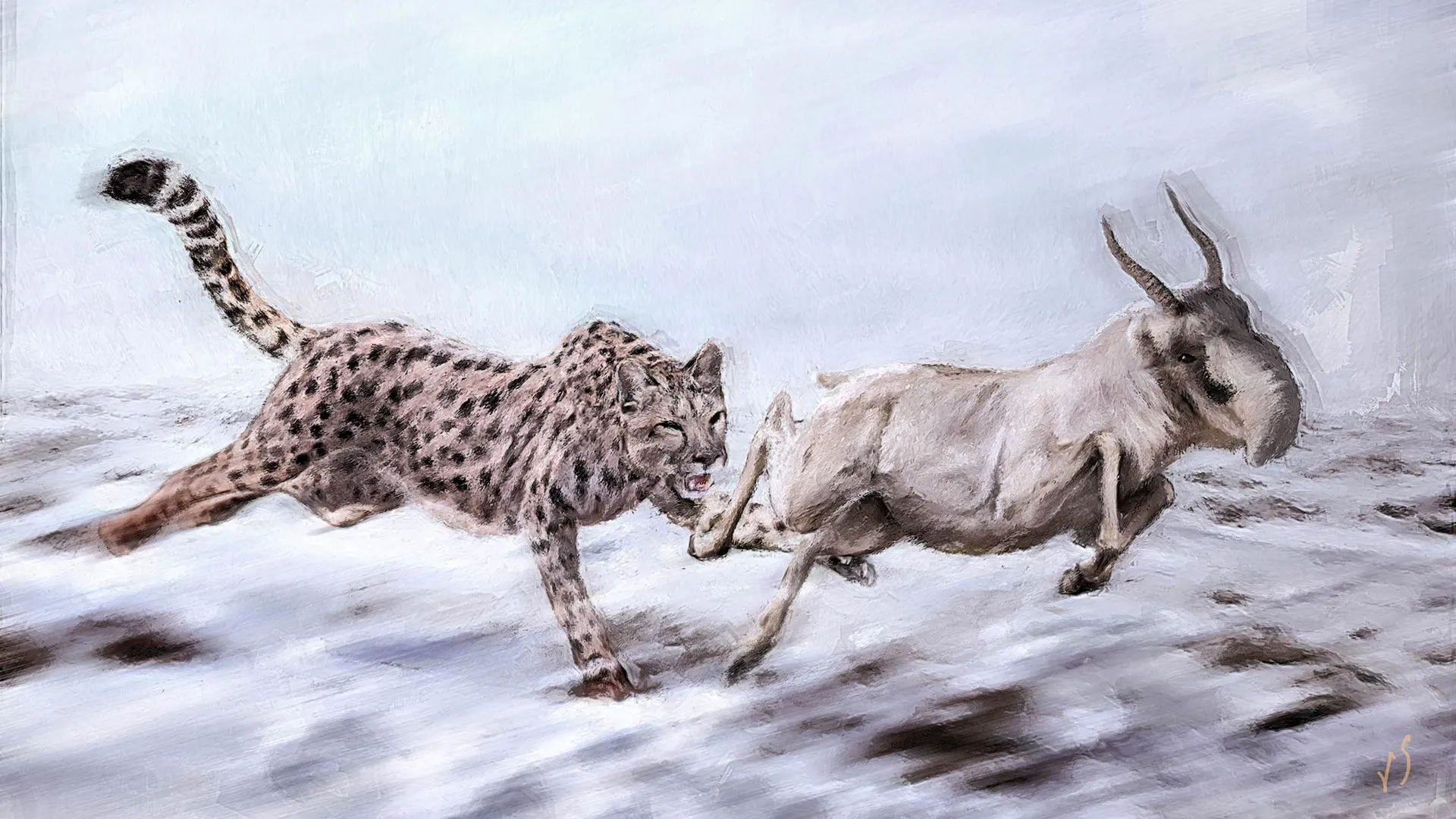
The most significant implication of this study is the challenge it poses to the "ghosts of predators past" hypothesis. For decades, the extraordinary speed of the American pronghorn—the fastest land animal in the Western Hemisphere—was explained by the need to outrun the "American cheetah."
If M. trumani was not a specialized high-speed pursuit predator but rather a generalist cousin of the puma, the pressure driving the pronghorn’s evolution must be reconsidered. Scientists must now determine whether another predator, or a different set of environmental factors, pushed the pronghorn to develop its record-breaking speed.
Furthermore, the study serves as a cautionary tale for the field of paleontology. Assigning biological identities based solely on physical appearance can lead to decades of misconception. The "American cheetah" is a classic example of how convergent evolution can deceive even the most rigorous observers.
A Legacy of Adaptability
Ultimately, the study elevates M. trumani from a misunderstood, "failed" version of an African cat to a success story of North American adaptation. These animals were not inferior versions of cheetahs; they were highly successful, adaptable predators that managed to occupy vastly different niches across a massive geographic range.
As the research collaboration—which included the Yukon Palaeontology Program and Des Moines University—continues to analyze these ancient genomes, the story of Miracinonyx trumani serves as a reminder that the past is rarely as simple as the labels we place upon it. The "American cheetah" is gone, but the true story of this versatile hunter—a master of both the grasslands and the Arctic—is only just beginning to be told.