World War II has long been the ultimate canvas for cinematic storytelling. From the gritty, documentary-style realism of Saving Private Ryan to the sweeping, strategic scale of The Longest Day, the genre has traditionally fixated on the overwhelming logistics of global conflict: the storming of beaches, the rumble of tanks across the European theater, and the heavy burden of duty borne by the "Greatest Generation."
However, Quentin Tarantino’s 2009 masterpiece, Inglourious Basterds, occupies a singular, subversive space in this pantheon. Now available to stream on Hulu as of September 2026, the film remains a landmark in alternate-history storytelling. While it was marketed as a high-octane revenge fantasy featuring Brad Pitt as the leader of a scalp-hunting squad of Jewish-American soldiers, the film’s true power lies in its restraint. Tarantino, a director often synonymous with hyper-stylized violence, transforms the battlefield into a dinner table, a tavern, and a movie theater—proving that the most devastating weapons in war are often just words.
A Chronicle of Subversion: The Anatomy of the Plot
The film’s narrative is a mosaic of intersecting fates, spanning the early days of the Nazi occupation of France to the desperate, final throes of the Third Reich.
The story is anchored by three distinct but colliding threads. First, there is the arrival of SS Col. Hans Landa, a terrifyingly charismatic "Jew Hunter" who serves as the film’s primary antagonist. His opening interaction with a French dairy farmer sets the tone for the entire runtime: it is a masterpiece of psychological warfare.

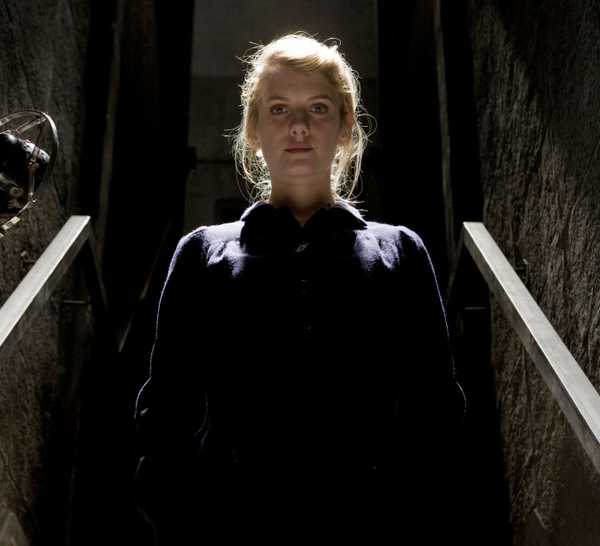
Second, we follow Shosanna Dreyfus, a Jewish cinema owner who escapes Landa’s massacre of her family. Her journey from a traumatized refugee to a defiant orchestrator of mass destruction provides the film’s emotional core.
Finally, the "Basterds" themselves—a ragtag unit of Allied soldiers—operate as a chaotic, unpredictable force of nature. Their mission, Operation Kino, eventually merges with Shosanna’s private vendetta, leading to an incendiary climax that effectively deletes the Third Reich from history.
The Weaponization of Conversation: Building Unbearable Tension
Tarantino’s genius in Inglourious Basterds is his ability to weaponize silence. In most war films, tension is derived from the immediate threat of physical harm. In Basterds, tension is derived from the threat of being "found out."
Consider the now-legendary tavern scene. British Lt. Archie Hicox, posing as a German officer, meets with a German film star-turned-spy, Bridget von Hammersmark. The scene is a masterclass in cultural anthropology used as a death trap. Hicox’s fluency in German is perfect, but his fatal error is as simple as the way he holds his fingers while ordering three drinks. In a split second, the Gestapo Major Dieter Hellstrom notices the deviation from German custom.

The ensuing standoff is a quintessential Tarantino moment: the characters know the game is up, the audience knows the game is up, yet the director forces us to sit in the suffocating silence of that realization. This approach challenges the viewer to pay attention to the smallest details—accents, gestures, and the subtext of etiquette—elevating the film from a standard war romp into a high-stakes psychological thriller.
Supporting Data: The Craft Behind the Screen
When analyzing the film’s enduring impact, one must look at the production elements that allow it to transcend its genre.
- Linguistic Authenticity: By demanding that characters speak their native languages—French, German, English, and Italian—Tarantino created a barrier to entry for the audience that mirrors the characters’ own anxieties. When a character switches languages, the shift is not just linguistic; it is a tactical pivot.
- The Power of Propaganda: The film explicitly centers on the role of film itself. Joseph Goebbels and the Nazi high command’s obsession with cinema is the mechanism of their downfall. Shosanna’s use of highly flammable nitrate film stock to incinerate the leadership at her theater is a piece of narrative irony that functions as both a thematic statement and a satisfying plot device.
- Historical Divergence: Unlike speculative fiction such as The Man in the High Castle, which explores "what if the Nazis won," Basterds occupies a space of "what if we could have stopped them sooner." By literally riddling Hitler with bullets in a burning cinema, Tarantino offers a cathartic, if historically impossible, conclusion to the conflict.
Official Responses and Cultural Legacy
Upon its release in 2009, the film faced a polarized reception. Some critics argued that Tarantino’s cavalier treatment of the Holocaust and World War II was reductive or overly indulgent. However, as the years have passed, the critical consensus has shifted toward recognizing the film as a sophisticated meta-commentary on the medium of film.
Film historians have noted that Inglourious Basterds effectively uses the language of cinema to critique how history is packaged for entertainment. By making the Nazi leadership look like buffoons—Hitler is portrayed as a petulant, shrieking narcissist—Tarantino strips them of the terrifying, monolithic image they cultivated, reducing them to targets in a grand, cinematic execution.

Christoph Waltz’s performance as Hans Landa remains one of the most celebrated portrayals of a villain in the 21st century. His ability to switch between courtly charm and sociopathic efficiency provided the film with an anchor that allowed its more surreal elements to feel grounded in a terrifying reality.
The Implications of Revisionist History
Why does this film still resonate in 2026? The answer lies in the human desire for moral clarity.
In real life, the end of World War II was messy, bureaucratic, and marked by ongoing geopolitical shifts. By choosing to rewrite history, Tarantino offers a narrative that fulfills a deep-seated desire for poetic justice. He doesn’t just want the Nazis to lose; he wants them to be humiliated, exposed, and erased by the very tools they used to oppress.
The implication here is that cinema is not merely a reflection of reality, but a tool for reshaping our collective memory. By turning the theater into a tomb for the Third Reich, Tarantino suggests that the artist has the power to reclaim history, even if only for the duration of a feature film.
Conclusion: A Timeless Revenge Fantasy
Seventeen years after its premiere, Inglourious Basterds has aged with remarkable grace. It remains a cornerstone of modern cinema, proving that even within the well-trodden ground of World War II, there is room for innovation, subversion, and sheer storytelling audacity.
It is a film that rewards repeated viewings, with each conversation yielding new layers of dread and each scene serving as a masterclass in pacing. Whether you are watching for the stylized, explosive finale or the quiet, excruciating tension of a basement conversation, the film stands as a testament to Tarantino’s ability to manipulate audience expectations.
As it arrives on Hulu, Inglourious Basterds serves as a reminder of what happens when a director is given the freedom to be bold, to be historical, and—most importantly—to be unforgiving. It remains a work of art that is as daring today as it was in 2009: a brilliant, bloody, and entirely unforgettable piece of alternate history.