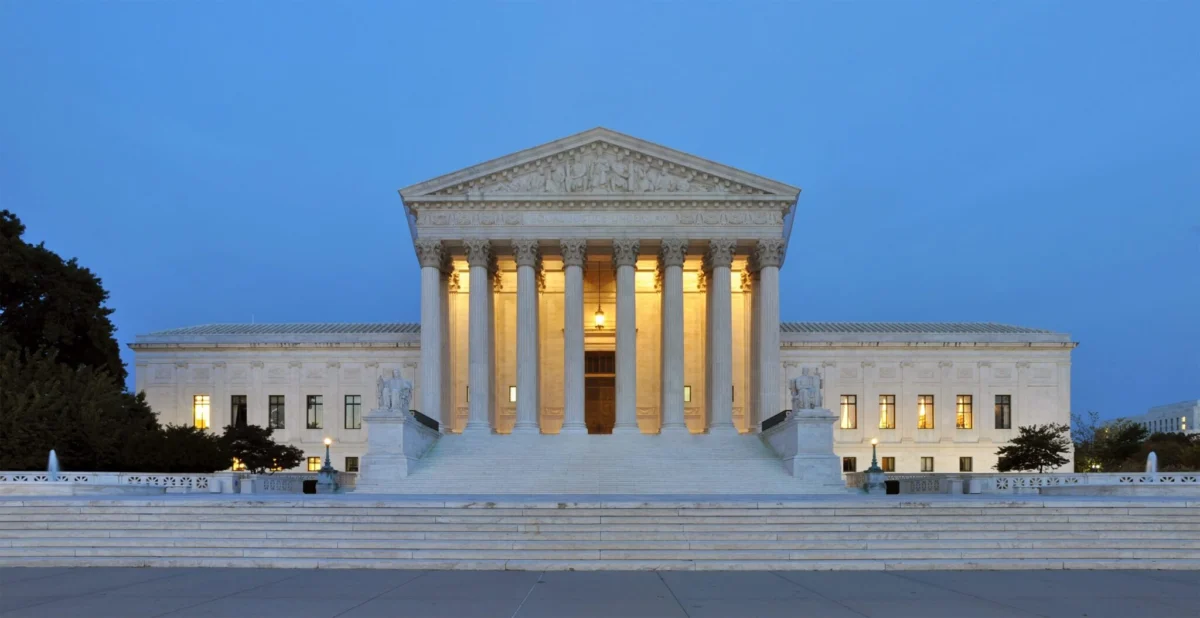
The United States Supreme Court is once again at the center of a volatile legal battle over the mechanics of American democracy. In a third attempt to secure judicial relief, the Trump administration has petitioned the nation’s highest court to greenlight a controversial United States Postal Service (USPS) rule that would fundamentally alter the distribution of mail-in ballots for upcoming federal elections.
This latest emergency application, filed Sunday by Solicitor General D. John Sauer, seeks to stay a preliminary injunction issued by a federal district court. At the heart of the dispute is the administration’s mandate—stemming from Executive Order 14399—which restricts the delivery of mail-in ballots to only those states that provide verified citizenship lists. As the midterm elections loom, the legal tug-of-war has created a climate of profound uncertainty for voters and election administrators nationwide.
The Core Legal Conflict: Federal Authority vs. State Sovereignty
The crux of the administration’s appeal lies in its defense of the "Ballot Mail for Federal Elections" rule. Solicitor General Sauer argues that the USPS possesses the administrative authority to impose "reasonable preparation requirements" for election-related mail. According to the filing, the rule is not an infringement on voting rights but rather a mechanism to ensure the integrity of federal elections by requiring that states provide citizenship data before their residents are eligible for the mail-in ballot process.
However, the opposition—a coalition of states led by California and bolstered by the League of Women Voters—maintains that the rule is a thinly veiled attempt to disenfranchise voters. They contend that the USPS, an agency tasked with mail delivery, has no constitutional or statutory mandate to serve as an arbiter of voter eligibility.
The legal battle has moved with lightning speed, reflecting the urgency of the upcoming electoral cycle. The administration’s latest filing effectively replaces a petition submitted just days prior, attempting to streamline its legal argument to focus on the preliminary injunction issued by U.S. District Judge Indira Talwani.
A Chronology of a Mounting Constitutional Crisis
The current stalemate is the culmination of a months-long effort by the executive branch to reshape the federal voting landscape.
- March 31, 2026: President Trump issues Executive Order 14399, titled "Ensuring Citizenship Verification and Integrity in Federal Elections." The order mandates that the Department of Homeland Security and the Social Security Administration compile lists of confirmed U.S. citizens aged 18 and older to be used for voter verification.
- August 21, 2026: The USPS officially implements the "Ballot Mail for Federal Elections" rule, which requires specific ballot envelope standards and unique Intelligent Mail barcodes.
- August 26, 2026: The rule is formally published in the Federal Register, sparking immediate legal challenges from a coalition of states and civil rights organizations.
- August 27, 2026: The U.S. District Court for the District of Massachusetts issues a temporary restraining order (TRO), halting the implementation of the rule.
- September 3, 2026: The Trump administration petitions the Supreme Court to stay the TRO, arguing that the lower court’s interference threatens the integrity of the election.
- September 4, 2026: U.S. District Judge Indira Talwani replaces the TRO with a comprehensive preliminary injunction, finding that the USPS lacked the constitutional authority to promulgate the rule.
- September 6, 2026: The administration files its third emergency application to the Supreme Court, seeking to bypass the First Circuit Court of Appeals and overturn the preliminary injunction.
The Constitutional Overreach Argument
Judge Talwani’s ruling on September 4 serves as the foundation for the current blockade against the USPS rule. In her opinion, she underscored a fundamental principle of American constitutional law: the separation of powers.
"Throughout its body of election legislation, Congress has never delegated its Elections Clause power to the USPS," Judge Talwani wrote. She further observed that the rule "clashes with Congress’s statutory scheme" and constitutes an unconstitutional intrusion into the powers explicitly reserved for the states. By linking the delivery of mail to citizenship verification, the administration is accused of forcing the USPS to act as a regulatory body for voting eligibility—a role neither authorized by Congress nor supported by the agency’s historical mandate.
The coalition of states challenging the rule has informed the Supreme Court that the administration’s reliance on the previous TRO is moot, given that it has been superseded by the preliminary injunction. This legal nuance suggests that the administration faces a difficult uphill battle in convincing the justices that they should grant an emergency stay while the merits of the case are still being litigated in the appellate courts.
Implications for the Midterm Elections
The uncertainty surrounding this rule is sending shockwaves through state election offices. Election administrators, who are already operating under tight timelines to print and distribute ballots, are currently unable to finalize their logistical plans.
Impact on Voters
Should the Supreme Court grant the administration’s request, voters in states that have not provided citizenship verification lists could face significant delays or outright denials of mail-in ballots. For voters who rely on the mail—whether due to geographic isolation, disability, or work schedules—this could effectively disenfranchise thousands of citizens.
Impact on Postal Operations
The USPS has also been placed in an impossible position. By attempting to implement the "Ballot Mail" rule, the service has been forced to navigate conflicting directives from the White House and the federal judiciary. The requirement for unique Intelligent Mail barcodes and agency-approved envelopes requires a level of coordination with state governments that currently does not exist in a standardized format across the nation.
The Federal-State Relationship
This case marks a significant shift in the balance of power. If the Supreme Court were to uphold the administration’s position, it would represent a massive expansion of federal executive power over state election procedures. Traditionally, the "time, place, and manner" of elections have been the domain of the states, overseen by federal law only where explicitly permitted by Congress. A ruling in favor of the USPS rule would set a precedent that federal agencies can intervene in election logistics under the guise of administrative policy.
The Road Ahead: The Supreme Court’s Dilemma
The Supreme Court is now in a position where it must decide between two competing constitutional visions. On one side is the executive branch’s argument for "election integrity" and the standardization of federal voting procedures. On the other is the protection of state sovereignty and the principle that administrative agencies should not assume legislative powers.
As the justices review the emergency application, they are likely to weigh the "likelihood of success on the merits," a standard legal test for granting an injunction. The Solicitor General insists the administration will prevail, citing the inherent authority of the USPS to manage its own operations. However, the legal community is watching closely to see if the Court will prioritize the administrative efficiency of the federal government over the established, state-led process of managing elections.
The outcome of this case will not only determine the rules of the road for the upcoming midterm elections but will also likely serve as a defining moment for the scope of presidential authority in the modern era. As the clock ticks toward Election Day, the nation awaits a decision that will dictate the accessibility and the integrity of the ballot box for millions of Americans.
Whether the Supreme Court decides to intervene or allows the preliminary injunction to stand, the impact will be immediate. For now, the administration’s latest request remains pending, leaving the American electoral system in a state of high-stakes, judicially-induced suspense.