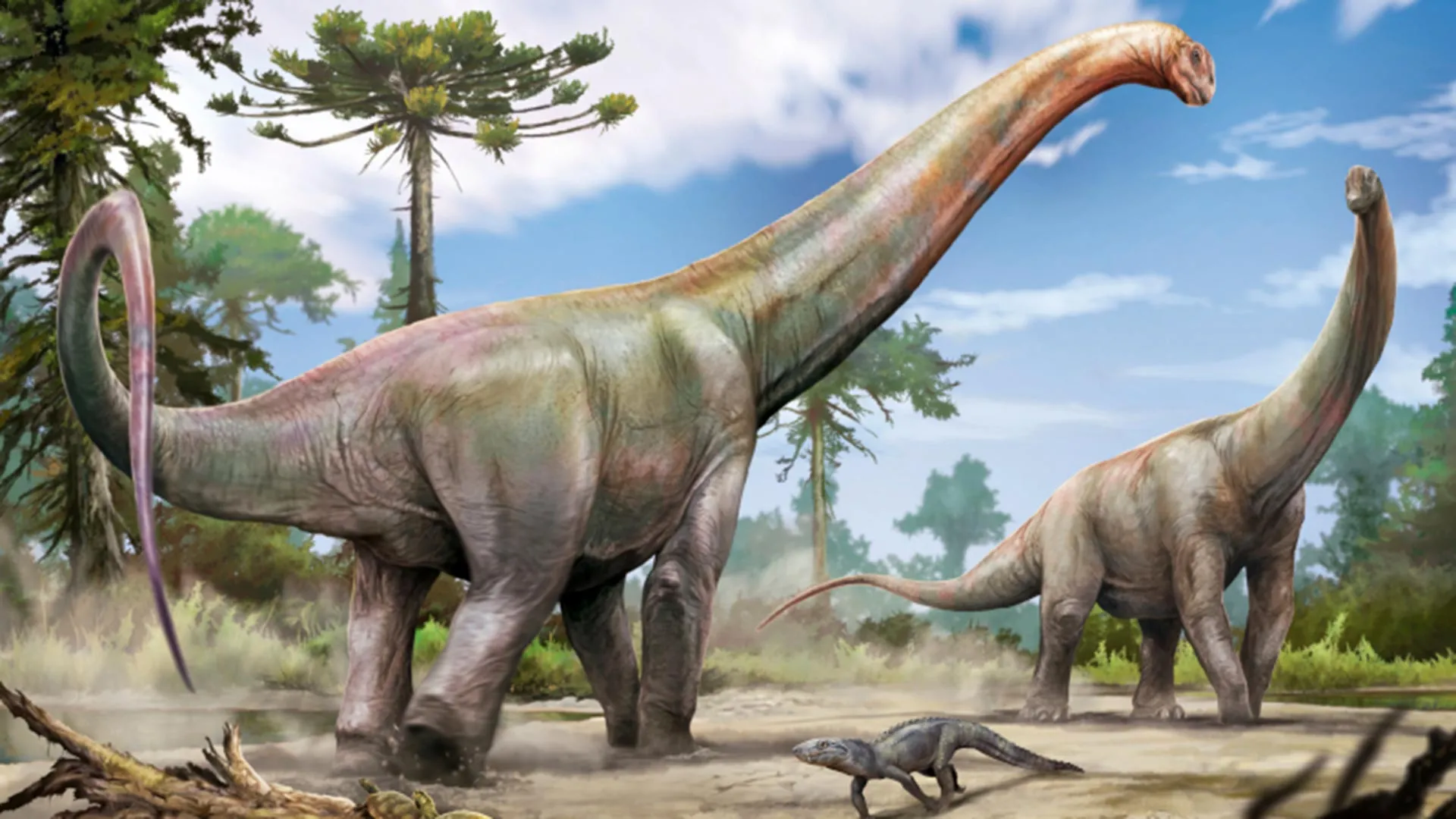
In the heart of northeastern Brazil, where the modern landscape is defined by the dense, tangled forests that gave the state of Maranhão its name, a prehistoric titan has been unearthed. The discovery of Dasosaurus tocantinensis, a massive sauropod dating back 120 million years, is not merely a local paleontological milestone; it is a significant evolutionary puzzle piece that bridges the vast geographical divide between South America and Europe.
Unearthed during the mundane reality of a road rail terminal construction project in Davinópolis, this colossal herbivore, measuring approximately 20 meters in length, is forcing scientists to reevaluate the migratory pathways of the Earth’s largest land animals during the Cretaceous period.
Main Facts: A New Chapter in Paleontology
The discovery, recently detailed in the Journal of Systematic Palaeontology, introduces Dasosaurus tocantinensis to the scientific record. As a member of the sauropod group—the long-necked, long-tailed giants that dominated the terrestrial ecosystems of the Mesozoic Era—this specimen is an anomaly for the region.
Unlike other sauropods found in Maranhão, such as the Amazonsaurus maranhensis, which reached a relatively modest 10 meters, Dasosaurus represents a significantly larger class of creature. The fossilized remains are remarkably well-preserved, including essential skeletal elements such as a 1.5-meter femur, tail vertebrae, ribs, and various limb bones.
The name itself serves as a tribute to the geography of its discovery. "Daso" is derived from the Greek for "forest," nodding to the region’s wooded environment, while "tocantinensis" honors the nearby Tocantins River. For paleontologists, the name captures the essence of the site where this creature rested undisturbed for over a hundred million years.
Chronology: From Roadworks to Research Laboratory
The path to this discovery was neither conventional nor planned. In 2021, archaeologists monitoring the environmental impact of a massive rail infrastructure project in Davinópolis stumbled upon bone fragments embedded deep within the earth.
The Initial Misidentification
Initially, the construction crew and supervising archaeologists presumed the remains belonged to large prehistoric mammals—creatures that may have coexisted with early human populations in the Americas. This is a common assumption in Brazilian paleontology, where Pleistocene megafauna are frequently encountered in surface-level excavations.
However, the depth of the find—eight meters beneath the surface—raised immediate red flags for Professor Elver Luiz Mayer, then a professor at the Federal University of Southern and Southeastern Pará (UNIFESSPA). Mayer, who usually specializes in Quaternary mammals, recognized that the geological strata were far older than the Cenozoic era.
The Realization of Antiquity
"Given its depth of about eight meters, I realized that it was much older," Mayer explains. "The age of the geological formation indicated material from the transition from the Lower to the Upper Cretaceous, about 120 million years ago."
Once the age was established, the recovery process transitioned from a construction monitoring task to a full-scale multidisciplinary scientific endeavor. The fossils were meticulously prepared in Pará before being transported to Sáo Luís, the state capital, where they are now housed at the State Center for Natural History and Archaeology Research.
Supporting Data: An Evolutionary Bridge
One of the most profound revelations regarding Dasosaurus tocantinensis is its evolutionary proximity to European species. Its closest known relative inhabited the Iberian Peninsula, specifically what is now Spain.
Gondwana and the Great Migration
How could a dinosaur in South America share such a close lineage with a species in Europe? The answer lies in the paleogeography of the early Cretaceous. Roughly 140 to 120 million years ago, the supercontinent of Gondwana was still largely intact. Researchers propose that the ancestors of Dasosaurus originated in or traversed through North Africa, moving across land bridges that have long since been consumed by the Atlantic Ocean.
Microscopic Insights
The study also delved into the histological structure of the dinosaur’s bones. Led by Tito Aureliano and Aline Ghilardi of the Federal University of Rio Grande do Norte (UFRN), the analysis revealed a unique growth pattern. Dasosaurus displayed a biological "hybrid" profile: it possessed traits common to older, more primitive sauropods, but also displayed the specialized bone remodeling features of titanosaurs.
This discovery suggests that the rapid growth mechanisms required for giantism may have evolved much earlier than previously assumed. By understanding how these bones remodeled over time, scientists are gaining a clearer picture of the metabolic and physiological leaps that allowed sauropods to reach such staggering sizes.
Official Responses: The Scientific Community Weighs In
The project, coordinated by Max Langer of the University of São Paulo (USP) under the initiative "Exploring the Diversity of South American Cretaceous Dinosaurs and Their Associated Faunas," highlights the collaborative nature of modern Brazilian science. Supported by the São Paulo Research Foundation (FAPESP), the project emphasizes the importance of preserving the nation’s deep-time history.
"Because it includes tail vertebrae, a 1.5-meter femur, ribs, foot bones, and arm and leg bones, this is considered a relatively complete specimen," says Professor Langer. "We believe there are more fossils from this same specimen yet to be excavated at the site."
The research team is currently in negotiations with the construction firm involved in the rail project. The goal is to secure access to the site once more, as the team believes the current fossil collection is merely the "tip of the iceberg" of a much larger, more complete skeleton buried within the sedimentary rock.
Implications: Infrastructure and Preservation
The story of Dasosaurus tocantinensis is also a case study in the tension between national development and historical preservation. In a tropical nation like Brazil, where dense rainforest and thick soil cover make traditional surface prospecting nearly impossible, large-scale infrastructure projects act as accidental, yet essential, windows into the past.
The Double-Edged Sword of Construction
"Brazil is a tropical country with dense vegetation," Langer notes. "Geologists and paleontologists rely heavily on human activity to excavate, expose the rocks, and reveal the fossils. If we map Brazil’s fossil sites, we’ll see highways and quarries."
While these projects are vital for modern economic growth, they pose an existential threat to paleontological heritage. When a bulldozer cuts through a fossil-rich layer of rock, the damage is often irreversible. The Dasosaurus find was successful only because of the environmental licensing requirements that mandated the presence of archaeological monitors.
A Call for Cooperation
Professor Mayer stresses that this discovery should serve as a blueprint for the future. "It’s urgent to foster closer cooperation between the parties to reconcile construction projects with federal legislation on fossils," Mayer argues.
The goal is not to halt development, but to integrate paleontological oversight into the earliest stages of planning. When construction firms and scientists work in tandem, the result is a win-win: the infrastructure project proceeds, and the nation gains invaluable insights into the prehistoric inhabitants of its land.
The Path Forward
As the team continues to study the bones currently in Sáo Luís and hopes for further excavation, the legacy of Dasosaurus tocantinensis is already secured. It stands as a reminder that the history of our planet is written in the stone beneath our feet. For Brazil, the discovery is a reminder that the land is not just a source of modern resources, but a repository of biological history that spans millions of years.
The work supported by FAPESP—ranging from doctoral scholarships to postdoctoral fellowships—ensures that the next generation of Brazilian scientists will be well-equipped to interpret these findings. As they continue to peel back the layers of the Cretaceous, one thing is clear: the road to the future is paved with the stories of the past.