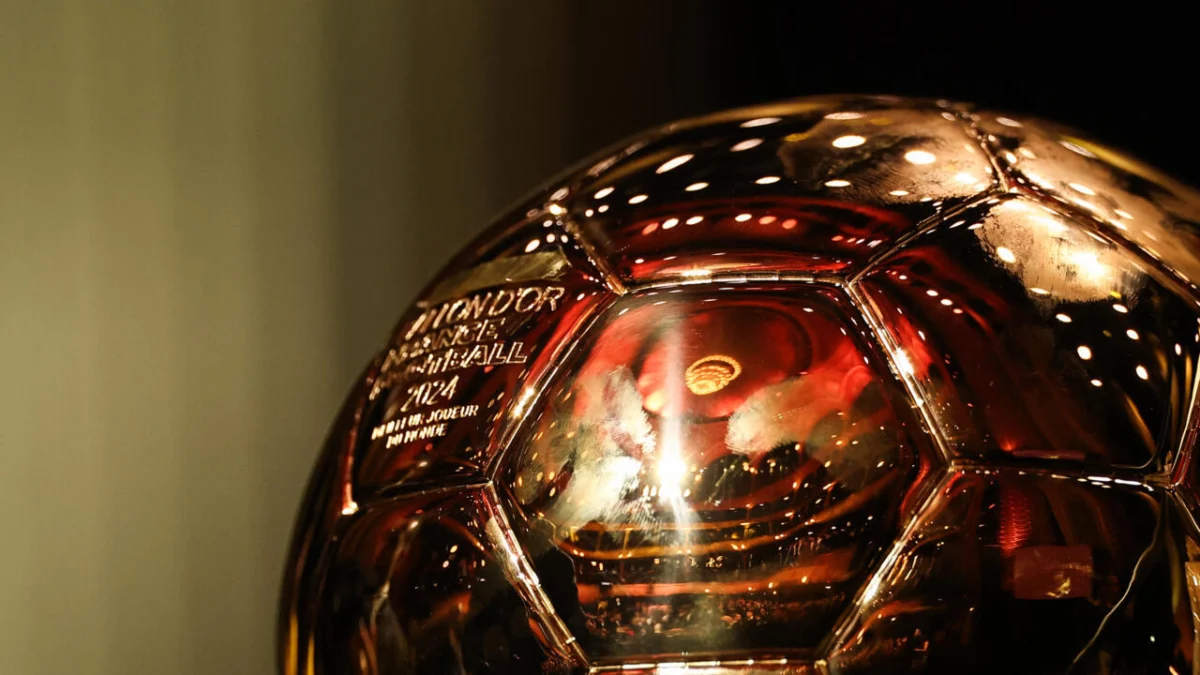
The landscape of global football shifted on Tuesday as France Football unveiled the 30-man shortlist for the 2026 Ballon d’Or. In what is being billed as a landmark year for the sport, the prestigious trophy—the individual pinnacle of professional football—will be presented in London for the first time in its 70-year history. The ceremony, scheduled for October 26, marks a poignant homecoming, taking place in the city that hosted the inaugural winner, Sir Stanley Matthews.
As the dust settles on a World Cup cycle that redefined legacies, the nominations reflect a shifting of the guard, balancing the enduring brilliance of veteran icons with the explosive emergence of a new generation.
The Contenders: A Clash of Titans
The 2026 shortlist features a staggering array of talent, but the narrative is dominated by four primary figures whose statistical output has bordered on the supernatural over the past twelve months.
The Mbappe Factor
Kylian Mbappé enters the conversation with a weight of expectation that few have carried before. Despite a trophy-less campaign with Real Madrid at the club level, his individual brilliance remained undeniable. His 10-goal haul at the 2026 World Cup saw him crowned as the tournament’s all-time leading scorer, a feat that cemented his status as the most dangerous attacking force in the modern game. For many, this is the year the Frenchman finally steps into the vacuum left by the previous generation.
The Treble-Winner: Harry Kane
If silverware is the primary currency of the Ballon d’Or, Harry Kane holds the most liquid assets. The Bayern Munich marksman enjoyed a historic season, tallying an astonishing 73 goals in 65 matches for club and country. By leading Bayern to a domestic treble—securing the Bundesliga, the German Cup, and the German Super Cup—and captaining England to the World Cup semi-finals, Kane has presented perhaps the most balanced case for the golden ball.
The Pure Scorers: Haaland and Messi
Erling Haaland continues to redefine the role of the traditional number nine, netting 58 goals in 64 games for Manchester City and Norway. His physical dominance and unerring accuracy make him a perennial favorite. Meanwhile, the evergreen Lionel Messi continues to defy time. With 75 goal contributions in just 49 matches for Inter Miami and Argentina—including a run to the World Cup final—the eight-time winner proves that his influence remains undiminished, even as he pivots toward the twilight of his career.
Notable Absences and Emerging Stars
The shortlist is as notable for who it excludes as for who it includes. Cristiano Ronaldo, despite securing the Saudi Pro League title with Al-Nassr, failed to make the cut, signaling a potential final departure from the Ballon d’Or inner circle. Conversely, the inclusion of Jude Bellingham, Ousmane Dembélé, and the teenage sensation Lamine Yamal underscores a broader shift toward a younger, more dynamic era of tactical football.
The Women’s Game: Icons and Rising Forces
The women’s shortlist mirrors the high-stakes competition of the men’s game. Poland’s Ewa Pajor is a frontrunner following a quadruple-winning season with Barcelona. She is joined by the perennial maestro Alexia Putellas, who, despite moving to the London City Lionesses, remains a defining figure of the sport. Manchester City’s Khadija ‘Bunny’ Shaw also earns her place, representing the incredible rise of the CONCACAF region’s goal-scoring talent.
Yashin Trophy: The Guardians of the Goal
The Yashin Trophy, awarded to the world’s best goalkeeper, has produced one of the most heartwarming narratives of the year. Cape Verde’s Vozinha, whose heroic displays were the heartbeat of his nation’s historic World Cup group-stage advancement, has earned a deserved nomination. He faces stiff competition from established titans such as Spain’s World Cup-winning Unai Simon, Argentina’s Emi Martinez, and the African duo of Yassine Bounou and Edouard Mendy.
Chronology of a Historic Season
To understand the weight of these nominations, one must look at the timeline that shaped the 2026 season:
- August 2025: The European club season kicks off, with Harry Kane immediately establishing his form at Bayern Munich, signaling an intent to dominate the domestic front.
- January 2026: The mid-season break sees Messi’s Inter Miami form hit a fever pitch, while Haaland maintains a goal-per-game ratio that keeps him at the top of the betting odds.
- June/July 2026: The World Cup dominates the summer. Mbappe breaks the all-time scoring record, Argentina pushes to the final, and Cape Verde surprises the world, thrusting Vozinha into the global spotlight.
- August 2026: Bayern Munich completes their domestic treble, cementing Kane’s position as a serious contender for individual honors.
- September 2026: France Football announces the shortlist, triggering the annual debate over objective performance versus subjective legacy.
- October 26, 2026: The gala in London, where the winner will be crowned.
Data Analysis: By the Numbers
The raw statistics for the top four contenders illustrate the intensity of the competition:
| Player | Total Goals | Total Assists | Key Trophies |
|---|---|---|---|
| Harry Kane | 73 | 14 | Bundesliga, DFB-Pokal, Super Cup |
| Erling Haaland | 58 | 8 | Premier League, FA Cup |
| Lionel Messi | 45 | 30 | MLS Supporters’ Shield |
| Kylian Mbappé | 52 | 12 | World Cup Top Scorer |
Note: Data accounts for all competitive matches during the 2025-2026 qualifying period.
The London Ceremony: A Symbolic Return
The decision to host the 70th edition of the Ballon d’Or in London is more than a logistical choice; it is a historical statement. By returning to the birthplace of the award—honoring Sir Stanley Matthews—organizers are attempting to ground the modern, globalized game in its roots. The city of London, currently a hub for global football culture, will provide a backdrop of tradition for an award that has become increasingly obsessed with the future.
Implications for the Global Game
The 2026 nominations signify a period of transition. The absence of Ronaldo and the continued, albeit changing, presence of Messi suggest that the "era of the two" is finally concluding. In their wake, we see the rise of "specialist" strikers like Haaland and Kane, and "complete" attackers like Mbappe.
Furthermore, the inclusion of players like Vozinha and the recognition of women’s stars like Ewa Pajor demonstrates a broader, more inclusive definition of "excellence." The Ballon d’Or is no longer merely an award for players in the "Big Five" European leagues; it is a recognition of influence, regardless of geography or gender.
Official Responses and Expert Sentiment
While France Football remains silent on the voting process until the night of the ceremony, pundits are already divided. Former players and tactical analysts are split between the "Silverware School"—who believe Kane’s treble makes him the only logical choice—and the "Impact School," who argue that Mbappe’s sheer individual dominance at the World Cup transcends the success of his club team.
"This is the hardest year to predict in a decade," noted one senior football analyst. "When you have a player with 73 goals winning a treble, and another breaking a World Cup scoring record, you aren’t just choosing the best player—you are choosing a philosophy of what the sport values most."
As the world turns its eyes toward London, the consensus is clear: the 2026 Ballon d’Or is not just an award ceremony; it is a reflection of a sport that continues to evolve, rewrite its own history, and crown new kings. Whether it is the tactical perfection of Kane, the predatory instinct of Haaland, the enduring genius of Messi, or the explosive pace of Mbappe, the winner will define the next chapter of footballing history.