KYIV — International legal experts and human rights advocates are intensifying their scrutiny of the ongoing conflict in Ukraine following a devastating Russian missile strike on the capital that utilized cluster munitions. Human Rights Watch (HRW) issued a formal warning on Thursday, asserting that the use of these inherently indiscriminate weapons in a densely populated civilian zone constitutes a potential war crime under international humanitarian law.
The strike, which occurred on August 5, 2026, serves as a grim reminder of the escalating intensity of the conflict. With the death toll among non-combatants reaching its highest point in years, the international community is once again grappling with the legal and moral ramifications of modern warfare conducted within urban environments.
The August 5th Attack: A Violation of International Norms
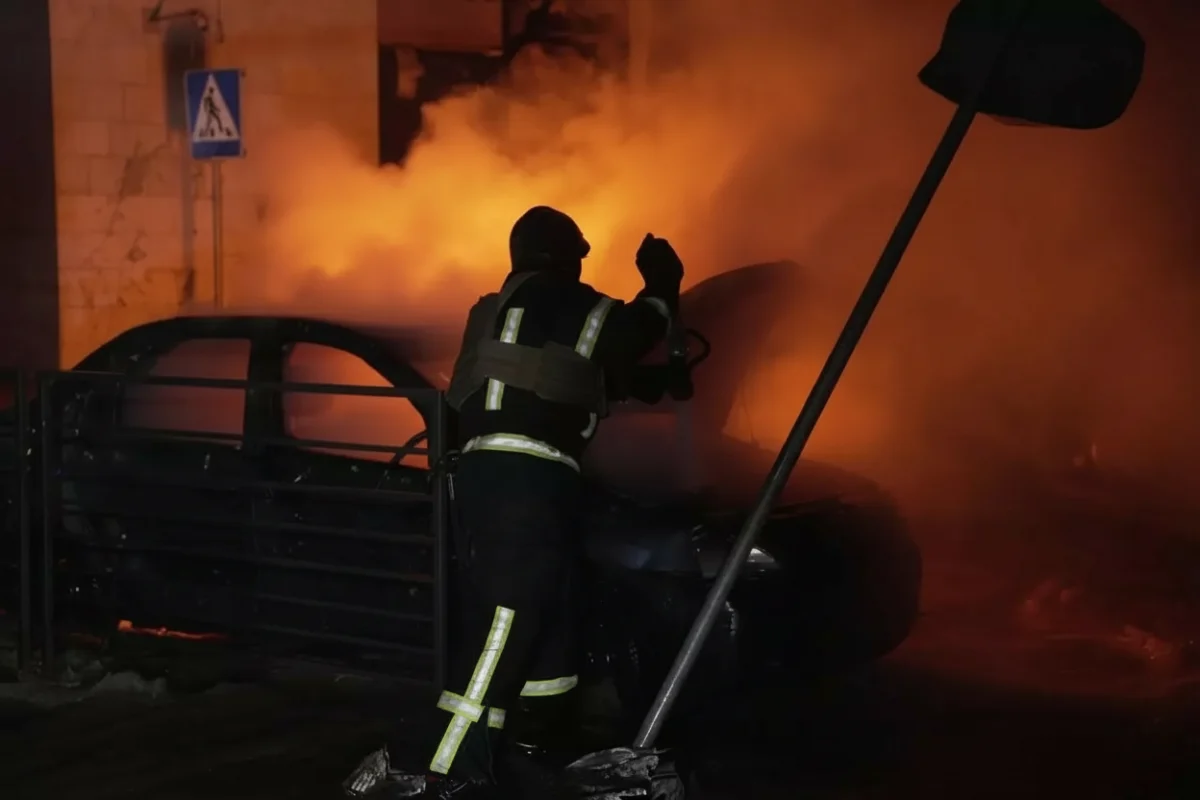
The attack targeted residential areas of Kyiv, leaving a path of destruction that experts say was entirely foreseeable. According to HRW, the strike resulted in the deaths of at least three civilians, while dozens more sustained injuries. The total casualty count for the broader strike, of which this incident was a part, reached 17 civilians.
Kseniya Kvitka, an assistant Ukraine researcher at HRW, did not mince words regarding the tactical choices made by Russian forces. "Russia has once again fired an inherently indiscriminate weapon into a densely populated civilian area," Kvitka stated. "There can be no justification for using cluster munitions near homes, schools, and hospitals, and it shows Russia’s utter disregard for civilians and the international law designed to protect them."
Digital forensics performed by HRW, utilizing footage circulated on the messaging platform Telegram, confirmed the precise location of the blast. The analysis revealed that the munitions detonated less than a kilometer from a functioning hospital and within 500 meters of multiple high-rise residential buildings. The visual evidence shows the hallmark signs of cluster munitions: simultaneous flashes of light and multiple explosions across a wide area, consistent with the dispersal of "bomblets."
Chronology of the Escalation
To understand the gravity of the August 5th incident, one must examine the broader trajectory of the conflict, which has been characterized by a steady degradation of adherence to international norms.
- 2014: The modern conflict begins with the Russian annexation of the Crimean Peninsula and the mobilization of separatist forces in the Donbas region.
- February 24, 2022: The conflict shifts into a full-scale invasion, with Russia justifying its military operations under the guise of "de-militarizing" and "de-nazifying" Ukraine.
- March 2022: Within weeks of the initial invasion, the United Nations reports that cluster munitions have been deployed at least two dozen times in populated Ukrainian neighborhoods, setting a precedent for the indiscriminate tactics that would follow.
- July 2026: The UN Human Rights Monitoring Mission in Ukraine reports that 437 civilians were killed in July alone—the highest monthly casualty count since May 2022—underscoring a lethal surge in violence.
- August 5, 2026: A targeted strike on Kyiv uses cluster munitions, prompting renewed international outcry and formal warnings from human rights organizations regarding war crimes.
Supporting Data: The Lethality of Cluster Munitions
The technical nature of cluster munitions makes them uniquely suited for causing civilian harm in urban settings. These weapons function as "gravity bombs," artillery shells, or rockets that, upon activation, fragment into dozens or hundreds of small, lethal bomblets.
The Indiscriminate Nature of the Weaponry
Because these bomblets are designed to cover a wide "footprint," they are effectively impossible to aim with precision in a city environment. Even if a military target is identified, the dispersal pattern inherently threatens anyone within a significant radius, including children, families in their homes, and medical personnel.
The Treaty Vacuum
While the 2008 Convention on Cluster Munitions was designed to ban the use, production, stockpiling, and transfer of these weapons, the global legal landscape remains fractured. Currently, 112 states are parties to the treaty, committing to total eradication of these munitions. However, both Russia and Ukraine—along with 71 other nations—have failed to ratify the convention. This leaves a significant gap in international accountability, as neither side is legally bound by the treaty’s specific prohibitions, though both remain subject to the broader principles of the Fourth Geneva Convention of 1949, which explicitly prohibits attacks on civilians.
Official Responses and Legal Implications
The legal consensus among human rights monitors is that the intentional targeting of, or reckless indifference toward, civilian populations constitutes a war crime. The Geneva Conventions mandate that parties to a conflict must distinguish at all times between combatants and civilians.
HRW has called upon both Russia and Ukraine to take two immediate steps:
- Accession to the Treaty: Both nations should join the Convention on Cluster Munitions, signaling a commitment to ending the use of these weapons.
- Remediation: Both parties must commit to clearing unexploded ordnance (UXO) in areas under their effective control. Unexploded bomblets often remain active for years, effectively acting as "landmines" that continue to kill and maim long after the fighting has ceased.
The UN’s recent reports reflect a grim reality: the failure to adhere to these norms has turned Ukrainian urban centers into death traps. As the casualty numbers for July 2026 hit a record high, the international community is facing pressure to not only document these incidents but to create mechanisms for accountability that transcend the current battlefield stalemate.
Implications for the Future of the Conflict
The use of cluster munitions in the heart of Kyiv signals a transition toward a more "total war" approach, where the distinction between the front line and the home front has all but vanished. For the people of Ukraine, the psychological toll of such attacks is as profound as the physical destruction.
The Burden of Proof
The documentation provided by HRW, including the analysis of Telegram footage, is becoming a vital part of the evidentiary record for potential future trials at the International Criminal Court (ICC) or other specialized tribunals. By mapping the distance between the strike and critical infrastructure like hospitals, researchers are building a case that the attacks were not merely "collateral damage" but were directed at or recklessly launched toward areas where civilian harm was certain.
A Call for Global Intervention
The international community’s reaction to the August 5th strike has been one of weary indignation. However, as the death toll climbs, there are increasing calls for stronger diplomatic measures. The "chaos exception"—the argument that the unpredictability of war excuses the use of otherwise prohibited weapons—is increasingly being rejected by legal scholars.
As the conflict stretches into its third year of full-scale warfare, the deployment of cluster munitions remains a defining feature of the Russian military strategy in Ukraine. The challenge for the international community is to move beyond periodic condemnations and toward a framework that effectively discourages the use of these weapons, protecting the most vulnerable populations from the "inherent indiscriminateness" of modern artillery.
In the final analysis, the warning from Human Rights Watch is a plea for the preservation of international law in a time of unprecedented brutality. Whether this plea will lead to a change in military conduct remains the central question of the ongoing war, one that will ultimately be decided by the resilience of the Ukrainian people and the strength of the global commitment to human rights.