Main Facts
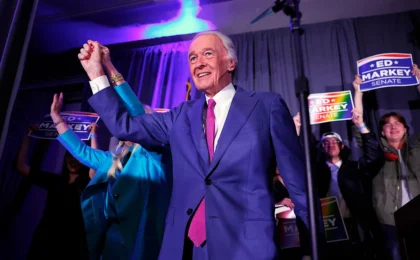
In a high-stakes primary election that tested the appetite for generational turnover within the Democratic Party, veteran U.S. Senator Edward J. Markey and long-serving House Representatives Stephen F. Lynch and Richard E. Neal decisively repelled challenges from younger candidates across Massachusetts.
The primary delivered a resounding endorsement of legislative seniority and progressive policy alignment over calls for generational change. Markey, the 80-year-old progressive mainstay, easily defeated 47-year-old Representative Seth Moulton in the Democratic Senate primary, securing 65 percent of the vote to Moulton’s 35 percent with 81 percent of precincts reporting.
====================================================================
MASSACHUSETTS DEMOCRATIC PRIMARY RESULTS SUMMARY
====================================================================

U.S. SENATE PRIMARY
--------------------------------------------------------------------
Candidate                Age   Votes (%)   Status
--------------------------------------------------------------------
Edward J. Markey (i)     80    65%         WINNER
Seth Moulton             47    35%         Defeated
[Reporting: 81%]

HOUSE PRIMARIES KEY RACES
--------------------------------------------------------------------
District 1:
  Richard E. Neal (i)    77    54%         WINNER
  Jeromie Whalen         39    46%         Defeated
  [Reporting: 90%]

District 8:
  Stephen F. Lynch (i)   71    57%         WINNER
  Patrick Roath          39    43%         Defeated
  [Reporting: 80%]

District 6 (Open Seat):
  Dan Koh                39    41%         WINNER
  Tram Nguyen            --    ~31%        Defeated
  [Reporting: Midnight projections]
====================================================================
In the House, septuagenarian incumbents avoided joining the seven House Democrats nationwide who lost primary contests earlier this election cycle. In the 8th Congressional District, 71-year-old Rep. Stephen F. Lynch defeated 39-year-old attorney Patrick Roath by a 57 to 43 percent margin with 80 percent of votes counted.
Meanwhile, in Western Massachusetts’s 1st Congressional District, 77-year-old Rep. Richard E. Neal, the ranking member on the House Ways and Means Committee, narrowly turned back a spirited campaign from 39-year-old educator Jeromie Whalen, leading 54 to 46 percent with 90 percent of the vote tabulated.
In the open primary for the 6th Congressional District—vacated by Moulton in his bid for the Senate—former Biden White House adviser Dan Koh emerged victorious from a crowded Democratic field. Capturing 41 percent of the vote, Koh outpaced his nearest rival, state Rep. Tram Nguyen, positioning himself to potentially become the first Asian American to represent Massachusetts in the United States Congress.
With his primary victory secured, Markey enters the November general election as the overwhelming favorite against Republican nominee John Deaton, a Marine Corps veteran and attorney who ran unopposed in the GOP primary. If victorious in the fall, Markey has committed to serving one final six-year term, which would conclude when he is 86 years old.
Chronology of the 2026 Primary Campaign
The Massachusetts primaries marked the culmination of a months-long struggle over the direction, leadership, and age profile of the Democratic Party, following the fallout from the 2024 presidential campaign.
2024–2026 PRIMARY CAMPAIGN TIMELINE

  [Late 2024] --------------------------------------------------+
  • Post-election debate over Democratic strategy and age       |
  • Rep. Seth Moulton stirs debate with comments on athletics   |
                                                                v
  [Early 2026] -------------------------------------------------+
  • Moulton announces primary challenge against Sen. Ed Markey  |
  • Younger challengers file against Reps. Lynch and Neal       |
                                                                v
  [Summer 2026] ------------------------------------------------+
  • Progressive coalition (AOC, Warren, Sanders) backs Markey   |
  • AI debate moment becomes central digital ad attack          |
                                                                v
  [Primary Night] ----------------------------------------------+
  • Polls Close; early tallies show strong Markey lead          |
  • Markey claims victory in Boston; Moulton concedes           |
  • Lynch & Neal secure contested victories in House districts  |
Origins of the Challenge
The drive for structural and generational reform gained momentum nationwide following the 2024 general election cycle. Seeking to capitalize on voter anxiety regarding an aging federal legislature, Representative Seth Moulton launched a primary bid against Senator Markey, framing his campaign around the urgent need for a "new generation of leadership."
Simultaneously, grassroots activist groups—including Leaders We Deserve, a organization co-founded by Gen Z activist David Hogg—recruited and financed younger candidates to challenge entrenched House incumbents like Lynch and Neal.
Debate and Policy Clashes
Throughout the summer campaign, contrast in strategy became sharply defined:
- Age and Technological Literacy: Moulton focused aggressively on Markey’s age and long tenure in public office. During a televised debate, when asked about his use of artificial intelligence, Markey remarked, "I use whatever is inside my iPhone or my iPad, whatever comes up." The Moulton campaign immediately converted the response into a digital advertisement designed to portray the incumbent as out of touch with modern technology.
- Progressive Policy Alliances: Markey effectively counterbalanced criticisms of his age by reaffirming his progressive credentials. Co-author of the Green New Deal alongside Rep. Alexandria Ocasio-Cortez, Markey campaigned on calls to institute Medicare for All and abolish Immigration and Customs Enforcement (ICE).
- Social and Cultural Friction: The candidates clashed over transgender rights. Markey repeatedly criticized Moulton for comments made following the 2024 election regarding transgender athletes participating in youth sports—a statement for which Moulton later expressed regret. Markey mobilized a large network of youth organizers, supported by high-profile progressive leaders including U.S. Senators Elizabeth Warren and Bernie Sanders, as well as Representatives Ocasio-Cortez and Ayanna Pressley.
Primary Night Outcomes
On election night, early returns quickly demonstrated Markey’s resilience in major urban centers and progressive suburbs. AP projections confirmed Markey’s victory shortly after polls closed, followed by confirmed leads for Lynch in Eastern Massachusetts and Neal in the western part of the state.
Supporting Data and Key Electoral Metrics
An analysis of election statistics, fundraising totals, and historical comparisons underscores the dynamics that shaped the primary outcomes.
====================================================================
CAMPAIGN COMPARISON AND FINANCIAL METRICS
====================================================================

SENATE RACE
--------------------------------------------------------------------
Candidate           Age   Margin of Victory   Key Endorsements
--------------------------------------------------------------------
Edward J. Markey    80    +30.0% (65–35)      Warren, Sanders, AOC,
                                              Pressley
Seth Moulton        47    --                  Self-funded/Grassroots

HOUSE RACES
--------------------------------------------------------------------
District & Candidates           Margin (%)   Notable Campaign Factor
--------------------------------------------------------------------
MA-01: Neal (i) vs. Whalen      +8.0%        Whalen ran grassroots
                                (54–46)      van-based campaign

MA-08: Lynch (i) vs. Roath      +14.0%       Roath backed by Gen Z
                                (57–43)      'Leaders We Deserve'

MA-06: Koh vs. Nguyen (Open)    +10.0%+      Koh endorsed by Biden,
                                (41% plurality) Harris, & Tierney
====================================================================
Electoral Margins
- Senate Race: Markey’s 30-point margin over Moulton (65% to 35%) exceeded his performance in the 2020 Democratic primary, where he defeated primary challenger Rep. Joseph P. Kennedy III by approximately 10 percentage points (55.4% to 44.6%).
- 1st Congressional District: Rep. Richard Neal experienced the closest primary contest of his 38-year career in Congress. Despite holding a significant financial advantage, Neal won by an 8-point margin (54% to 46%) against Jeromie Whalen, who conducted a low-budget campaign traveling the district in a converted cargo van.
- 8th Congressional District: Rep. Stephen Lynch maintained a 14-point margin (57% to 43%) over Patrick Roath, insulated by strong support in historic labor bastions in South Boston and surrounding communities.
Historical Perspective
Markey’s political career spans over five decades, beginning with his election to the Massachusetts House of Representatives during the Nixon administration. He was elected to the U.S. House of Representatives in 1976 and won a special election to the U.S. Senate in 2013 to succeed John Kerry.
In achieving victory Tuesday, Markey preserved his record against younger primary opponents seeking to leverage arguments against Washington’s gerontocracy.
Official Responses and Statements
Following the announcement of the results, candidates addressed their supporters across the state to outline their vision for the upcoming general election and reflect on the primary campaign.
Speaking to a crowd of supporters in Boston, Senator Edward J. Markey framed his victory as a success for the broader progressive coalition:
"Tonight is a testament to the power of the progressive movement of our nation. It is a progressive movement fueled by young people demanding more from their leaders, and it’s your voices that are the ones we need to hear right now. Your leadership will show us the way."
Delivering his concession address in Dorchester, Representative Seth Moulton reflected on the necessity of challenging political norms:
"Challenging the establishment and calling for a new generation of leadership isn’t easy, but it is necessary. We started conversations that needed to happen, and I will never stop pushing the Democratic Party and our country to look toward the future. We didn’t achieve our goal tonight, but I am confident that because of this campaign, others will be inspired to buck the system when they’re told to wait their turn."
In the open 6th District primary, Dan Koh celebrated his nomination by emphasizing national unity and party alignment, highlighting his endorsements from former President Joe Biden and former Vice President Kamala Harris:
"We ran a campaign focused on bringing people together to solve complex problems. I am deeply honored by the trust the voters of the North Shore have placed in me tonight as we look toward November."
On the Republican side, Senate nominee John Deaton released a statement targeting the incumbent’s tenure:
"The voters of Massachusetts deserve a representative who focuses on practical economic relief and public safety rather than career longevity. I look forward to presenting a distinct alternative to Senator Markey’s record in the general election."
Political Implications and Strategic Outlook
The primary results in Massachusetts carry broader strategic implications for both state politics and national Democratic strategy as the party prepares for the November midterms.
====================================================================
KEY TAKEAWAYS & GENERAL ELECTION LOOKAHEAD
====================================================================

1. PROGRESSIVE POLICY OVER AGE
   Markey proved that deep policy alignment with youth activists
   can neutralize age-based electoral challenges.

2. INCUMBENT VULNERABILITY IN HOUSE
   Narrow margins for veterans like Rep. Neal (54-46) signal
   growing voter appetite for change in traditional districts.

3. DIVERSIFYING REPRESENTATION
   Dan Koh's primary victory in MA-06 sets up potential historic
   milestone as the state's first Asian American in Congress.

4. NOVEMBER MATCHUPS
   • Senate: Ed Markey (D) vs. John Deaton (R)
   • MA-06: Dan Koh (D) vs. Micah Jones (R)
====================================================================
The Limits of Generational Arguments
The outcomes suggest that age-based arguments alone may be insufficient to unseat long-serving incumbents who remain aligned with their district’s policy preferences. While national trends saw seven House Democrats lose primaries to younger or more ideological challengers, Markey successfully insulated himself by maintaining firm ties to the party’s left wing and youth activism networks. By contrast, Moulton’s moderate positions on key social issues alienated progressive constituencies necessary to construct a winning primary coalition in Massachusetts.
Heightened Competition for Establishment Incumbents
The unexpectedly close contest in the 1st District highlights underlying tensions for establishment Democrats. Rep. Richard Neal’s 8-point margin against a minimally funded candidate suggests that institutional clout and committee leadership do not fully shield incumbents from grassroots dissatisfaction over length of tenure. House leadership may need to dedicate greater political resources to safeguarding established members in future primary cycles.
November General Election Outlook
Looking ahead to the general election:
- U.S. Senate: Markey enters the contest against John Deaton with significant structural advantages given the state’s political demographics. Deaton, who previously ran against Sen. Elizabeth Warren in 2024, faces a formidable funding and organizational deficit in deep-blue Massachusetts.
- House Races: Incumbents Lynch, Neal, Katherine M. Clark, William Keating, and Jake Auchincloss are heavily favored to retain their seats.
- 6th Congressional District: Dan Koh transitions to the general election against Republican Army veteran Micah Jones. Koh remains positioned to secure the seat, which would mark a milestone for Asian American representation in the New England congressional delegation.