By Editorial Staff
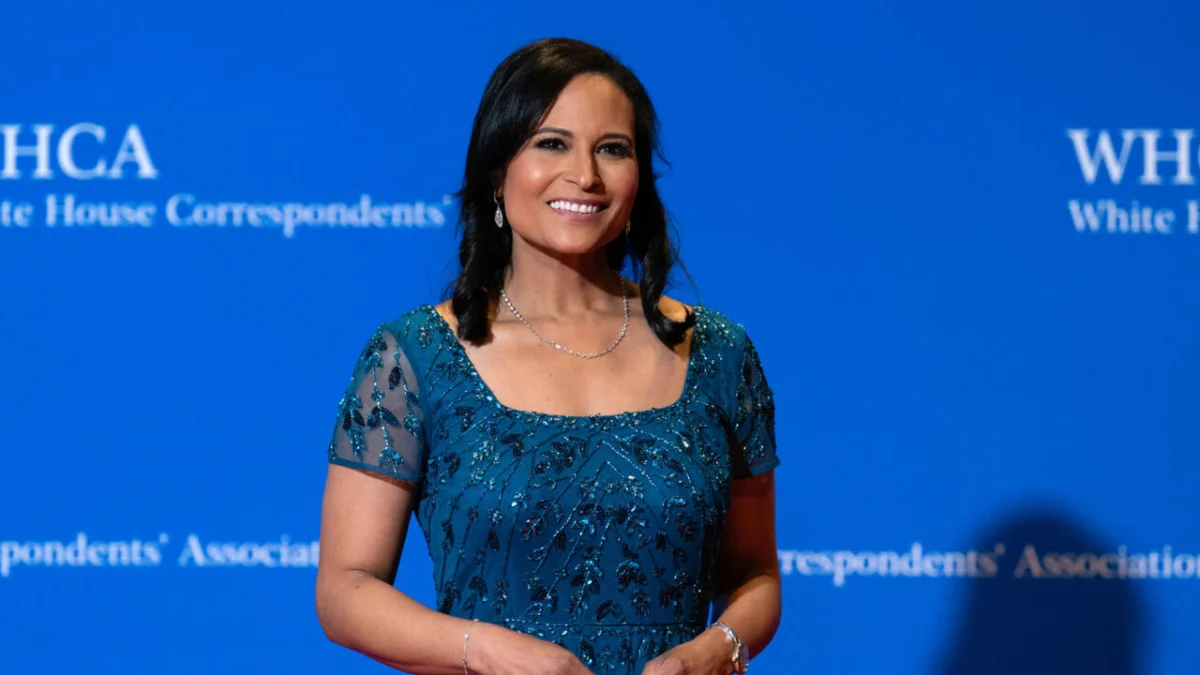
In an aggressive escalation of his ongoing campaign against mainstream news organizations, former President Donald Trump has issued a formal threat to pursue regulatory action against NBC News correspondent Kristen Welker. The threat, leveled via his Truth Social platform this past Sunday, marks a significant intensification of the friction between the former president and the broadcast media industry, specifically targeting the editorial independence of network news programs ahead of crucial midterm elections.
The dispute centers on a segment aired on NBC’s Meet the Press, during which Welker characterized Trump’s success rate in endorsing political candidates during party primaries as having produced "mixed results." Trump, disputing this characterization, claimed his endorsement record stands between 98% and 100% success. Asserting that the report constituted "purposeful inaccuracy," Trump declared his intention to report Welker to the Federal Communications Commission (FCC) to seek "rebuke or punishment."
The Chronology of Conflict: From Real Estate Tycoon to Media Critic
The relationship between Donald Trump and the American press has undergone a profound metamorphosis over the last four decades. As a real estate developer in New York City, Trump cultivated a symbiotic, albeit transactional, relationship with the media, often leveraging tabloid coverage to build his public brand. However, since his entry into national politics, that relationship has curdled into open hostility.
The Evolution of "Fake News"
During his term in office, the term "fake news" became a cornerstone of Trump’s political vocabulary. He moved beyond verbal sparring to tangible administrative actions. His administration engaged in a sustained effort to challenge the credibility of major outlets, including The New York Times and The Wall Street Journal, through various legal challenges and rhetoric aimed at undermining public trust in institutional journalism.
The Welker Friction Point
The current tension with Kristen Welker is not an isolated incident but the culmination of months of deteriorating relations. In June, a high-profile interview between Trump and Welker collapsed after the former president abruptly ended the session. The interview, which veered into heated exchanges regarding foreign policy—specifically the conflict with Iran—left the president visibly frustrated. Observers noted that the animosity displayed in that exchange appeared to set the stage for the public reprimand delivered this past Sunday.
Regulatory Pressure and the Role of the FCC
At the heart of the current controversy is the scope of the Federal Communications Commission’s authority. Trump’s appeal to the Commission specifically calls upon Chairman Brendan Carr—a vocal ally of the former president—to intervene in what Trump characterizes as a "threat to our country."
The Reach of the FCC
The FCC holds the power to assign and oversee licenses for radio and television broadcast frequencies. However, the agency’s mandate is largely technical and limited in terms of editorial oversight. Historically, the FCC has maintained a "hands-off" approach to political commentary, largely due to the protections afforded by the First Amendment of the U.S. Constitution.
Trump’s assertion that the Commission should "rebuke or punish" a journalist for a segment he deems factually inaccurate ignores the long-standing legal precedents that separate government regulatory bodies from the content produced by private media entities. By invoking the FCC, the Trump administration is signaling a desire to shift the regulatory environment toward one that mirrors the more restrictive media landscapes found in various authoritarian regimes, where state-controlled agencies police political discourse.
Supporting Data and Legal Precedent
The legal consensus among media law experts and constitutional scholars is that the FCC lacks the jurisdiction to discipline journalists based on their viewpoints or the accuracy of their political analysis.
The Yale Journal Perspective
A 2025 white paper published by the Yale Journal on Regulation explicitly addresses this concern. The research reinforces the long-standing interpretation of U.S. Supreme Court rulings, which maintain that federal law does not grant the FCC the power to ban or penalize "controversial speech." The report notes that such efforts by the executive branch to weaponize the FCC are generally viewed as "unconstitutional overreach" that violates the fundamental principles of the First Amendment.
The Pattern of Intimidation
Beyond the rhetoric, the Trump administration has historically utilized its influence across various federal agencies to apply pressure on the press. From the Pentagon to the FBI, the administration has implemented stricter protocols regarding press access, briefings, and the handling of information, which media advocates argue are designed to create a "chilling effect" on investigative journalism.
Implications for the First Amendment
The potential implications of Trump’s threat extend far beyond the career of a single broadcast journalist. The call for regulatory punishment represents a structural challenge to the American media ecosystem.
Political Retaliation vs. Editorial Freedom
Major broadcast networks and news organizations have begun to push back against these tactics. Several outlets have initiated lawsuits against the FCC, alleging that the agency’s recent behavior constitutes political retaliation. The core argument in these cases is that the government cannot use its licensing power to compel media outlets to "toe the line" or to punish them for being overly critical of the administration.
The Threat to Democratic Discourse
If the FCC were to succumb to political pressure and begin auditing or penalizing news organizations for their reporting, the impact on democratic discourse would be catastrophic. The role of the "Fourth Estate" is to serve as a check on power, a function that becomes impossible if media outlets must fear for their broadcast licenses every time they report on a politician’s record.
Official Responses and the Industry Outlook
As of this writing, NBC News has not issued an official statement regarding the threat, maintaining a standard practice of allowing the reporting to speak for itself. However, industry trade groups and organizations dedicated to the protection of journalists are mobilizing.
The View from Media Watchdogs
Press freedom advocates argue that Trump’s rhetoric is intended to rally his base by painting the media as an existential enemy. By framing his primary endorsement statistics as an absolute, he forces his supporters to choose between his word and the factual reporting of outlets like NBC. This binary choice, analysts suggest, is a classic populist tactic designed to insulate the candidate from scrutiny.
The Institutional Standoff
The standoff between the Trump camp and the media is expected to intensify as the midterm elections approach. With the former president’s legal team signaling a willingness to litigate and the FCC under current leadership facing intense pressure to act, the judiciary may soon become the final arbiter of how much power the executive branch can exert over the press.
Conclusion: A Critical Juncture for the American Press
The threat against Kristen Welker serves as a litmus test for the resilience of the First Amendment in the modern era. While Trump’s rhetoric resonates with a segment of the electorate that feels alienated by mainstream media, the legal and constitutional barriers to his proposed actions remain formidable.
However, the frequency and intensity of these attacks have created a new, uncertain reality for journalists. As the lines between political campaigning and regulatory policy continue to blur, the media industry faces the challenge of maintaining its editorial integrity while navigating an environment where the threat of government retribution is no longer hypothetical, but a stated campaign objective.
The upcoming months will likely see an escalation in legal battles and public debates over the role of the press in American society. Whether the FCC remains a neutral regulator or becomes a tool for political retribution will be one of the defining questions of this political cycle, with far-reaching consequences for the future of democratic accountability in the United States.