By Editorial Staff, FRANCE 24
The island of Flores, a jewel of eastern Indonesia known for its rugged landscapes and vibrant tourist economy, has been plunged into a humanitarian crisis. On Saturday, a powerful 7.7-magnitude earthquake struck off the island’s north coast, triggering widespread panic, significant structural damage, and a harrowing search-and-rescue operation that is currently battling both time and geography.
As of Saturday evening, authorities have confirmed at least 38 fatalities across four distinct towns. However, officials warn that this number is likely to rise as emergency teams gain access to more remote, isolated villages that remain unreachable due to landslide-blocked roads.
The Morning of the Disaster: A Chronology of Chaos
The seismic event began in the early morning hours, catching most residents of Nagekeo—the area closest to the epicenter—off guard. The earthquake, which US and Indonesian authorities pinpointed at approximately 68 kilometers (42 miles) northwest of the coastal town of Ende, was shallow, which typically results in more intense shaking and surface destruction.
The Initial Jolt
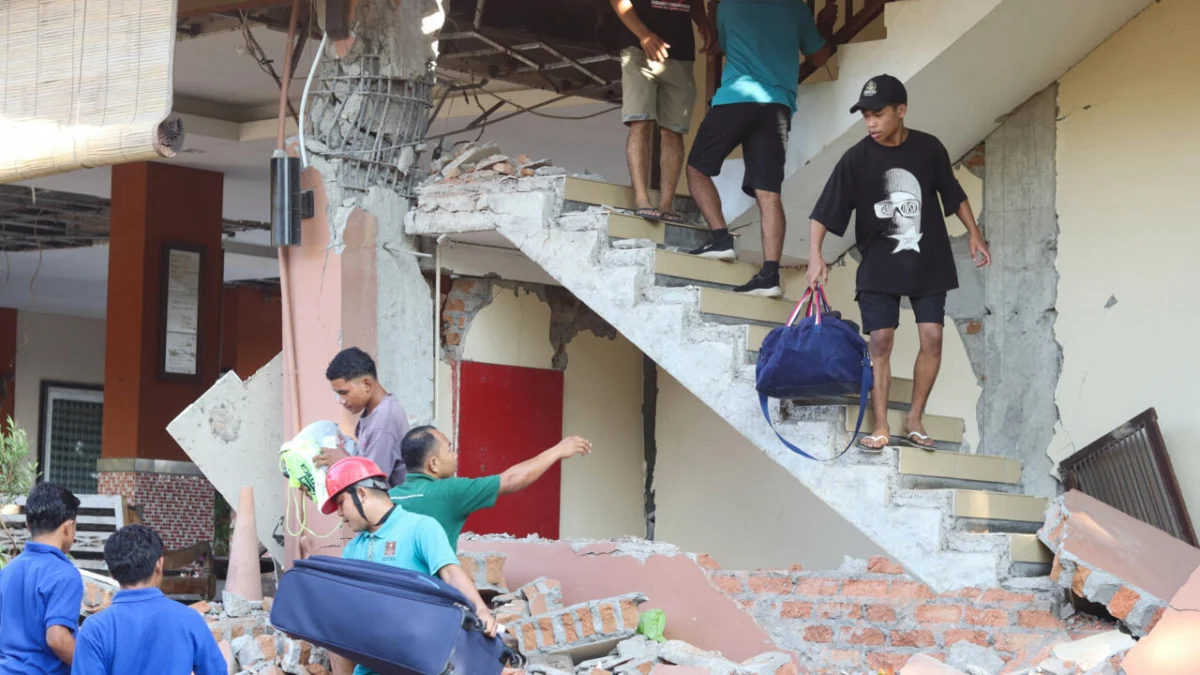
At the first signs of the tremor, the rhythm of daily life on the island shattered. Witnesses described a violent, sustained shaking that lasted long enough for buildings to sustain major fractures. In Maumere, a major port town on the island, the seismic waves were strong enough to cause partial collapses in commercial structures.
The Tsunami Scare
Perhaps the most terrifying moments occurred shortly after the shaking subsided. In coastal areas like Nagekeo, residents witnessed the sea receding—a classic, ominous precursor to a tsunami. Fearing a repeat of historical disasters, thousands of residents abandoned their homes, markets, and hospital beds, racing toward higher ground on foot, motorbikes, and in pickup trucks.
"People were panicking, running here and there," said Yohanes Babo, 56, a resident of Nagekeo. "We were at the market when it started. Thankfully, we were already outside. We are evacuating to the hills now. My family is safe, but the fear is overwhelming."
The Aftermath and Aftershocks
While the official tsunami warning was lifted by the Meteorology, Climatology, and Geophysics Agency (BMKG) by mid-day, the threat remained far from over. Dozens of aftershocks have plagued the region, the most severe measuring 6.1 in magnitude. These tremors have complicated the rescue effort, forcing teams to pause operations repeatedly as structures already weakened by the main quake threatened to collapse entirely.
Official Responses and Humanitarian Challenges
The Indonesian government has mobilized its disaster management agency, Basarnas, to coordinate the response. However, the mission is fraught with logistical nightmares.
The Struggle for Access
Fathur Rahman, a rescue official leading operations, highlighted the critical nature of the current phase. "Our focus will be on locating the victims who are buried under the rubble," he stated. However, he admitted that reaching the hardest-hit areas has been significantly hampered by landslides that have effectively severed major transportation arteries.
In some areas, search-and-rescue teams have been forced to proceed on foot, carrying heavy equipment manually to reach debris-strewn sites. Footage released by the agency shows the grim reality of the task: rescuers working frantically at the port of Maumere, where they successfully pulled two survivors from the wreckage of a collapsed building, though they also recovered one body from the same site.

Medical and Public Safety Concerns
The public health infrastructure has been strained to its limits. Lukas Lotar, a hospital customer service official in Maumere, recounted the scenes of chaos inside medical facilities. "Patients fled the hospital; the jolt was big. I saw walls cracking," he said. With many hospitals sustaining structural damage, the ability to treat the influx of injured patients is severely compromised. Authorities have urged residents not to return to their homes or businesses, even if they appear standing, due to the high risk posed by inevitable aftershocks.
The Geopolitical Context: Indonesia and the "Ring of Fire"
The tragedy on Flores serves as a stark, violent reminder of Indonesia’s precarious geological position. The archipelago sits squarely atop the Pacific "Ring of Fire," an area of extreme tectonic activity where several major plates collide. This region, stretching from Japan through Southeast Asia and across the Pacific Basin, accounts for the majority of the world’s seismic and volcanic activity.
A History of Tragedy
The island of Flores is no stranger to such catastrophes. In 1992, a 7.7-magnitude earthquake struck the region, triggering a tsunami that claimed approximately 2,500 lives. That disaster remains etched in the collective memory of the local population, fueling the mass exodus to higher ground that occurred on Saturday.
Indonesia’s history is defined by these seismic events. The 2004 Boxing Day earthquake, a massive 9.1-magnitude tremor off the coast of Sumatra, triggered a tsunami that killed over 220,000 people across the region, with 170,000 deaths occurring within Indonesia alone. More recently, in 2018, the nation suffered back-to-back disasters: a series of tremors in Lombok killed over 550 people, followed by a 7.5-magnitude quake and subsequent tsunami in Palu that left more than 4,300 people dead or missing.
Implications for the Future
As the dust settles on Flores, the implications for the region are multifaceted.
Strengthening Infrastructure
The fact that many buildings, particularly in rural villages, suffered structural failure under the intensity of the quake raises questions about current building codes and seismic resilience in remote eastern Indonesia. While the region lacks high-rise buildings, the failure of basic masonry and concrete structures indicates that significant investment in earthquake-proof construction is required to protect the local population.
Tsunami Early Warning Systems
The swiftness with which the BMKG issued the tsunami warning and the subsequent caution regarding sea-level monitoring suggest that Indonesia’s disaster preparedness has improved significantly since the 2004 tragedy. However, the panic that ensued demonstrates that education and clear communication channels remain vital. The "tsunami-ready" status of remote communities is a variable that will likely be under intense scrutiny in the coming months.
The Economic Toll
Flores is an increasingly popular tourist destination, prized for its natural beauty and proximity to Komodo National Park. The destruction of local infrastructure, the disruption of the transport network, and the loss of life will have an immediate and chilling effect on the local tourism economy. As the region pivots from rescue to recovery, the Indonesian government will face the daunting task of not only providing immediate humanitarian aid but also rebuilding the economic foundations of these communities.
Conclusion: A Community in Mourning
For now, the priority remains the search for survivors. Every hour that passes under the threat of aftershocks makes the work of Fathur Rahman and his team more perilous. The people of Flores, resilient in the face of nature’s volatility, are once again forced to reconcile with the fragility of their island home.
As the sun sets over the island, the sound of sirens and the hum of rescue equipment provide a grim soundtrack to the recovery process. The death toll of 38 is a tragic statistic, but for the families of the missing, it is a tally that represents a world turned upside down. The international community watches on, waiting to see the full scale of the disaster, while the survivors look toward the hills, praying that the earth will finally be still.