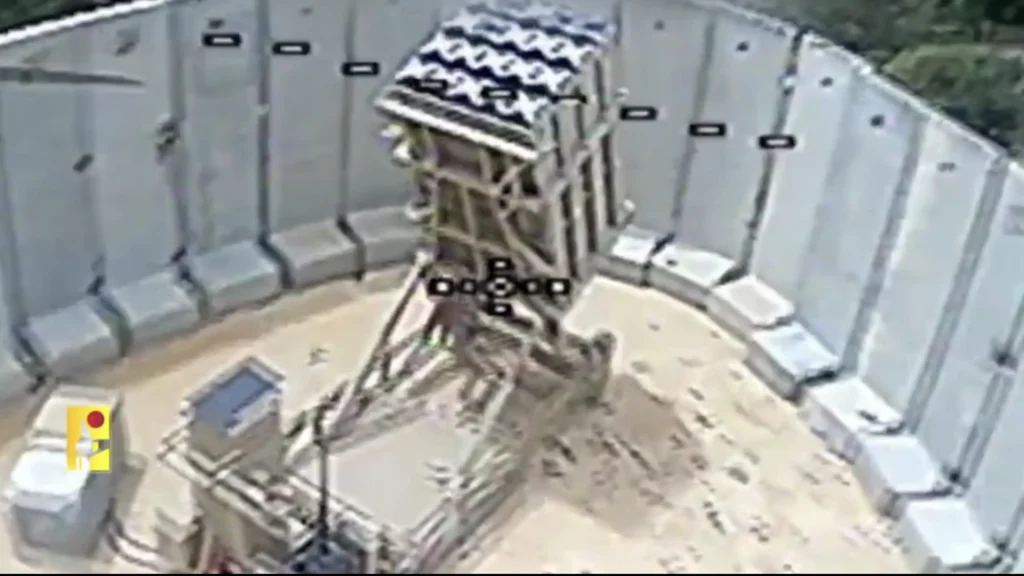
The nature of warfare on Israel’s northern frontier has undergone a seismic shift since February 28. Following an escalation involving Iran, the United States, and Israel, the militant group Hezbollah has pivoted toward a tactical reliance on First-Person View (FPV) drones. These small, agile, and relatively inexpensive unmanned aerial vehicles (UAVs) have transformed the battlefield, forcing the Israel Defense Forces (IDF) to rapidly adapt their defensive posture to a threat that is as difficult to intercept as it is to predict.
Since a partial ceasefire took effect on April 17, the Israeli military has documented a staggering 645 FPV drone attacks originating from southern Lebanon. These strikes have targeted both military installations and civilian areas, signaling a new, persistent phase of attrition in the long-standing conflict.
The Evolution of the FPV Threat
FPV drones, popularized by their devastating effectiveness in the Ukraine-Russia conflict, are fundamentally changing the tactical calculus of asymmetric warfare. Unlike larger military-grade drones, FPVs are small, quiet, and exceptionally hard to detect using conventional radar systems. Their ability to loiter, maneuver at high speeds, and strike with precision makes them lethal against armored vehicles, stationary artillery, and exposed infantry.
For Hezbollah, the adoption of this technology serves as a "force multiplier." By targeting high-value assets—such as the Iron Dome air defense system—the group seeks to degrade Israel’s strategic defensive capabilities. Hezbollah’s media apparatus has been aggressive in broadcasting these successes, frequently releasing edited footage via Telegram to bolster its image as a sophisticated, modern fighting force capable of penetrating Israeli defenses.
However, beneath the polished veneer of propaganda, a more complex reality is emerging. An investigation by the FRANCE 24 "Observers" team reveals that while the drone threat is undeniably real, much of the visual "evidence" touted by Hezbollah is an illusion.
Investigating the Evidence: The Decoy Strategy
Hezbollah has claimed in numerous videos that their FPV drones have successfully crippled Israel’s prized Iron Dome batteries. These claims have been a centerpiece of their recent psychological warfare campaign. Yet, a detailed technical analysis of these videos suggests a different story: nine out of every ten recorded strikes appear to target decoys rather than operational missile launchers.
Identifying the Discrepancies
The Iron Dome system is a marvel of modern engineering, designed to intercept short-range rockets using a complex network of radar, fire-control software, and the Tamir interceptor missile. A genuine launcher has a distinct, unmistakable architectural profile. It includes four hydraulic support struts (two vertical and two diagonal) that stabilize the platform during deployment, a specific box-shaped structure on the launcher bed, and a telescoping antenna mast.
In the videos released by Hezbollah, the targets frequently lack these critical components. The "decoys" observed in the footage often feature only two external struts and lack the internal hydraulic mechanisms or the characteristic box-shaped structure found on an authentic battery. These decoys are sophisticated enough to deceive an operator flying a drone at high speeds under intense combat stress, but they fail the scrutiny of forensic analysis.
Farzin Nadimi, a defense and security analyst at The Washington Institute, confirms that the IDF is intentionally utilizing these decoys to bait, distract, and exhaust Hezbollah’s drone inventory. "Among all the videos that Hezbollah has published so far, I see only one case where the target that was hit could be a real Iron Dome system," Nadimi noted. "All the other cases are decoys."
The Logic of Deception
The use of decoys is a time-tested military tactic, yet its application in the modern drone era is particularly poignant. By deploying realistic replicas—akin to the inflatable tanks of the Second World War—Israel forces Hezbollah to waste precious, limited munitions on targets that pose no threat.

Furthermore, this serves a strategic purpose in intelligence gathering. Each time Hezbollah commits an FPV drone to a strike, they reveal their launch coordinates, operator locations, and tactical preferences. This allows the IDF to track and eventually neutralize the operators, rather than simply reacting to the incoming drone.
For Hezbollah, however, the propaganda value remains high. Even if the operators suspect they are hitting a dummy target, the footage is easily manipulated to project strength. By circulating videos of "destroyed" Iron Dome batteries, the group maintains its narrative of defiance, which is crucial for internal morale and regional posturing. As Nadimi explains, "Hezbollah places a lot of importance on public image. So even if they detect that it is not a real Iron Dome, they may still continue to do so for propaganda purposes. How many people will look closely enough to see the difference?"
Chronology of Escalation (2026)
- February 28: Tensions spike as Israel and the US launch strikes against Iranian positions, signaling a shift in regional dynamics.
- April 17: A partial ceasefire is established, but skirmishes continue. Hezbollah begins the widespread deployment of FPV drones.
- May 7–18: A series of Hezbollah videos are released on Telegram claiming successful hits on Iron Dome batteries. Analysts begin identifying the targets as decoys.
- June 17: A tragic milestone occurs when two Hezbollah FPVs strike Israeli soldiers near a tank in Kfar Tebnit, southern Lebanon, resulting in five injuries.
- June 25: Total death tolls reach a grim peak, with the Lebanese health ministry reporting over 4,230 fatalities since the start of the latest hostilities.
The IDF Response and Strategic Realities
The Israeli military has remained largely tight-lipped regarding the specific mechanics of their decoy program. When pressed for comment, an IDF spokesperson noted that the military is "well aware" of the FPV threat and is "continuously working to adapt its operational response." This includes specialized training units dedicated to anti-drone warfare and the development of new electronic jamming capabilities.
The IDF’s silence on the decoy issue is a tactical necessity. Acknowledging the use of decoys might diminish their effectiveness or encourage Hezbollah to develop better target-acquisition methods. "For operational reasons, we cannot address the details of the incident," the spokesperson added. "Publications revealing information about harm to soldiers or the specifics of our defense measures may provide valuable intelligence to the enemy."
The human cost of this conflict continues to climb. Since March 2026, at least 37 IDF soldiers and two Israeli civilians have been killed by Hezbollah’s diverse arsenal. The shift toward FPV drones has undoubtedly increased the danger to soldiers operating near the border, as the "low-tech, high-impact" nature of these drones makes them harder to defend against than traditional, larger missiles.
Implications for Modern Warfare
The conflict between Hezbollah and Israel serves as a stark case study for militaries worldwide. It demonstrates that the proliferation of low-cost, off-the-shelf drone technology has permanently altered the battlefield. No longer is air superiority solely the domain of fighter jets and expensive anti-aircraft batteries; it is now contested by small quadcopters piloted by individuals with minimal formal aviation training.
The "decoy game" being played in southern Lebanon is indicative of a broader trend: the return of classic deception techniques in a digital, high-definition age. Just as Iran has been found to use high-quality replicas at its own air bases to mislead potential adversaries, Israel’s use of dummy Iron Dome batteries proves that in the age of precision guided munitions, the oldest trick in the book—misdirection—remains one of the most effective.
As the conflict persists, the struggle will likely intensify. Hezbollah will continue to refine its drone tactics, potentially moving toward more autonomous or AI-assisted flight paths to overcome electronic interference. Conversely, Israel will continue to fortify its defenses, likely relying more heavily on electronic warfare and directed-energy weapons to neutralize the FPV swarm before it reaches its target.
For now, the war in the north remains a deadly game of cat and mouse, where what is seen on a screen is rarely the whole truth, and the cost of being deceived—or failing to deceive—is measured in lives.