In the pantheon of 1980s action cinema, the decade is often bookended by the high-octane spectacle of Commando (1985) and the jungle-bound tension of Predator (1987). Yet, squeezed between these two pillars of the Schwarzenegger filmography lies a strange, gritty, and often overlooked anomaly: the 1986 action thriller Raw Deal.
While it lacks the iconic status of its neighbors, Raw Deal represents a fascinating intersection of disparate cinematic worlds. It is a film that marries the brutal, operatic sensibilities of Italian Spaghetti Western legends with the neon-soaked, muscle-bound excess of mid-80s American blockbusters. At its center is a script doctoring legacy that leads directly back to the dust-blown plains of Sergio Leone’s masterpieces, making Raw Deal one of the most intellectually curious "bad" movies ever produced.
The Script Doctor: A Spaghetti Western Pedigree
To understand the oddity of Raw Deal, one must first look at its unlikely creative architect: Luciano Vincenzoni. To the casual viewer, the name might mean little, but in the annals of European cinema, Vincenzoni is a titan. A screenwriter from Treviso with a career spanning over half a century, he was the man responsible for the narrative bones of For a Few Dollars More and the legendary The Good, the Bad, and the Ugly.
Vincenzoni was a master of the "script doctor" craft—a professional capable of tightening pacing, sharpening dialogue, and heightening stakes. However, by the mid-1980s, the landscape of global cinema had shifted. The Western was waning, and the high-concept, star-driven action film was ascending. Vincenzoni, along with his frequent collaborator Sergio Donati, sought to bring their seasoned, cynical sensibilities to the American market.
What they envisioned was a gritty, hard-boiled crime drama. What reached the screen, however, was a tonal tug-of-war between European grimness and Hollywood pyrotechnics, resulting in a film that felt distinctly out of place—and yet, strangely magnetic.
A Chronology of Chaos: From Conception to Production
The production history of Raw Deal is a narrative of lost potential and creative friction. Originally conceived by Vincenzoni and Donati years prior as a darker, more grounded affair, the project underwent significant metamorphosis before reaching director John Irvin.
The Mid-80s Action Landscape
By 1986, Arnold Schwarzenegger was not yet the global gargantua he would become in the 90s. He was a burgeoning star testing the waters of lead roles that didn’t rely solely on his physique. Commando had proven his box-office draw, but Raw Deal was intended to be a different kind of project—a "real" acting role, or as real as a revenge thriller could be in the era of Cobra and Rambo.
The Script’s "Raw" Transformation
The final screenplay, credited to Gary DeVore and Norman Wexler, deviated sharply from the Italian masters’ initial vision. Where the original draft aimed for a sophisticated crime narrative, the final cut became a pastiche of clichés. Irrelevant side characters were added to bloat the runtime, and the logic of the plot often dissolved into a series of excuse-driven explosions.
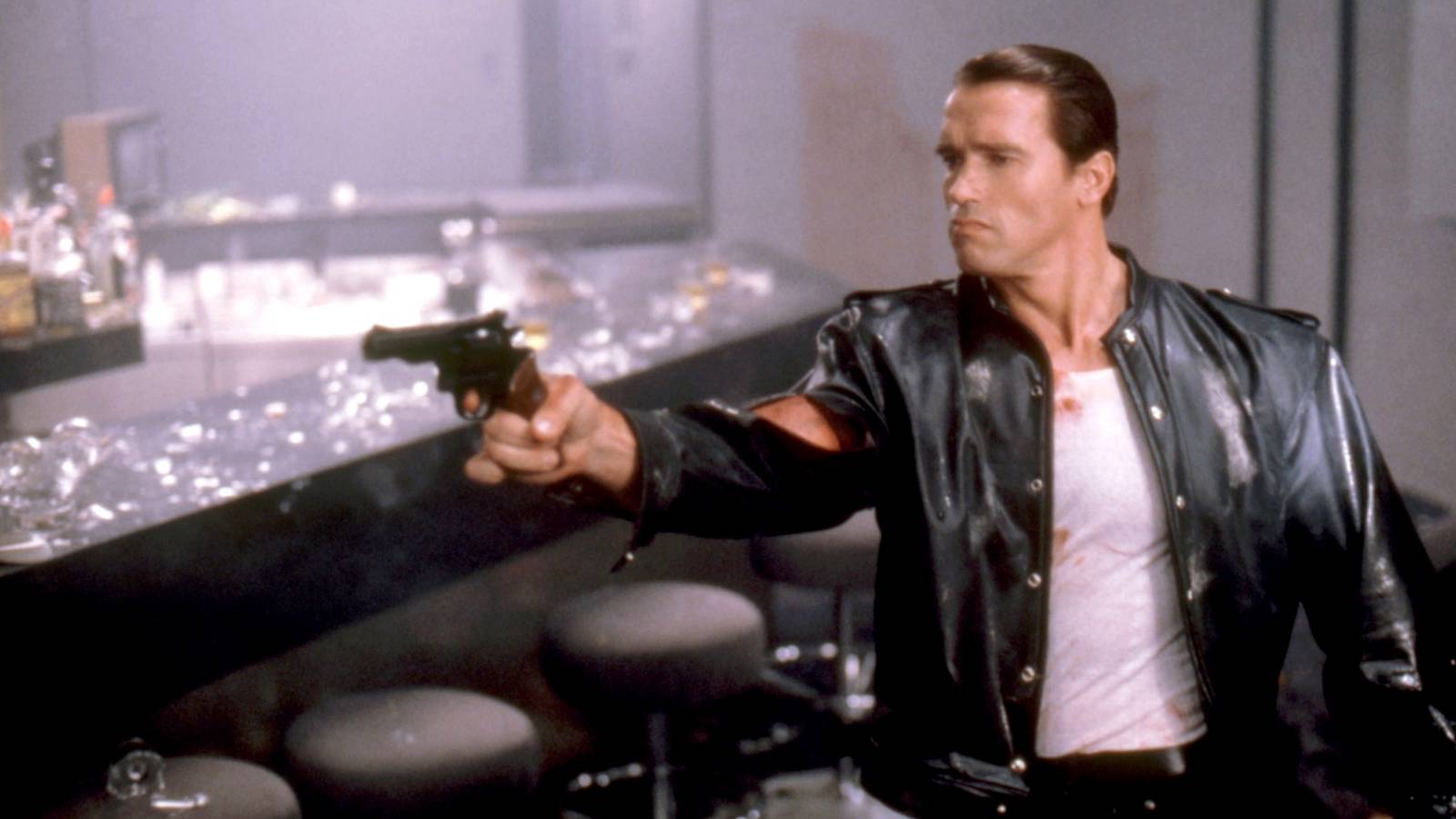
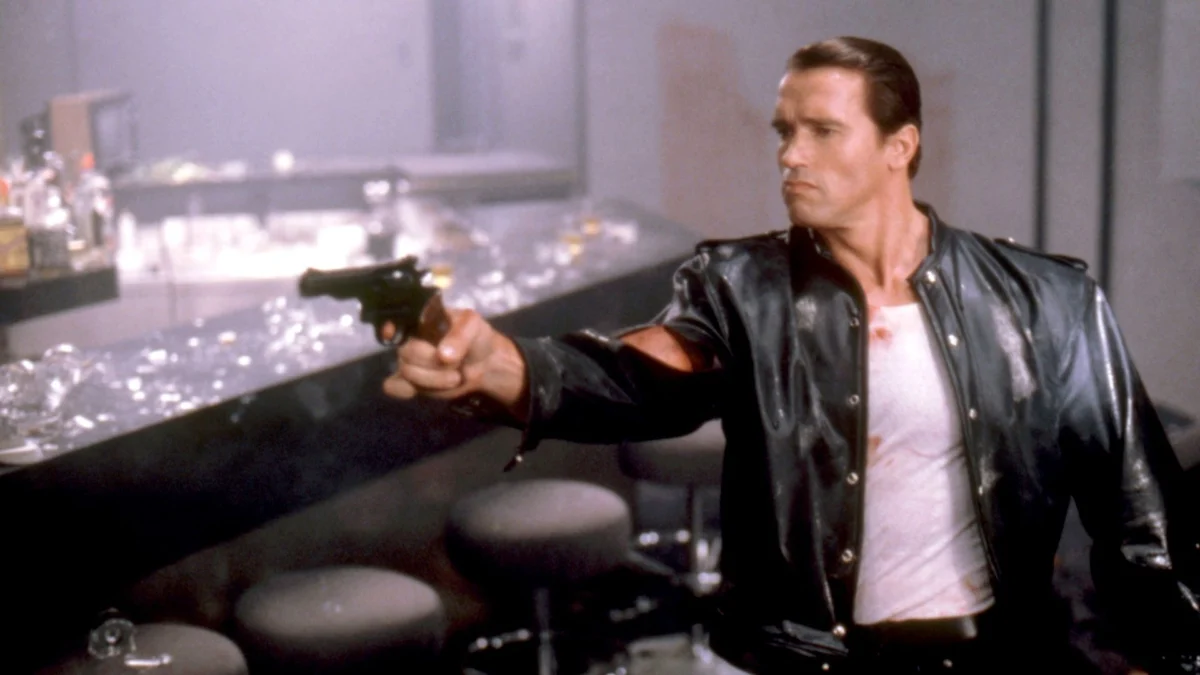
Despite the messy narrative, the film remains an essential study in how a star’s presence can mitigate script deficiencies. Schwarzenegger, playing the role of Mark Kaminski—an ex-FBI agent turned rural sheriff—navigates the nonsensical plot with a dry, ironic delivery that suggests he was in on the joke from the beginning.
Supporting Data: Critical Reception and Cultural Impact
When Raw Deal hit theaters in June 1986, it was met with a mix of confusion and begrudging admiration.
The Critic’s Verdict
Vincent Canby, writing for The New York Times, famously noted that the film was "better than Stallone’s Cobra," an assessment that served as the film’s primary marketing hook for years. It was a backhanded compliment that acknowledged the film’s technical competency despite its narrative poverty. Pauline Kael, the formidable critic of The New Yorker, was similarly conflicted, describing the film as "reprehensible and enjoyable."
This duality defines Raw Deal. It is undeniably a "bad" movie by conventional standards of structure and character development, but it possesses an inherent, infectious energy that keeps the viewer engaged.
The "Cake" Moment: A Case Study in Iconography
The film’s most enduring legacy is perhaps its most absurd moment. Early in the film, Kaminski returns home to his alcoholic wife, Amy, who is struggling with the isolation of their rural existence. In a scene that defies tonal consistency, the couple engages in a domestic dispute that culminates in Amy throwing a cake—emblazoned with the word "SHIT" in whipped cream—at her husband.
Schwarzenegger’s reaction—dodging the projectile and delivering the deadpan line, "You should not drink and bake"—is arguably one of the finest moments of his career. It perfectly encapsulates the film’s appeal: it is trashy, ridiculous, and undeniably memorable. It is the moment where the high-art aspirations of its Italian writers collide with the campy reality of 80s American action, and the result is pure, distilled charisma.
Official Responses and Behind-the-Scenes Friction
Though the film was never a critical darling, the production team maintained that Raw Deal was intended to be a throwback to the gritty noir films of the 1940s. John Irvin, who had previously directed the atmospheric war film The Dogs of War, brought a certain visual polish to the proceedings that elevated the film above the standard B-movie fare of the era.
However, historical reports from the set suggest that the disconnect between the European writers’ vision and the American production’s demands caused significant tension. The "script doctor" touch of Vincenzoni was intended to provide a layer of cynical wit, but much of that nuance was buried under the requirements of a studio looking for a standard Arnold vehicle.

Implications: The Legacy of the "Misfire"
Why does Raw Deal matter in 2026? It serves as a vital reminder that even the most successful actors of our time have had to navigate the "downtime" between their defining roles. Raw Deal is a testament to the fact that a star’s magnetism can function independently of a script’s quality.
The Cult Following
In the age of streaming, films like Raw Deal have found a second life. Platforms like YouTube have made the film accessible to a new generation of viewers who view it not as a failed blockbuster, but as a quintessential piece of 80s nostalgia. It represents a time when action cinema was tactile, practical, and unafraid to be inherently silly.
A Lesson in Cinematic Evolution
The film also highlights the evolution of the screenplay as a collaborative, often compromised, commodity. The fact that the same creative mind that penned the iconic "Mexican Standoff" in The Good, the Bad, and the Ugly also contributed to a film where Arnold Schwarzenegger throws a cake at his wife is a testament to the unpredictable nature of the film industry. It reminds us that every cinematic "misfire" is a result of a thousand small decisions, compromises, and shifts in vision.
Conclusion: Why Watch Raw Deal?
If you are looking for a masterclass in screenwriting or a nuanced character study, Raw Deal is not the film for you. However, if you are looking for 100 minutes of pure, unadulterated, brain-dead fun, it is a treasure.
It is a film that wears its flaws as badges of honor. It captures a specific moment in time when the action genre was still figuring out its identity, oscillating between the grit of the 70s and the glossy, high-concept excess of the late 80s.
So, take an evening to sit down with this piece of history. Watch it for the absurd dialogue, the questionable fashion choices, and the sheer force of personality that Arnold Schwarzenegger brings to every frame. And when the credits roll, you can take a small, smug pleasure in knowing that you’ve watched a film with a lineage that traces back to the greatest Spaghetti Westerns ever made. It’s a raw deal, perhaps, but it’s one that any self-respecting cinephile should be willing to take.